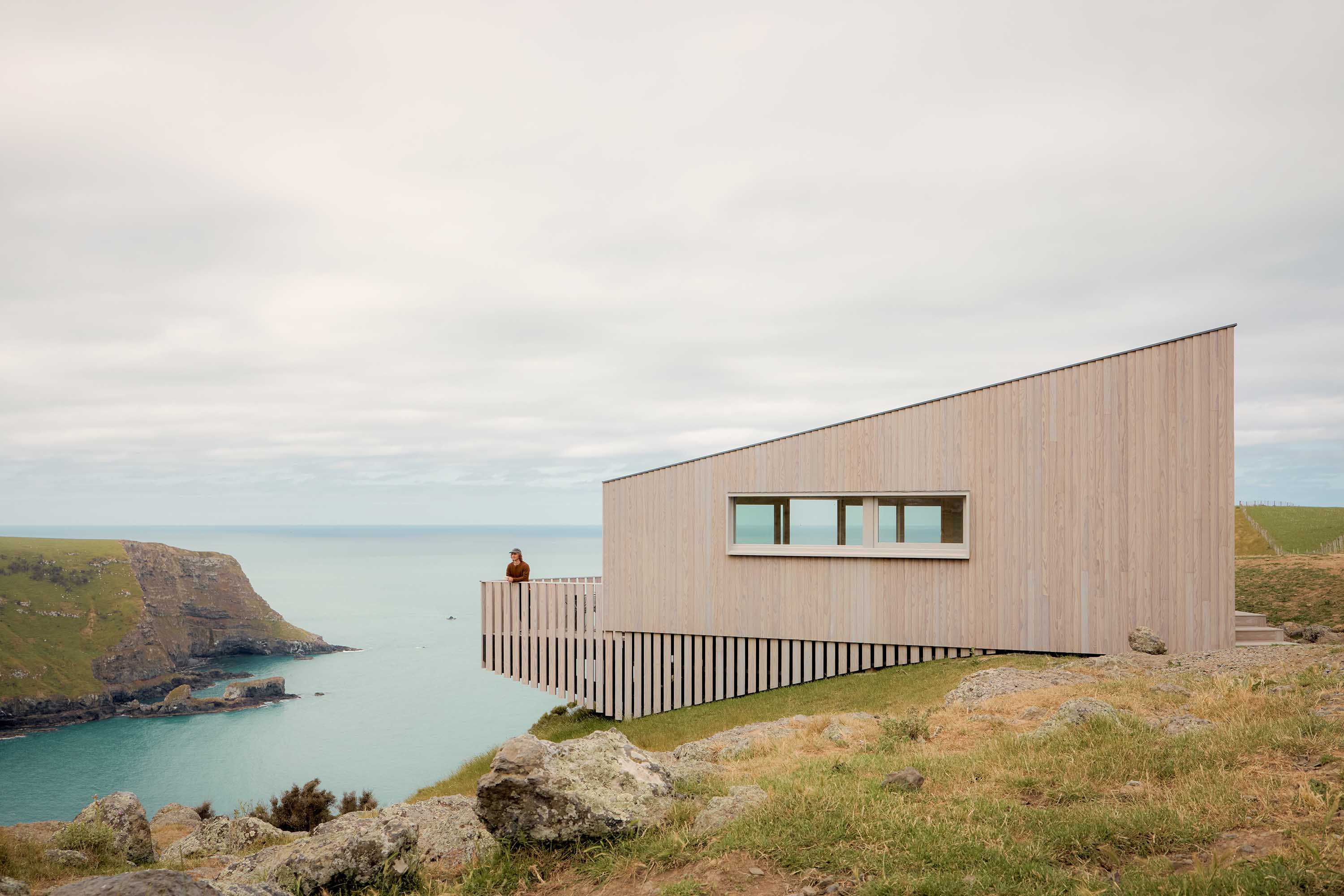
Studio Now director Ben Comber made his first trip to the site for this Lavericks Bay retreat in a four-wheel-drive piloted by owner Harriet Chapman. Bumping across the sprawling Te Pātaka o Rākaihautū Banks Peninsula farm, the pair arrived at a craggy headland where cliffs dropped sharply to the water, views ran long, and the wind did most of the talking. His first impression? “I actually thought it was pretty bonkers,” smiles Comber. “The idea of building a beautiful little off-grid cabin on a spot so remote seemed extreme. So straight away, that challenge was really cool.”
Chapman’s family has been on the land since 1858. Her three children with husband Lloyd are the seventh generation to grow up here. Spanning 970 hectares, the sheep and beef farm has a unique lineage, passing not from father to son, but from mother to son to nephew to daughter to son to daughter. Having already diversified into guest accommodation with a cottage and glamping site by the beach, the Chapmans wanted something more remote, more romantic. “I would walk up and down the ridgeline looking for the right spot,” says Chapman. “When I got here, I just felt it.”
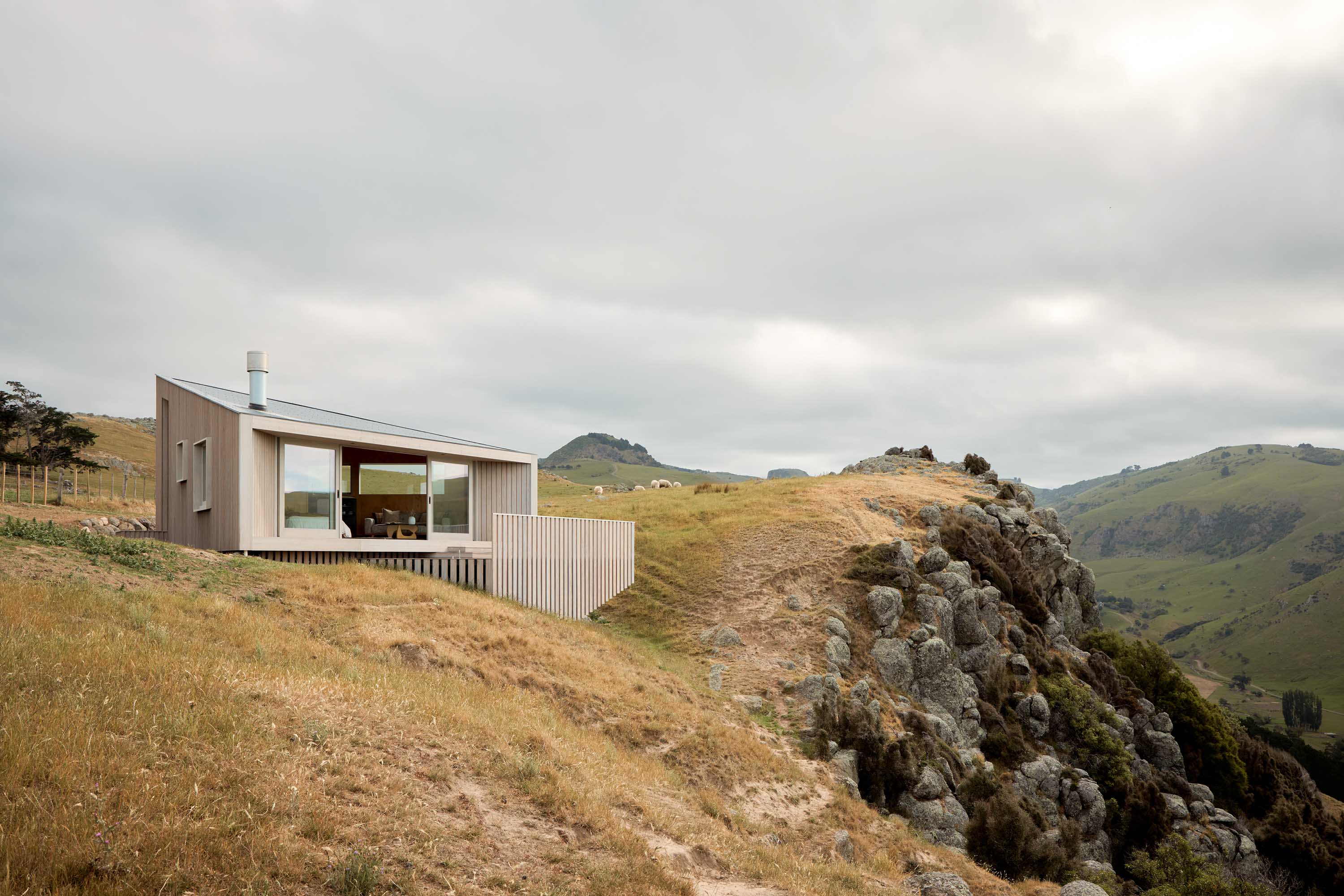
For Comber, the concept began to form on the drive back. “The trees all had that unruly, windswept quality, and it kind of stuck with me,” he recalls. Inspired by their defiant silhouettes, frozen in a silent gale, the cabin took shape. “The bottom is the secure base of the tree and it tapers up to that sculptural, windswept top.” In its simplest expression, the retreat is an equilateral triangle. Capitalising on the shape’s inherent strength and stability, the design streamlined what could have been a complex engineering puzzle. The exposed site demanded a Specific Engineering Design with structural solutions that well exceeded the standard building code. Yet, Comber and the engineers resolved it with a simple timber frame and a single steel portal supporting the large glazed opening. They even managed to slip a cantilevered deck in while meeting the heightened requirements, thanks to carefully considered trussing below.
A visual impact assessment was also needed to understand how the cabin would register in the landscape. Though there are no neighbours, Comber had to consider sightlines from the water and a quiet paper road that wraps around one side of the hill. “The design was always going to be very sympathetic to the land, to try and blend with its surroundings,” he explains. “So it naturally addressed most of the concerns. Other than that, it was really just about recessed glazing, so there’s less reflection or distraction.”
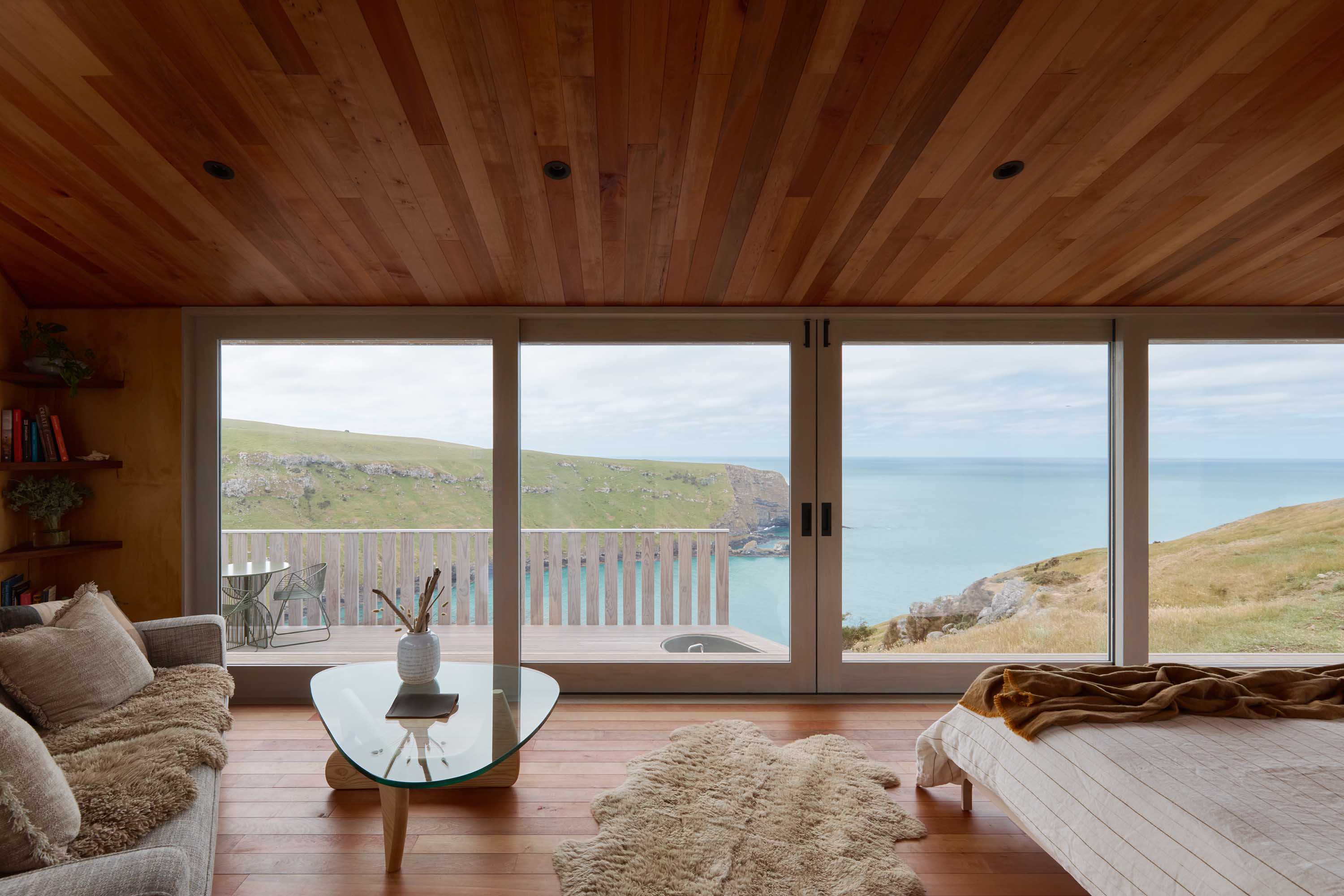
You enter the 35-square-metre retreat at the rear, stepping into the tallest zone. From there, the ceiling lowers, and the plan gently fans outward, drawing you forward to that panoramic view where the headland, sea and sky fill the frame. Designed for couples, it’s a straightforward layout that prioritises effortless comfort and a strong connection to the environment. “I wanted people to feel relaxed, protected and safe, even on a wild day,” says Comber. “An immersive experience, like you’re inside a snow globe.”
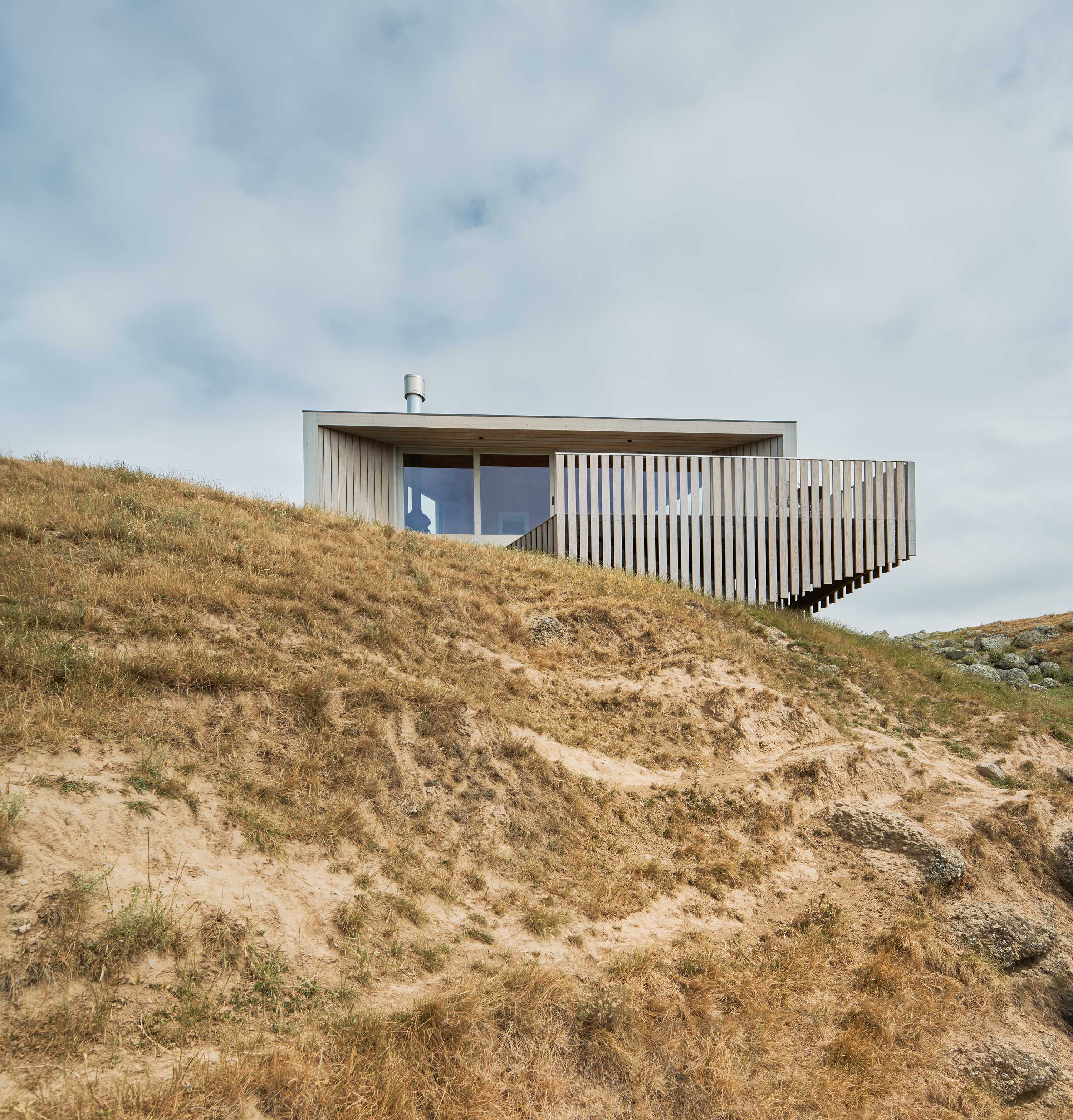
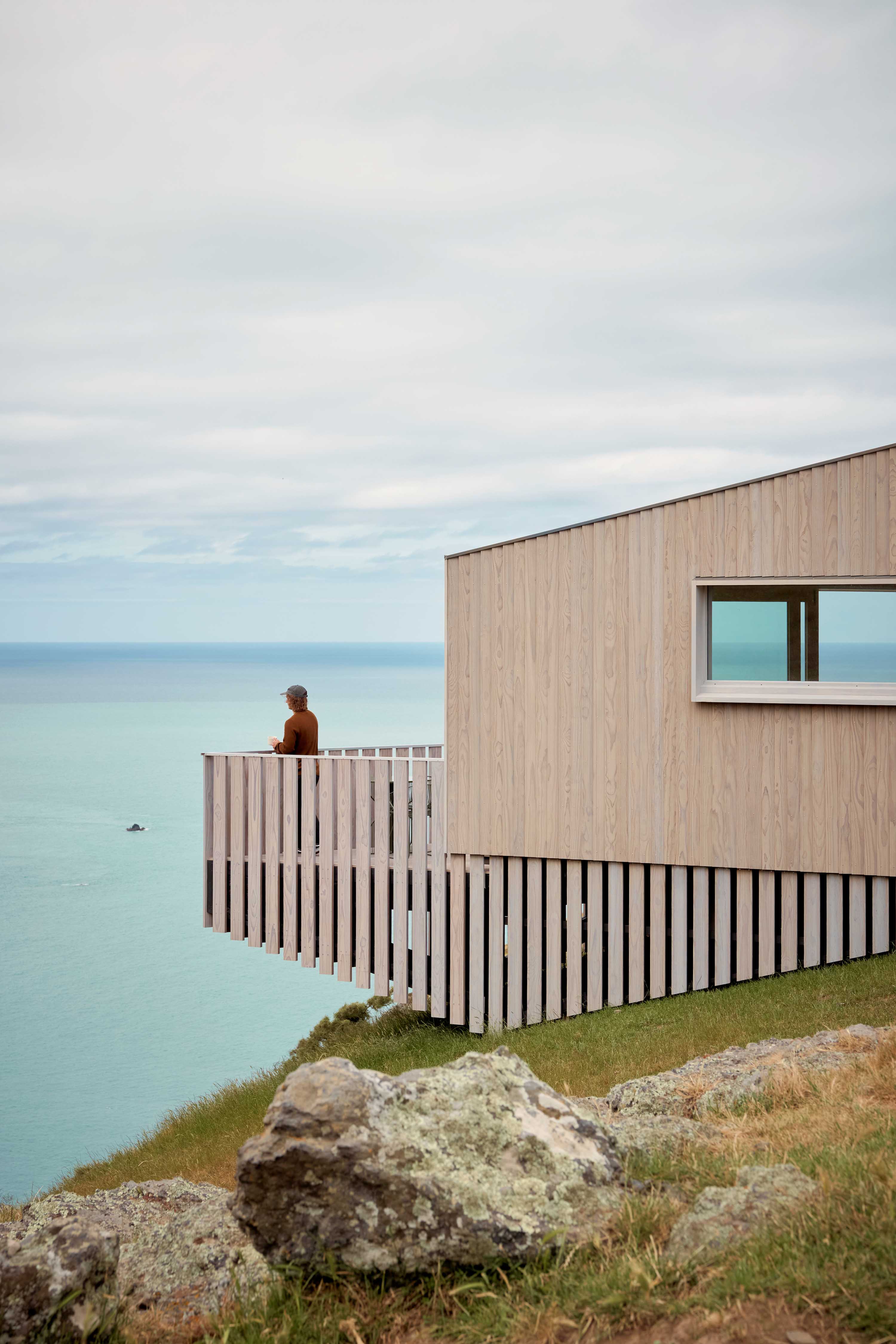
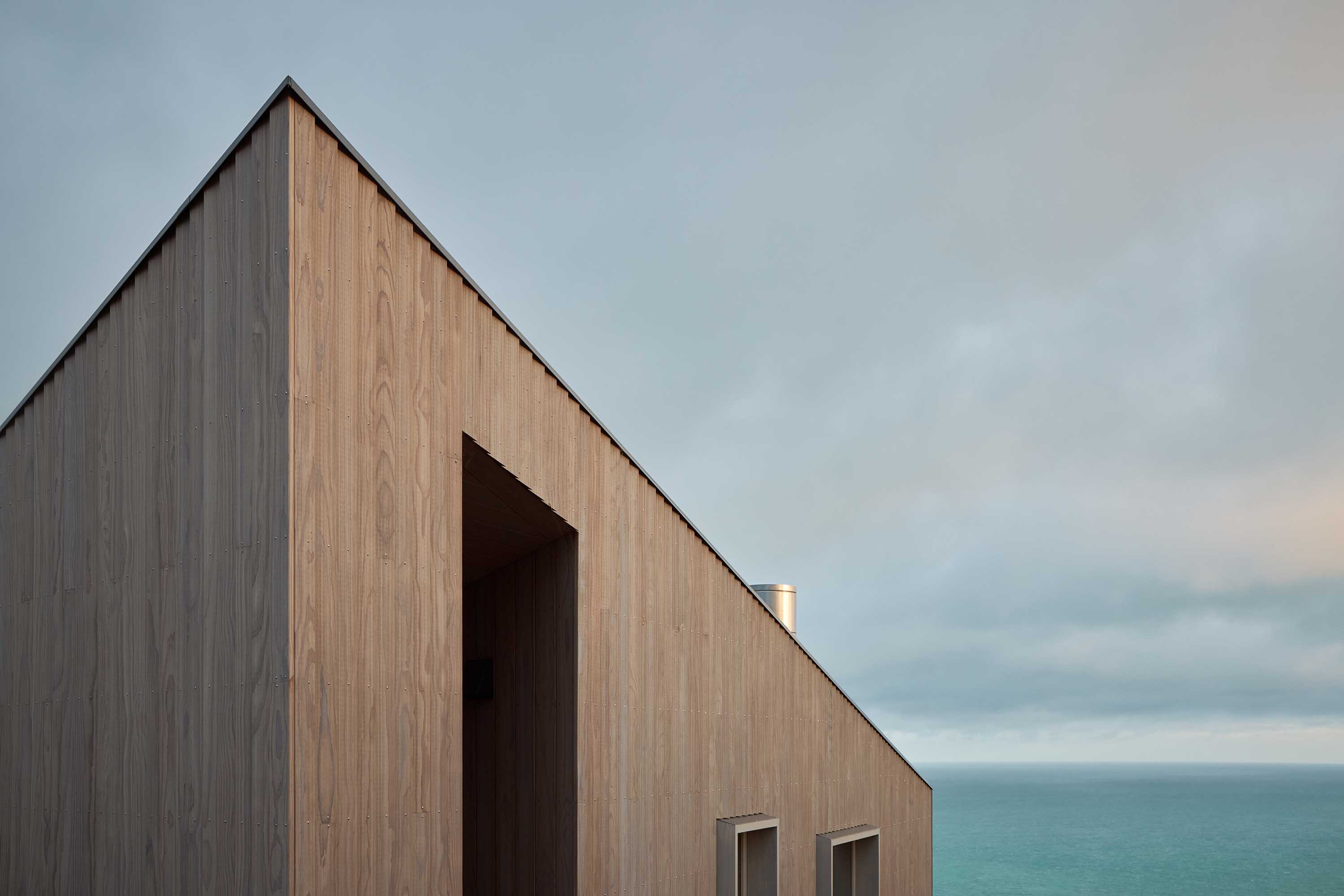
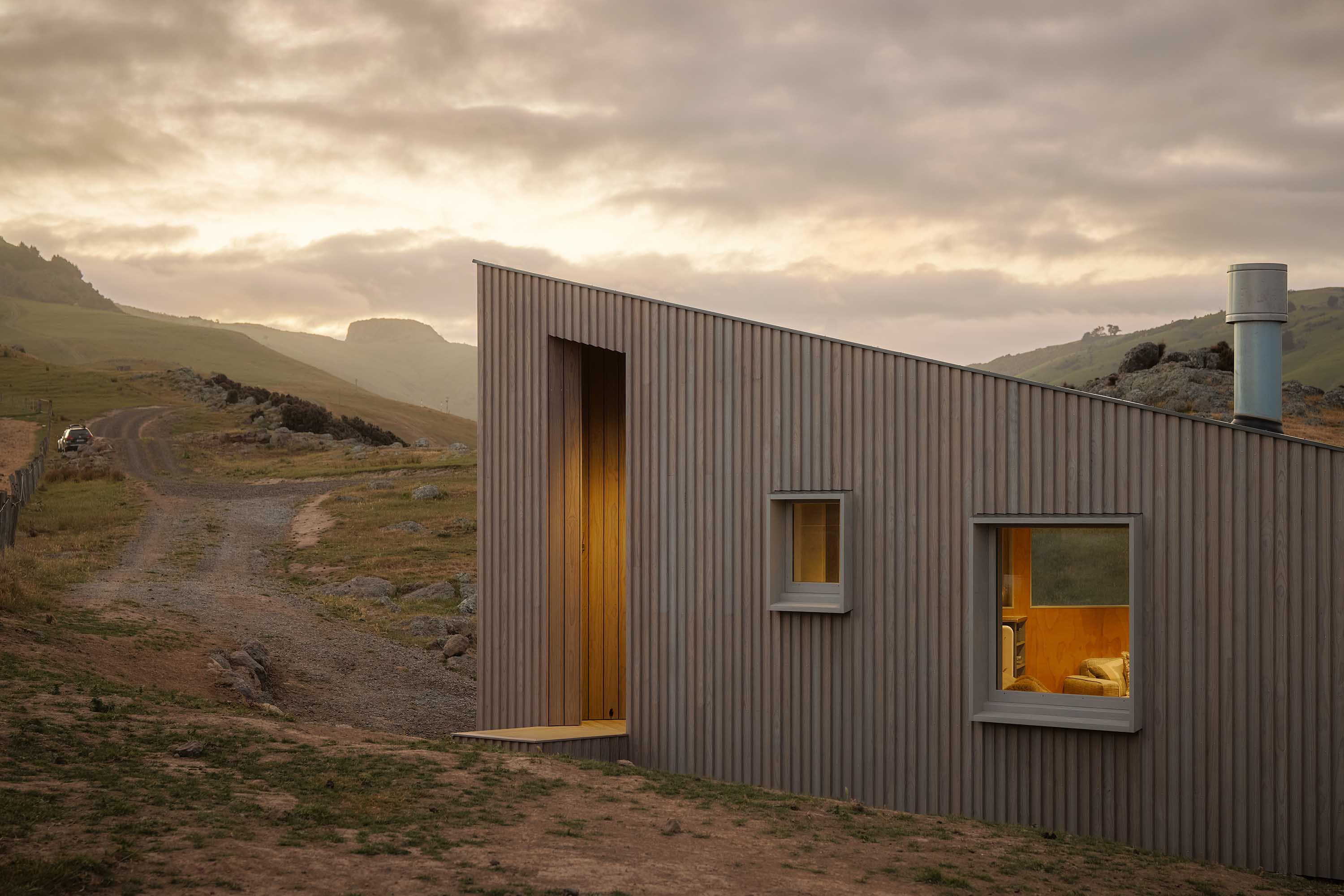
A committed advocate for locally sourced materials, Comber incorporated thermally modified pine cladding with subtle invention. Unlike standard shiplap timber, which lies flush, these boards were installed vertically and overlapping like traditional weatherboards rotated 90 degrees. The resulting texture and shadow reinforce that windswept motif, while a concealed membrane allows gutters and downpipes to disappear behind the timber, keeping detailing sharp and minimal. The arrangement also negates the need for flashings, so timber meets timber around the articulated window frames.
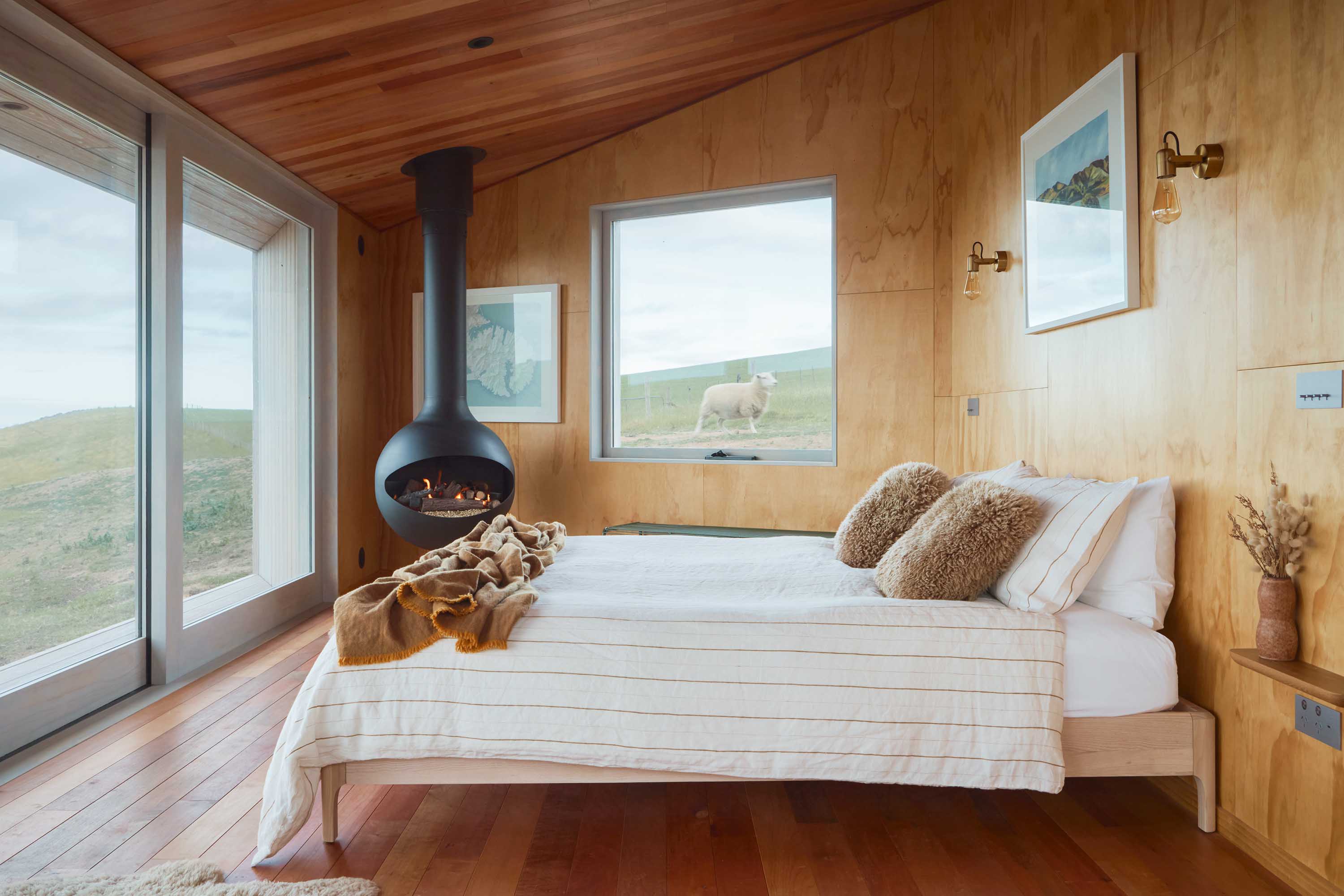
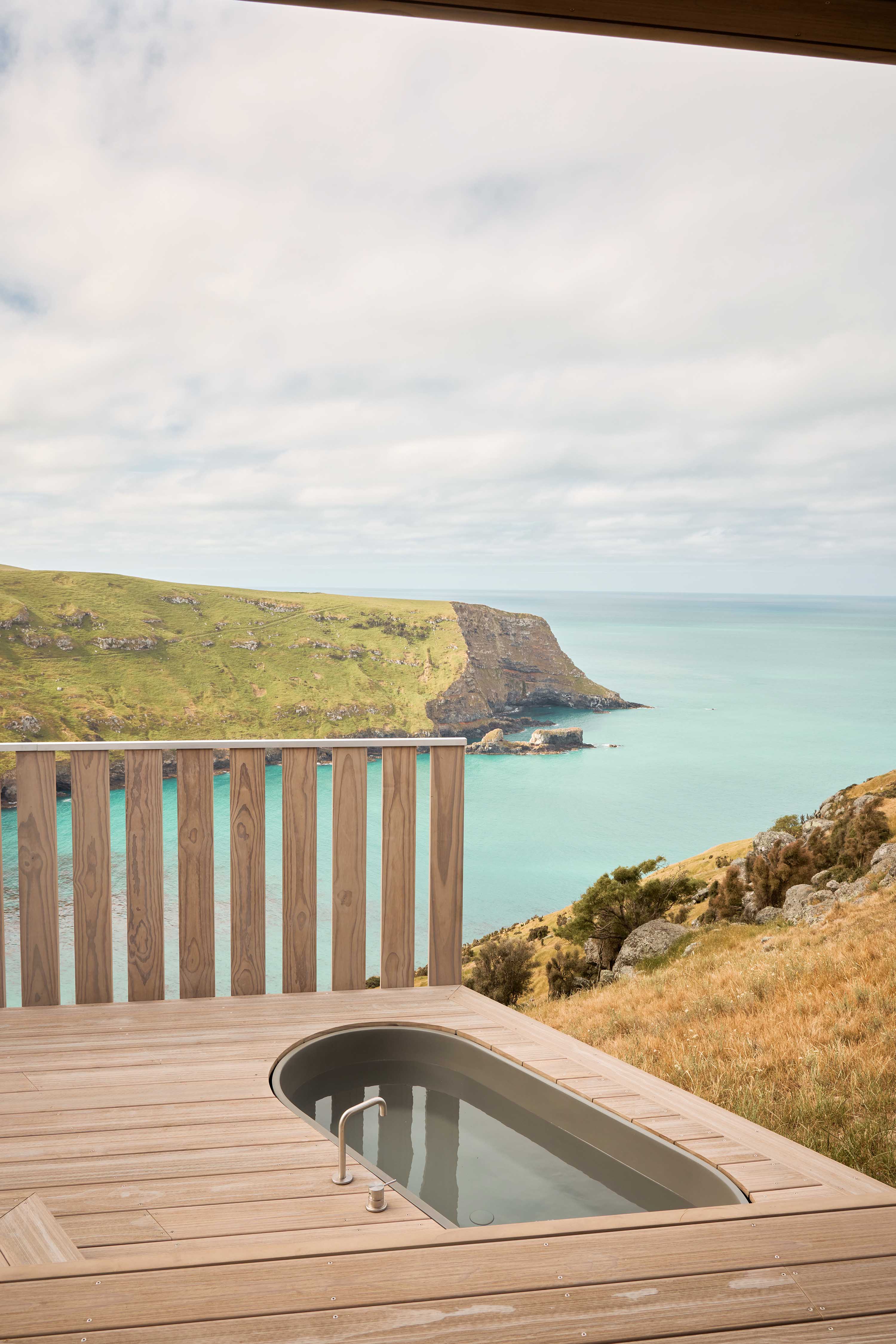
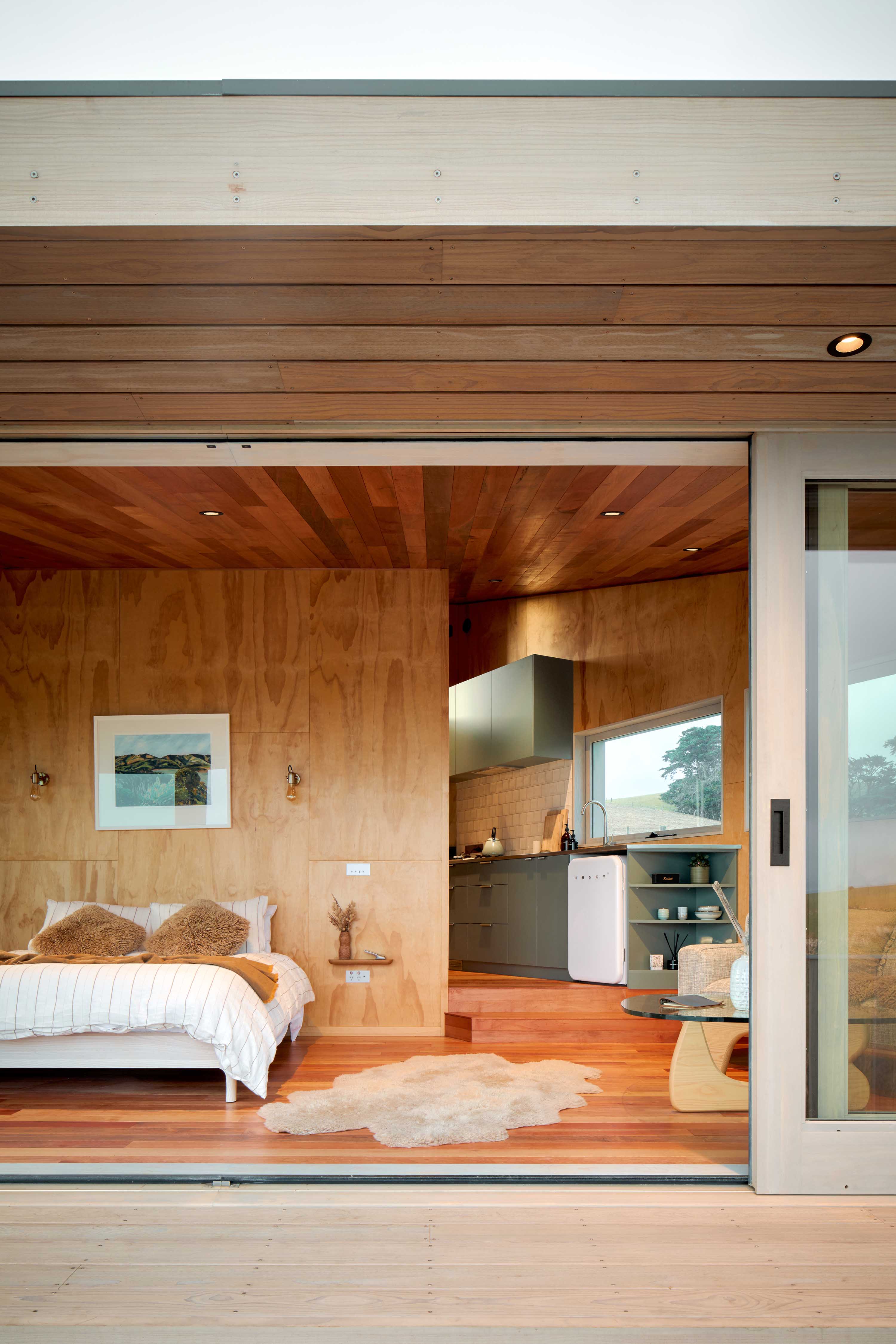
Inside, silvery-white wooden window joinery enhances the relaxed, tactile feel. It’s a credit to the Chapmans, who could have easily gone with the more cost-effective aluminium. Instead, they prioritised natural materials: floors and ceilings are beech, walls are plywood, and there’s not a strip of plasterboard in sight. Outside, the timber balustrade picks up on the agricultural vernacular, its slatted, gappy planks arranged like fence palings that let air and views through. “We stepped the bath down onto the lower deck, so sitting in it you’re right on the edge, but from the bed your view isn’t blocked by the tub,” Comber explains. It’s just one of the many moves that add to this immersive experience.
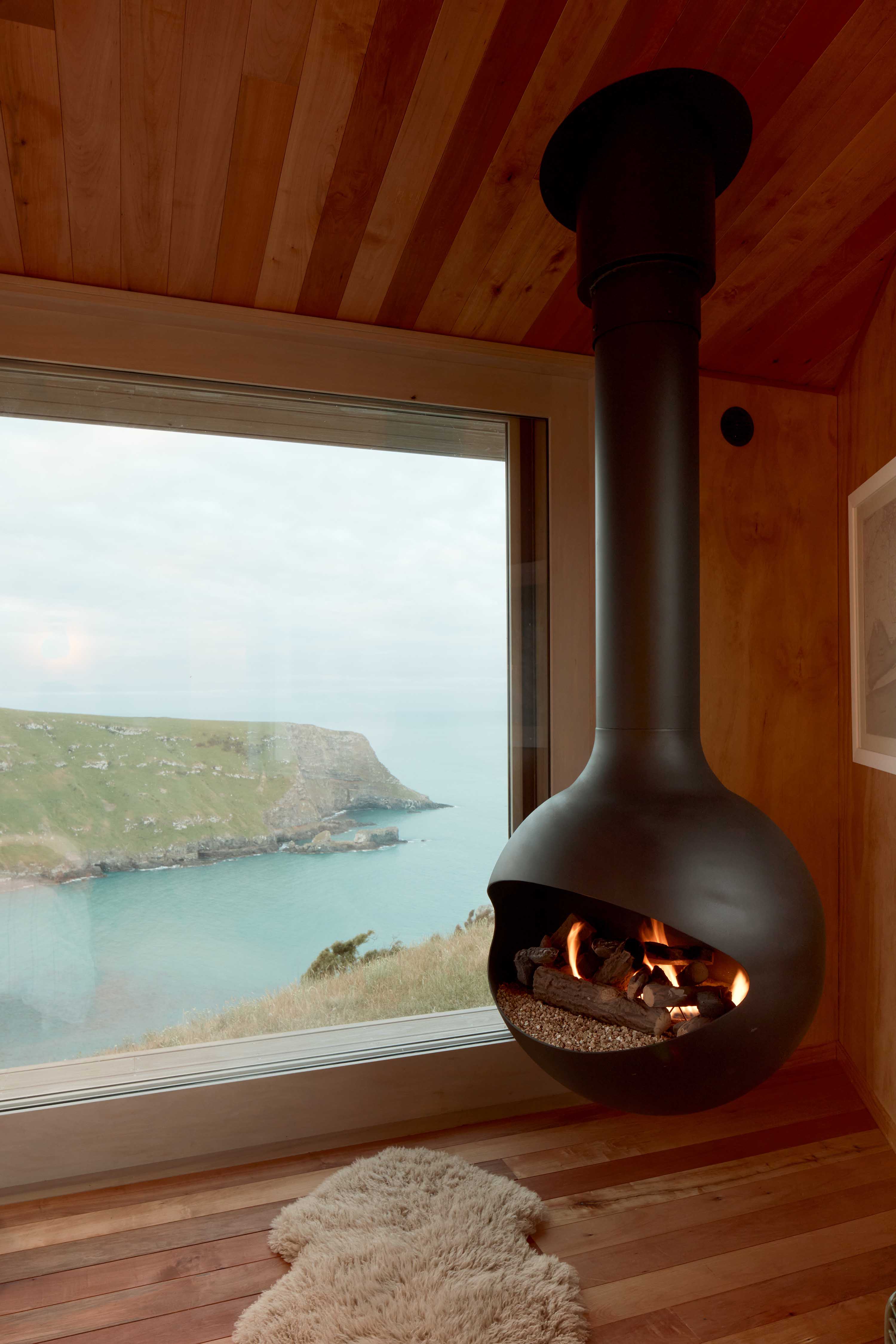
The exposed site and Banks Peninsula’s increasingly volatile weather demanded careful performance planning. Designed for year-round use, the retreat relies on its compact footprint, fireplace, double glazing and Terra Lana insulation to keep it warm. Thick walls and the absence of horizontal framing between studs allowed for maximum insulation. Creating a nice full-circle moment, the Chapmans also supply wool to the Ōtautahi-based insulation company, so chances are some of their own sheep have donated fibres to the cause. “I just love it there in winter, it’s so cosy,” says Chapman. “With the fire, the outdoor tub, and the darkness — the stars are unbelievable.”
Off-grid considerations include ground-mounted solar panels, a drip-line septic system and a 30,000-litre water tank. All water comes off the farm, including from natural springs which also double as an emergency firefighting supply. The indoor fire and hot water run on gas. Built entirely on site, with nothing prefabricated, logistics were critical. The builder and most subcontractors came from nearby Akaroa, though a few made the two-hour trek from Christchurch. Even so, the cabin was completed in under 10 months and is now booked well in advance.
The retreat’s remoteness is a feature, not a constraint – it sits in tune with its wild landscape, robust, warm and settled. “We wanted it to be stress free so that people can arrive and simply relax,” says Chapman. “It’s off-grid, but there’s none of the difficulties that usually come with that.”
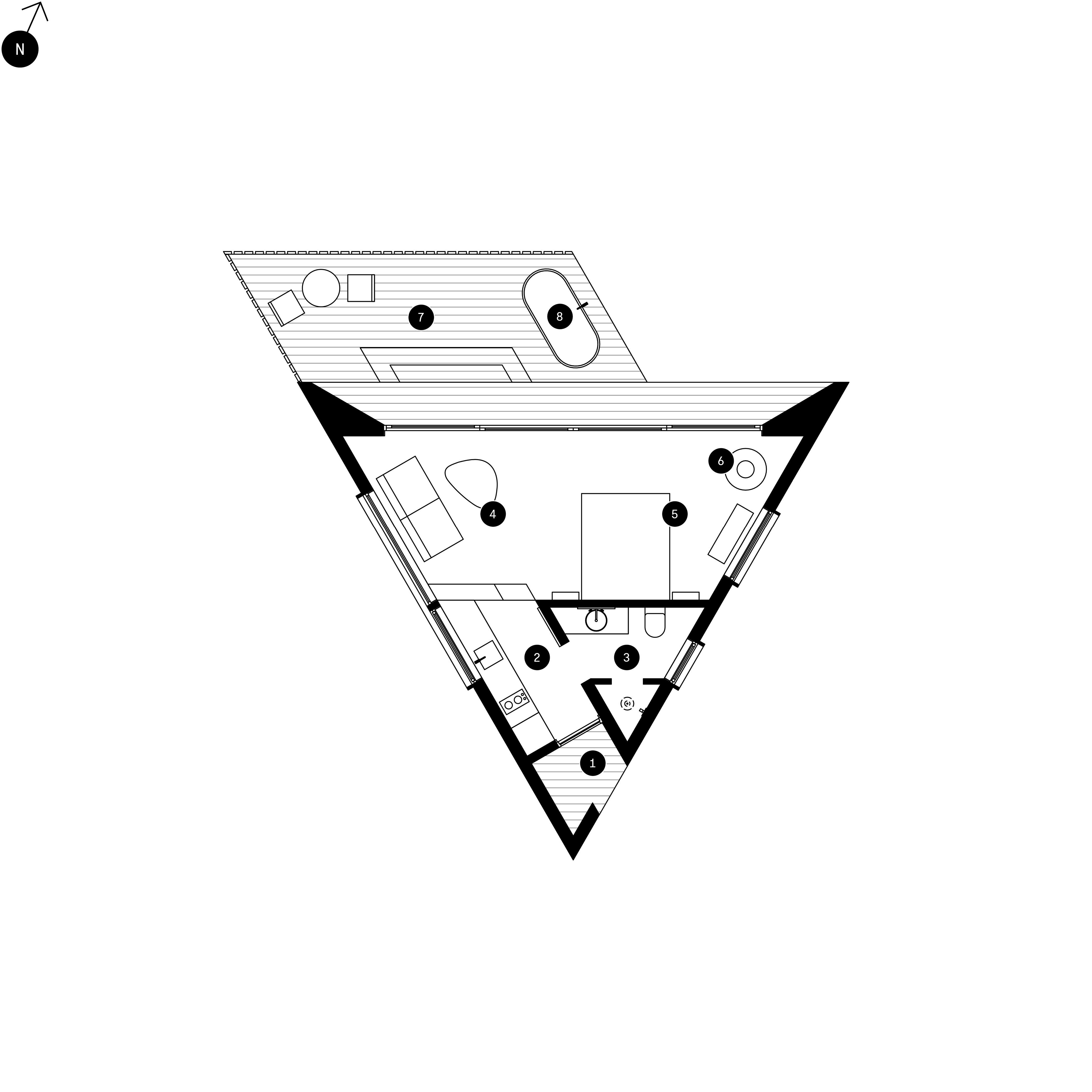
1. Entrance
2. Kitchen
3. Bathroom
4. Living
5. Sleep
6. Fireplace
7. Deck
8. Outdoor Bath
Related Stories: