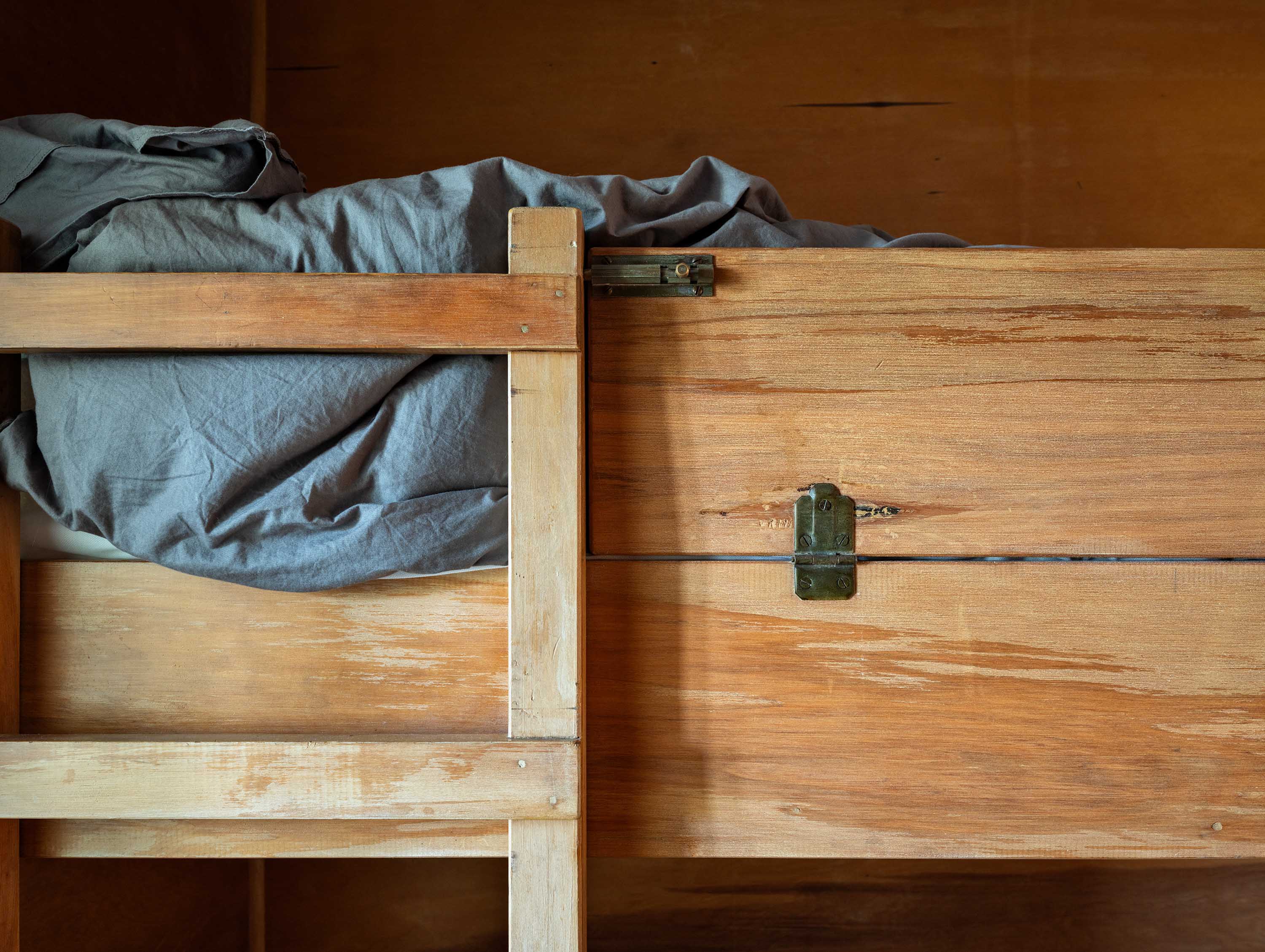
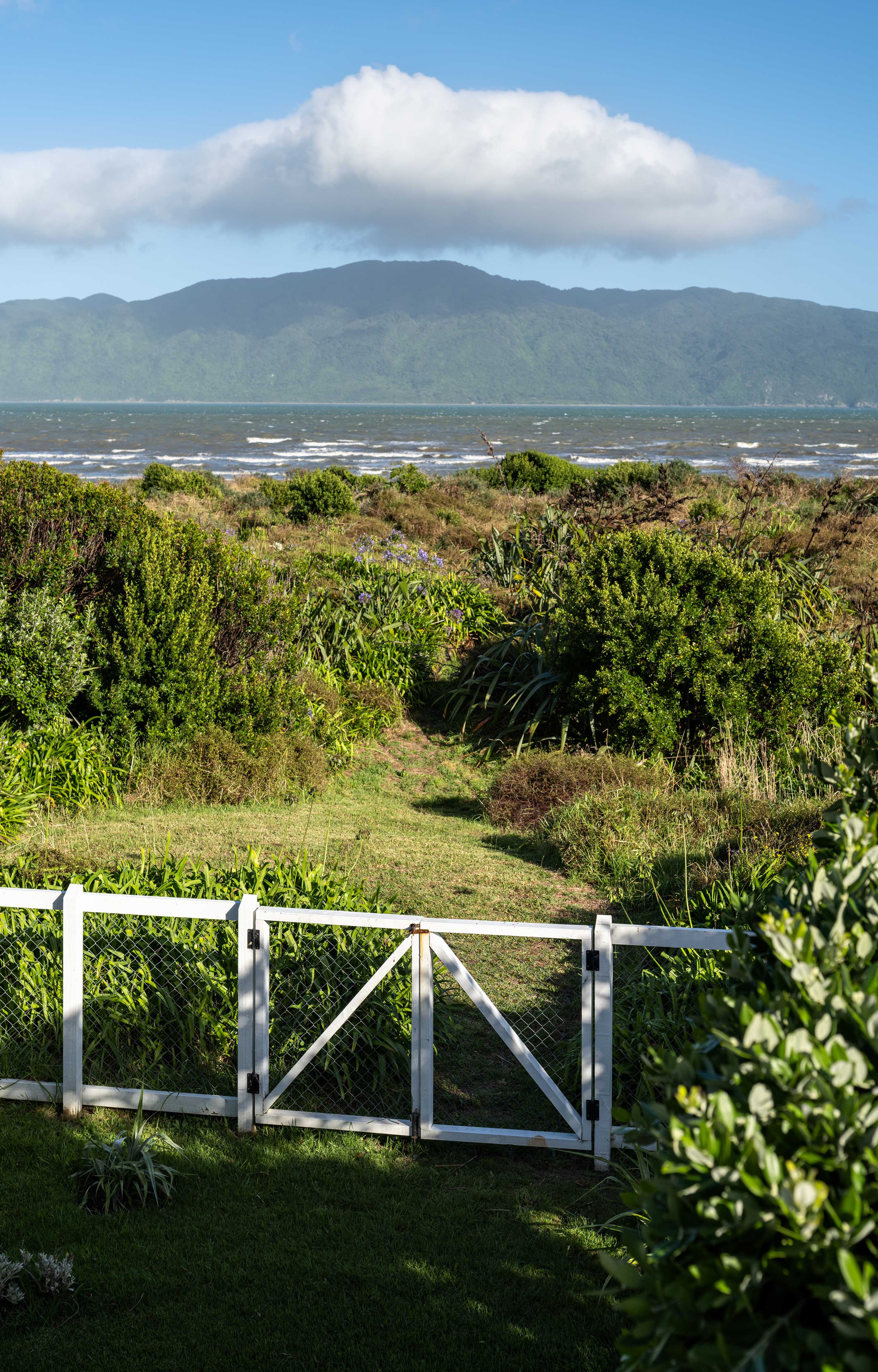
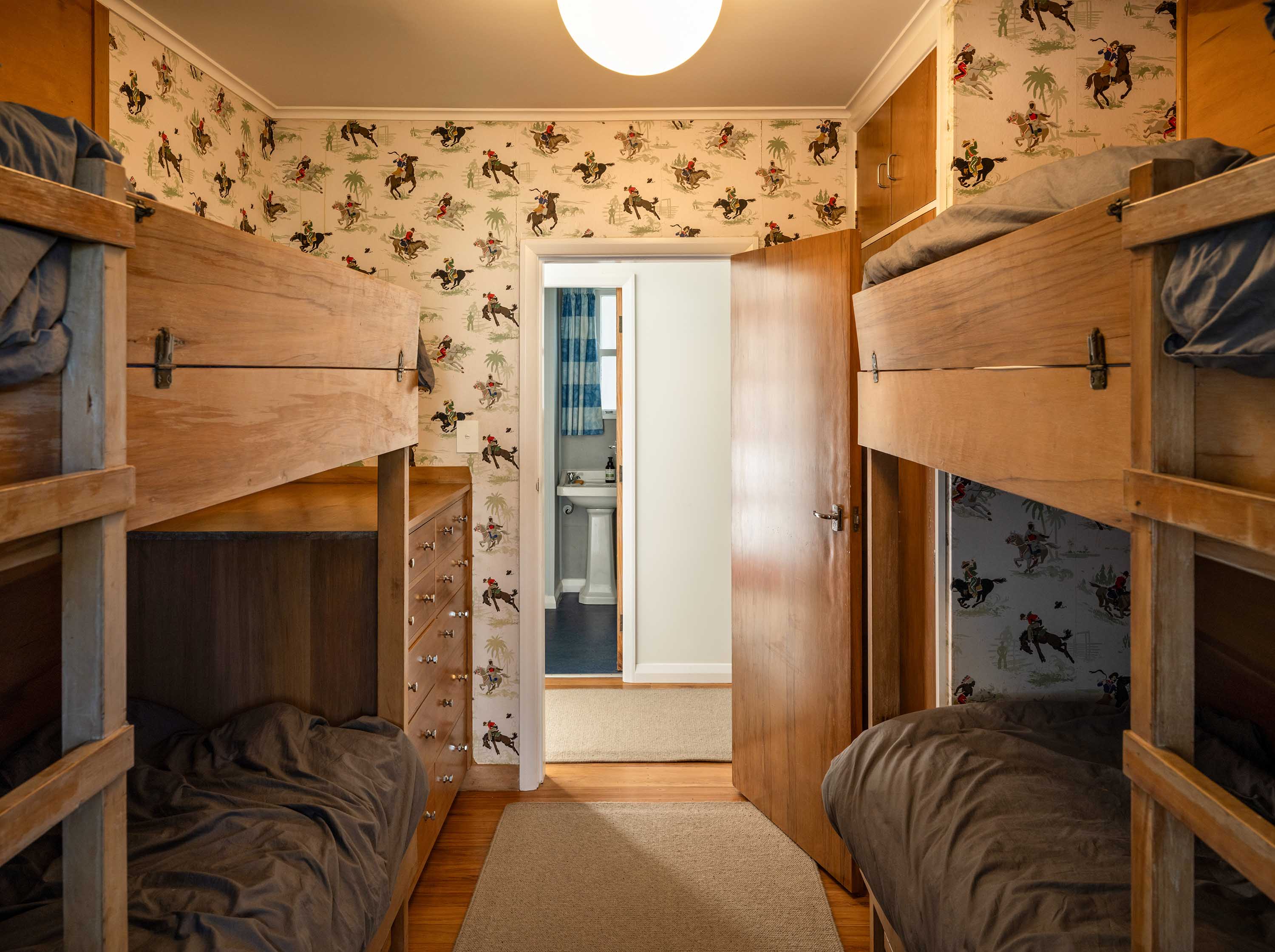
Michael Dunlop was eight years old when his parents built the beach house in Paraparaumu, looking out across the water to Kāpiti Island. He still remembers the scaffolding – and not being allowed to climb it. He grew up in that house as much as his home in Te Papaioea Palmerston North. “Other families would go to different places for holidays,” he recalls. “Our holiday was always at the beach.” He had the top bunk in the room with the Wild West wallpaper. His sisters slept down the hall under the ballet wallpaper. Both rooms, and wallpapers, are still there today.
After his parents passed, Dunlop eventually came to own the house. By then, he had a long-standing relationship with architect Stuart Gardyne of architecture +, who has worked with Dunlop on and off for 20 years on his home in Roseneath, Te Whanganui-a-Tara Wellington. It was Gardyne, unburdened by familiarity and sentimentality, who first articulated what the beach house was, and wasn’t. “It was an extremely unusual house to be beside the seaside,” Gardyne says. “Michael’s mother was born and raised in England, and what she understood a house to be was quite different to what New Zealanders of that time thought a house might be – especially by the beach.”
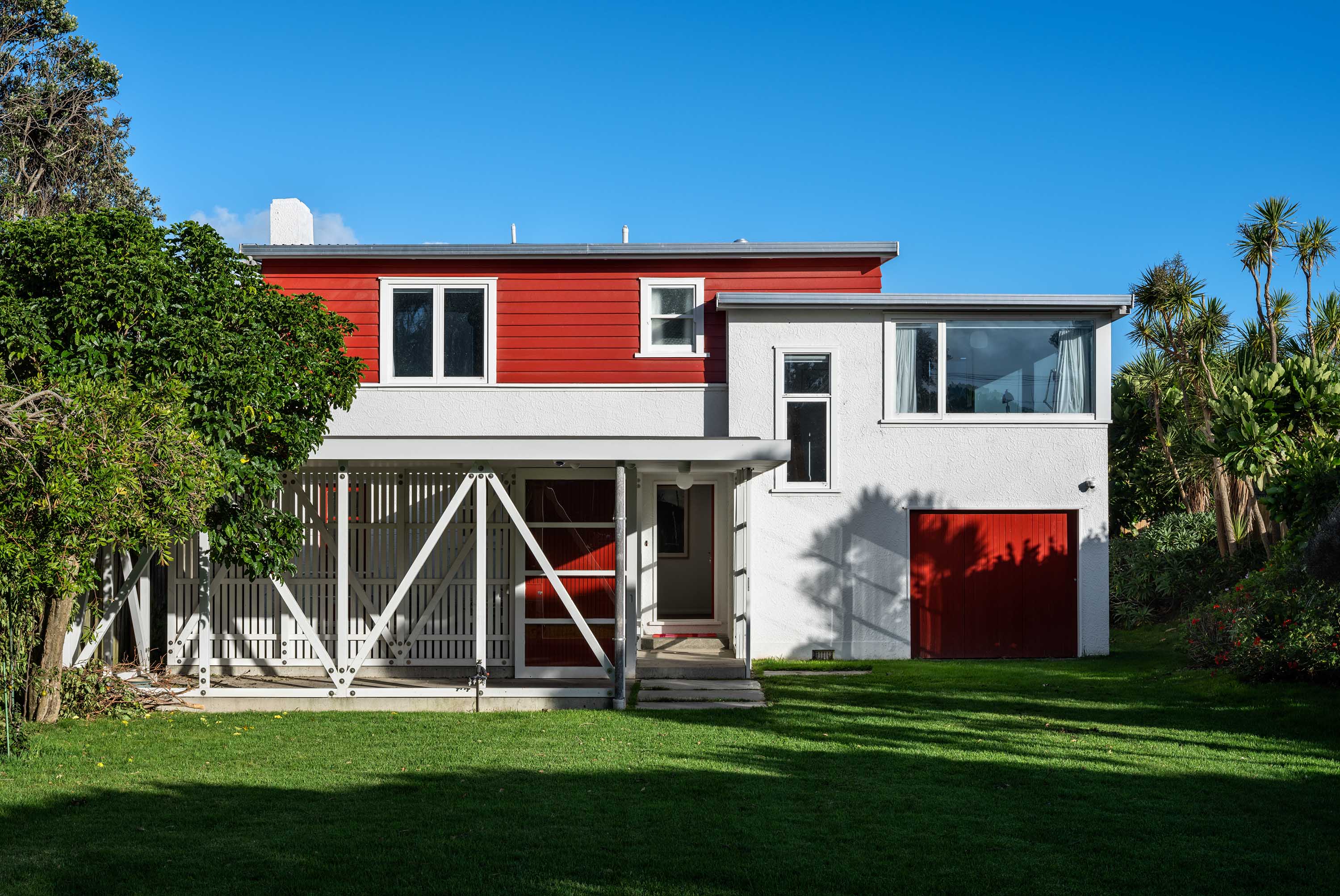
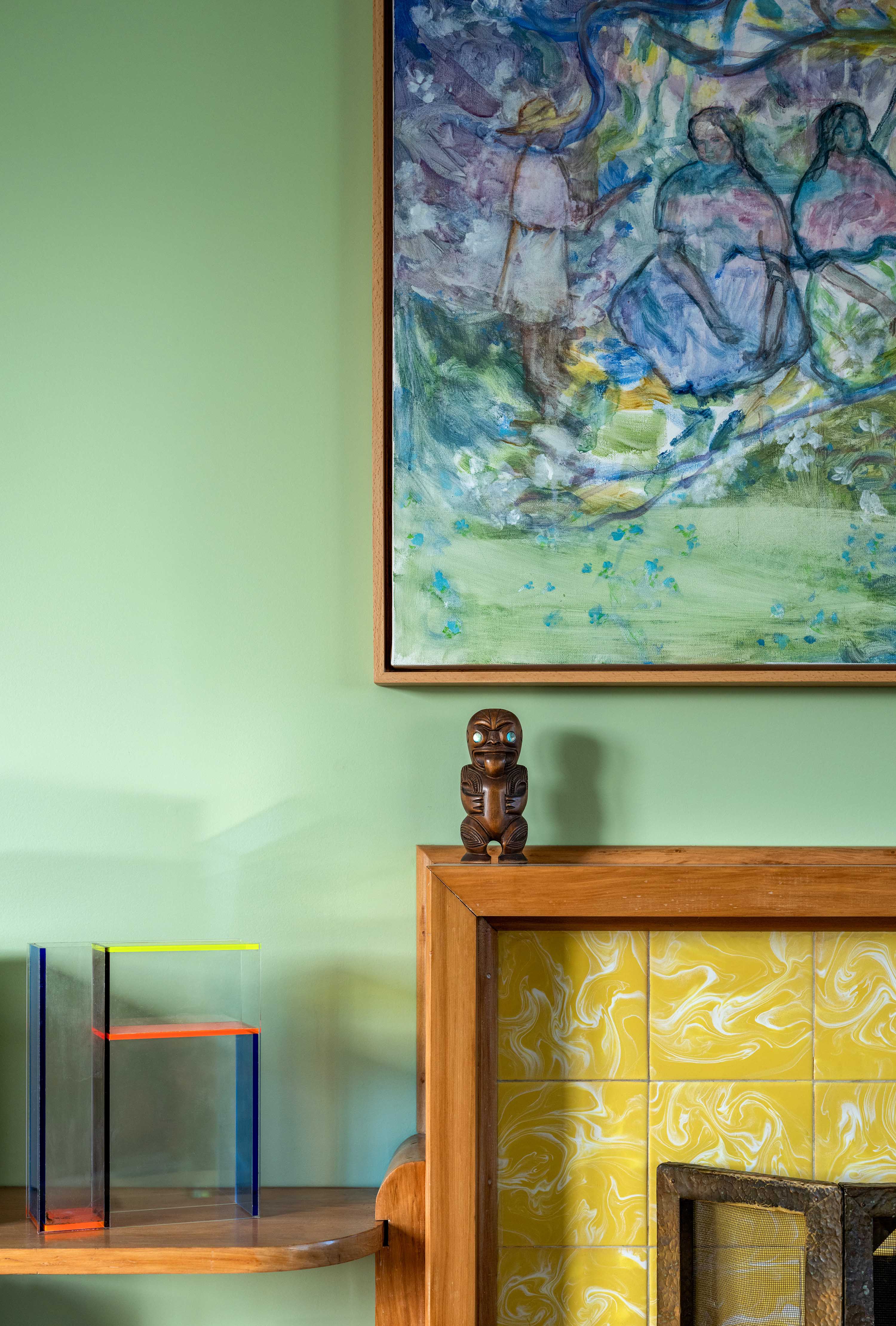
She had met Dunlop’s father in India during World War II and moved with him to New Zealand when he returned home. It took her time to get to know the place. On the mantelpiece is a small figurine – tourist-shop Kiwiana, bought by a young woman learning about her new country. “That is part of her discovery of becoming Kiwi,” Dunlop says. “We were brought up with that.” The house she and her husband built, shaped by what she knew from holiday homes in England, prioritised the view out towards the sea over physical access to it. It is two storeys – unusual for a bach at the time – because that was the only way to capture the view of Kāpiti Island. It had a small, formal front door, with no transitional space, and no real connection to the beach just beyond the dunes. There was no flow from the house out to the lawn. You were inside or you were outside.
Dunlop's brief was straightforward in its ambition if not its execution: bring the house into the landscape, add the amenities of a contemporary second home that could sleep 16 – and do not lose the history. Gardyne knew he needed to approach “with a fairly light touch”. The ground-floor plan was left almost entirely intact. The main intervention came on the seaward side: a new kitchen and dining room, pushed out toward the dunes, with a spiral staircase descending to a hot tub and direct beach access below. The two original bunk rooms were extended – doors punched through where windows had been – each gaining a double bedroom off the back. “It becomes a room where parents would be in the double bed and children in the bunks – or it might be a lot of adults all sleeping there as well,” Gardyne says. “It's just a very versatile, flexible arrangement.”

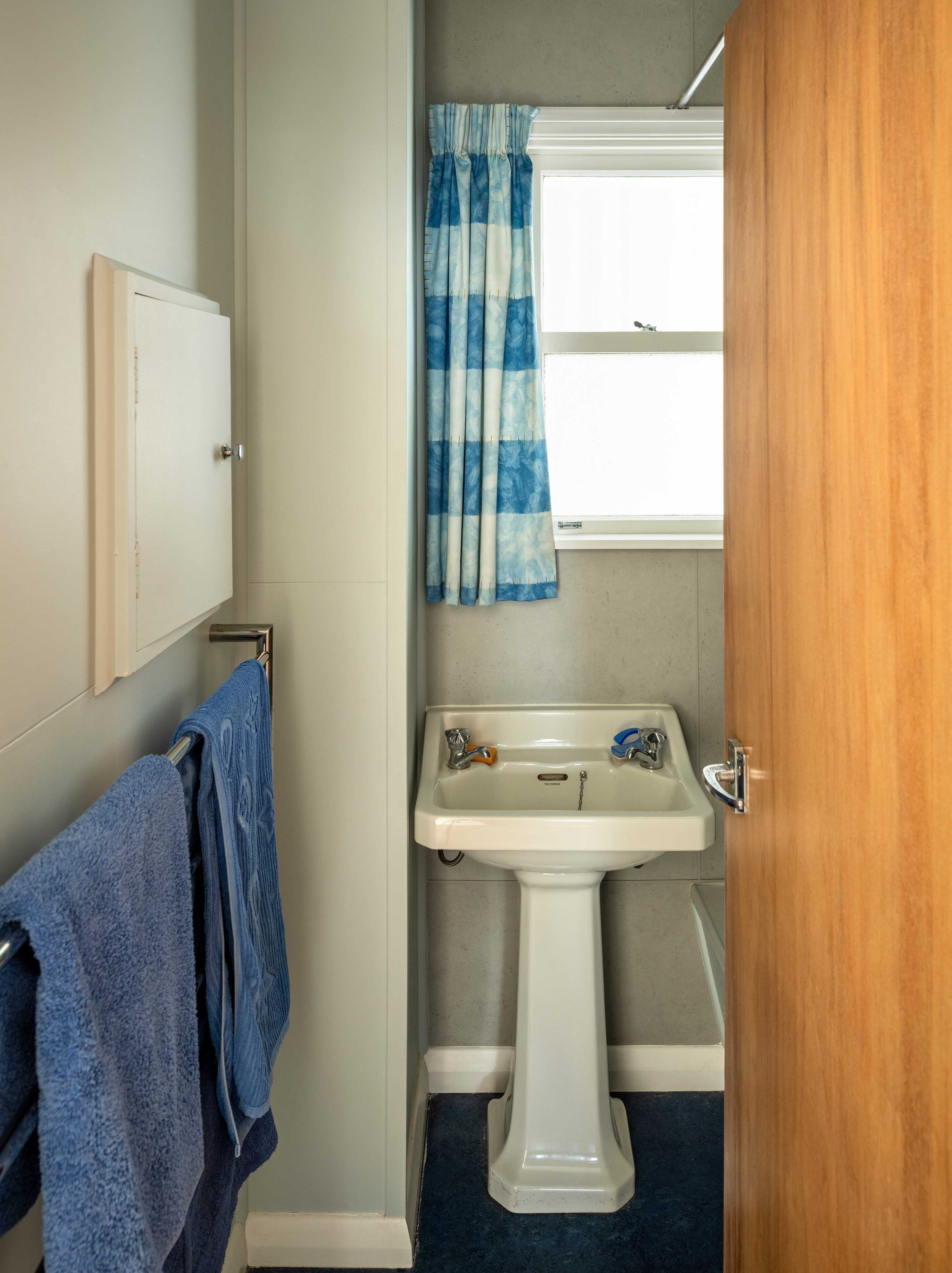
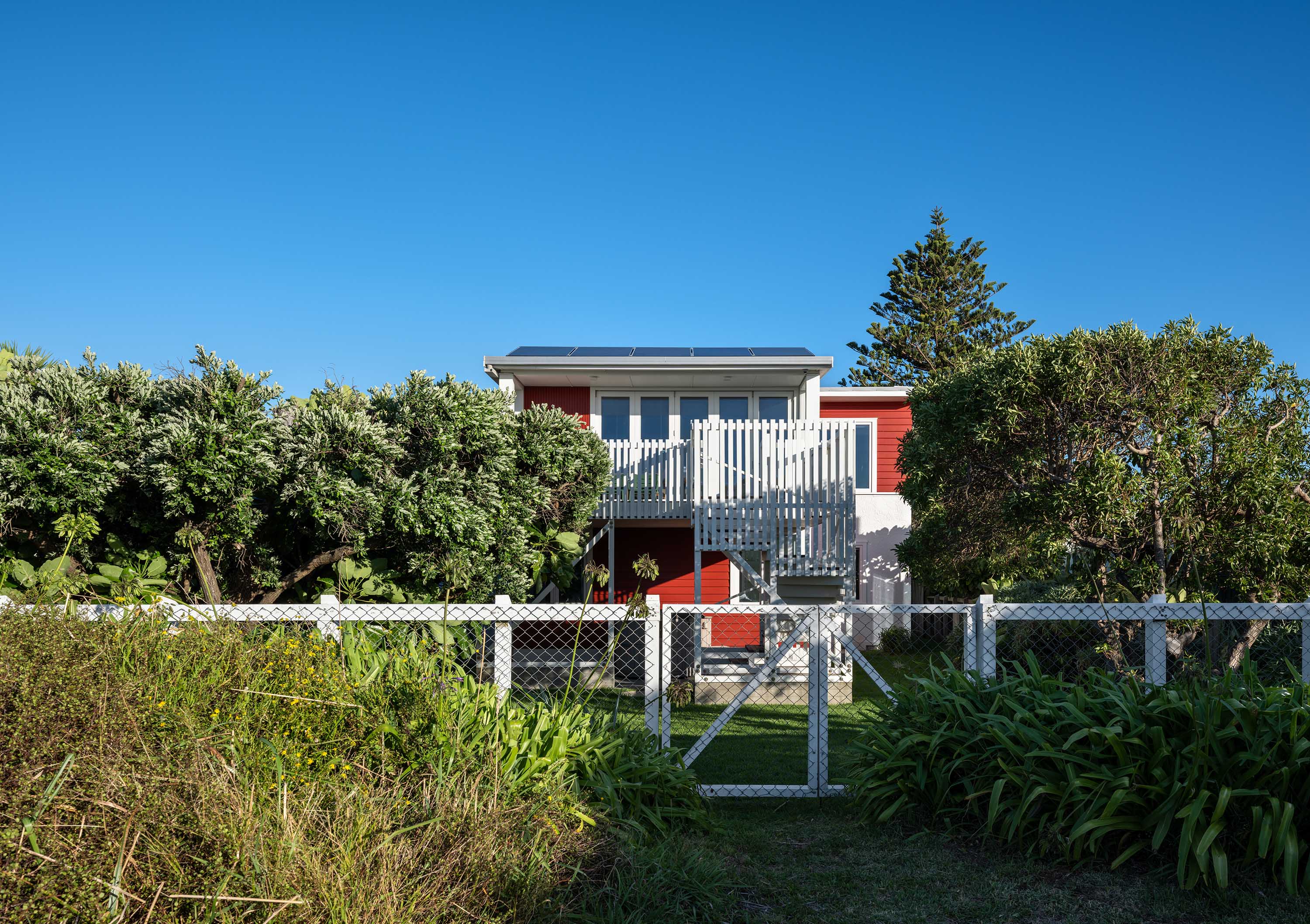
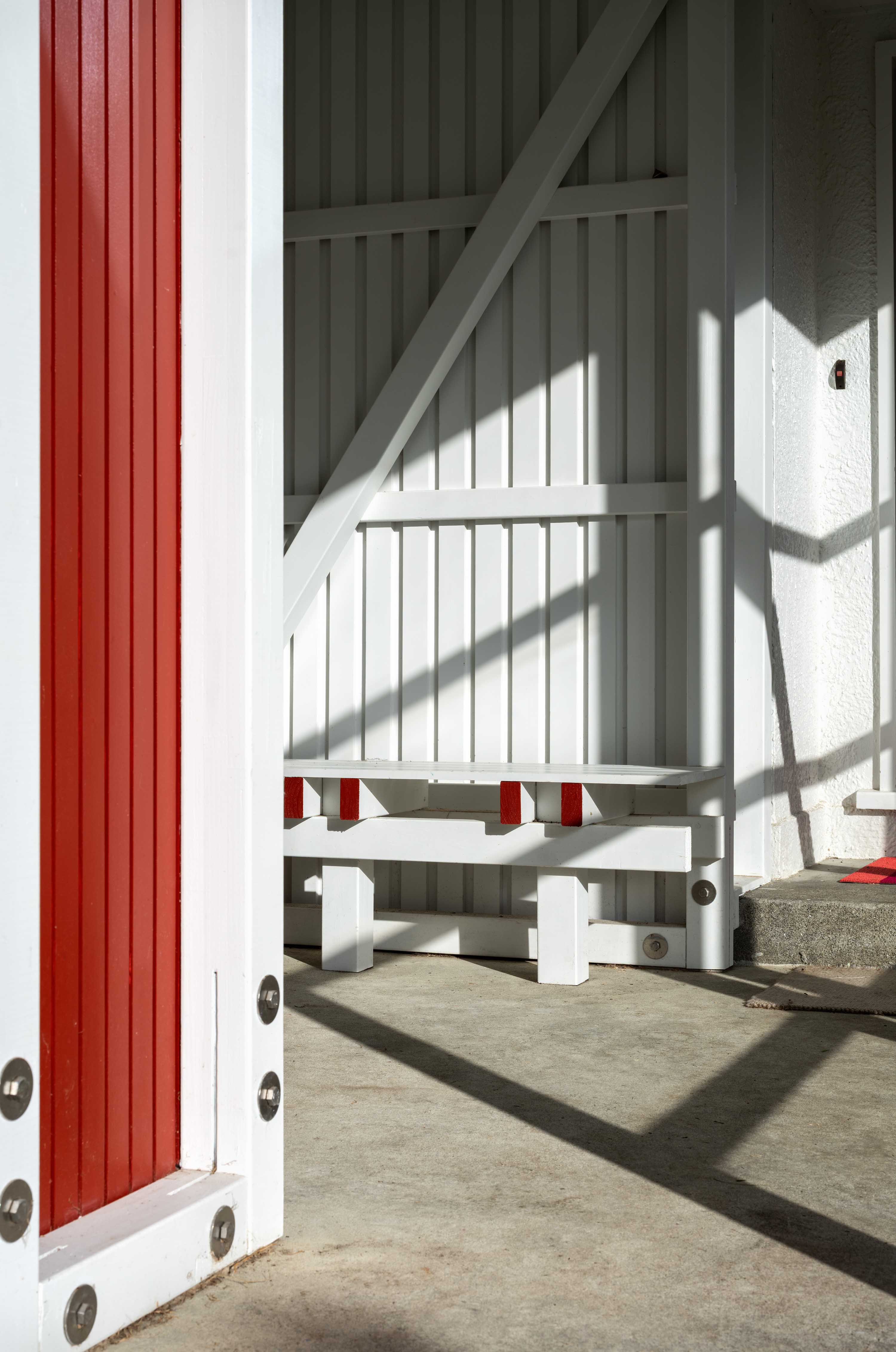
The westward changes also resolved the house’s most fundamental problem – its relationship to the beach itself. Where once you had to walk around to the front door to get in from the beach, now you can come up from the sand, rinse off, and head inside – either into the bedrooms or upstairs to the deck and living spaces. At the front a new carport entry porch completed the transformation of arrival. “Creating the porch where you can sit down, change your shoes, wash the sand off your feet, hang things up — that made the arrival so much more functional and friendly,” Gardyne says. “It was just too formal for the purpose of the house.”
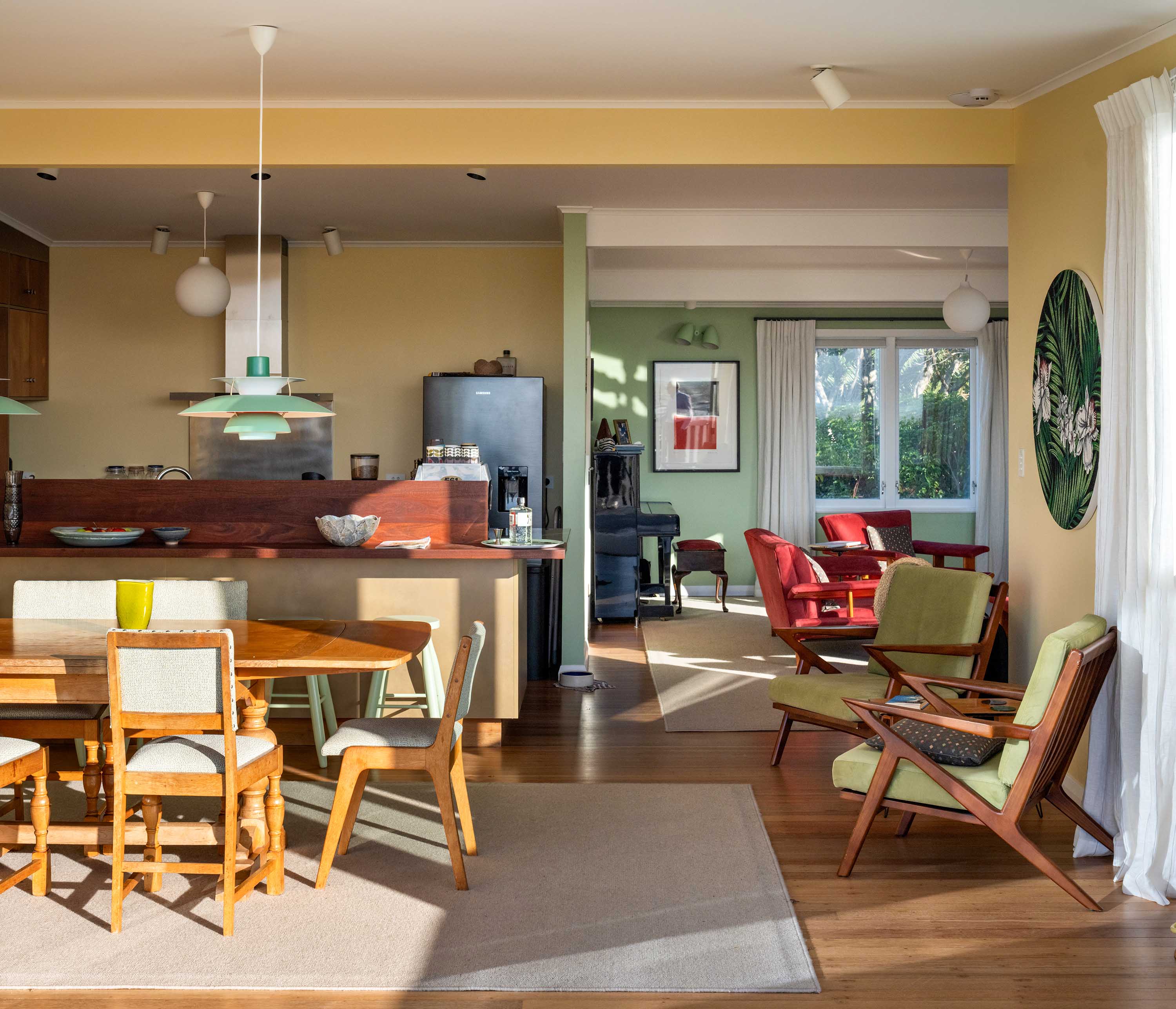
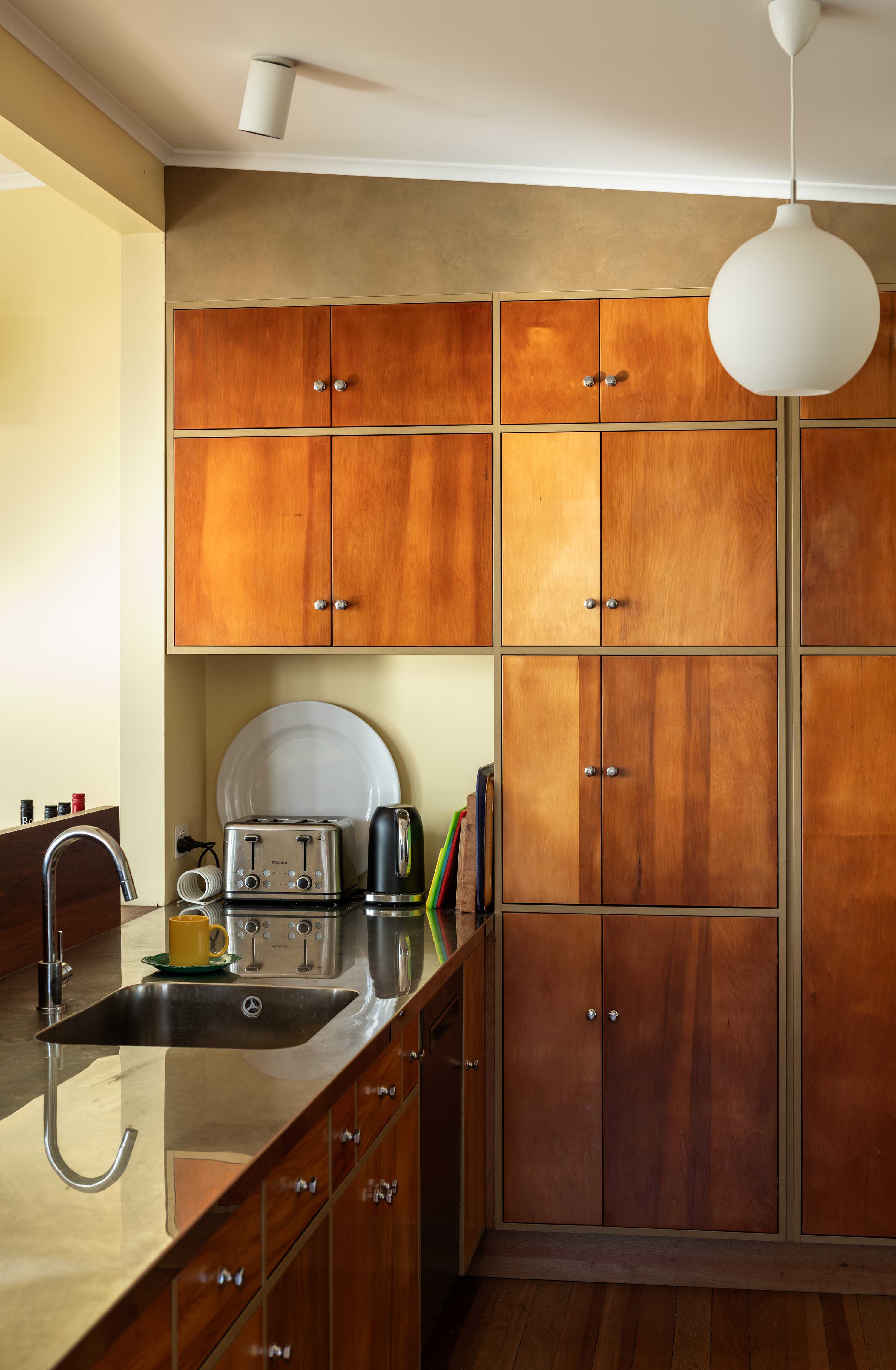
The design of the spiral stair with cross-braced timber went through many iterations before the team refined it into the clean sculptural form it is today. The result feels at once modern and timeless, precisely the architectural tightrope the whole project walks. Nothing illustrates that balance better than the kitchen. Every original 1950s door and drawer front was removed, measured, remachined and reinstated. “We worked out how to reuse 80 or 90 percent of them in the new kitchen,” Gardyne says. “That creates one of those little memories of the old kitchen.” The knobs and hinges are original too. Alongside them sits a contemporary kitchen with induction cooking and stainless-steel surfaces – amenity, but not amnesia.
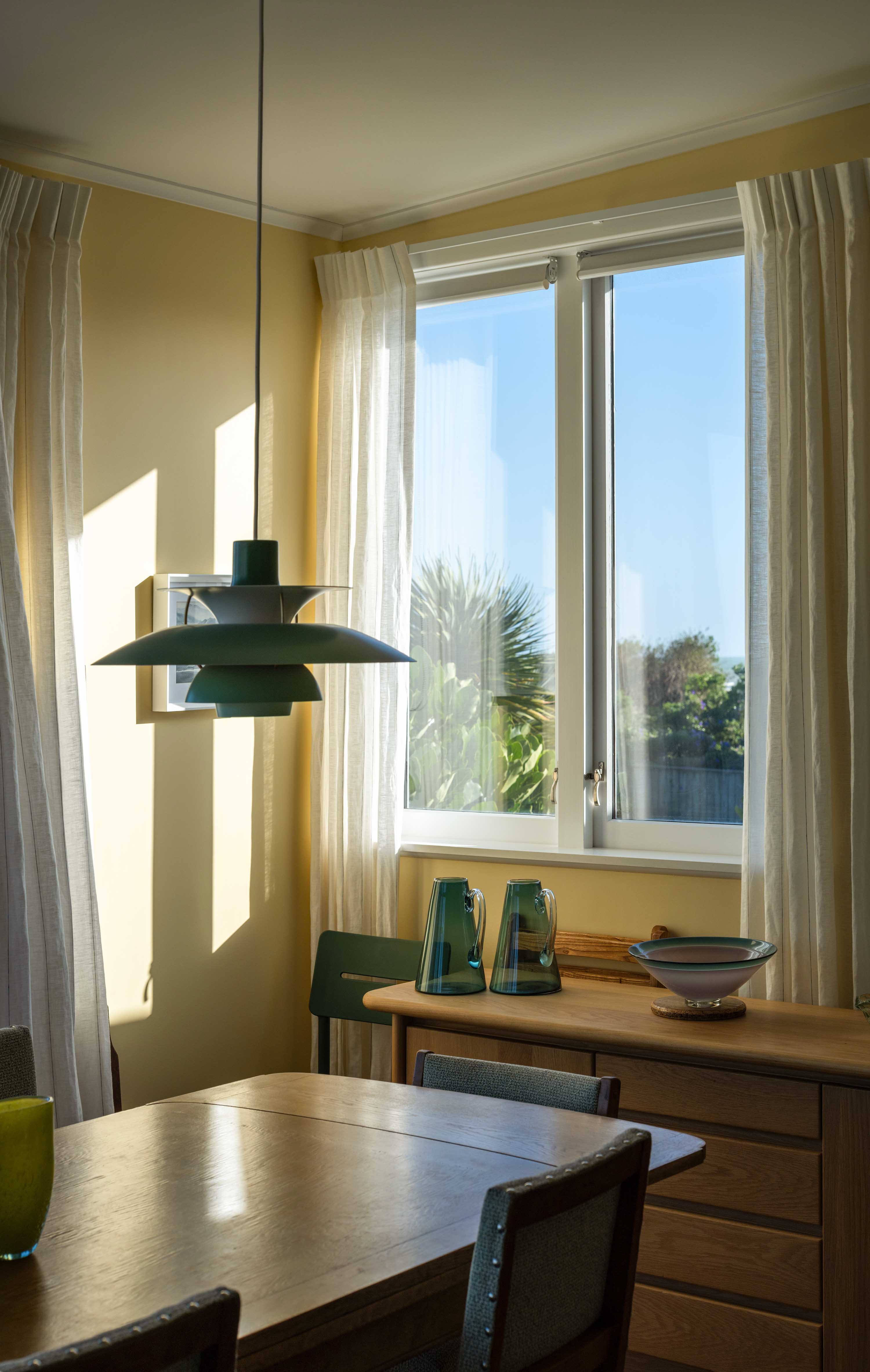
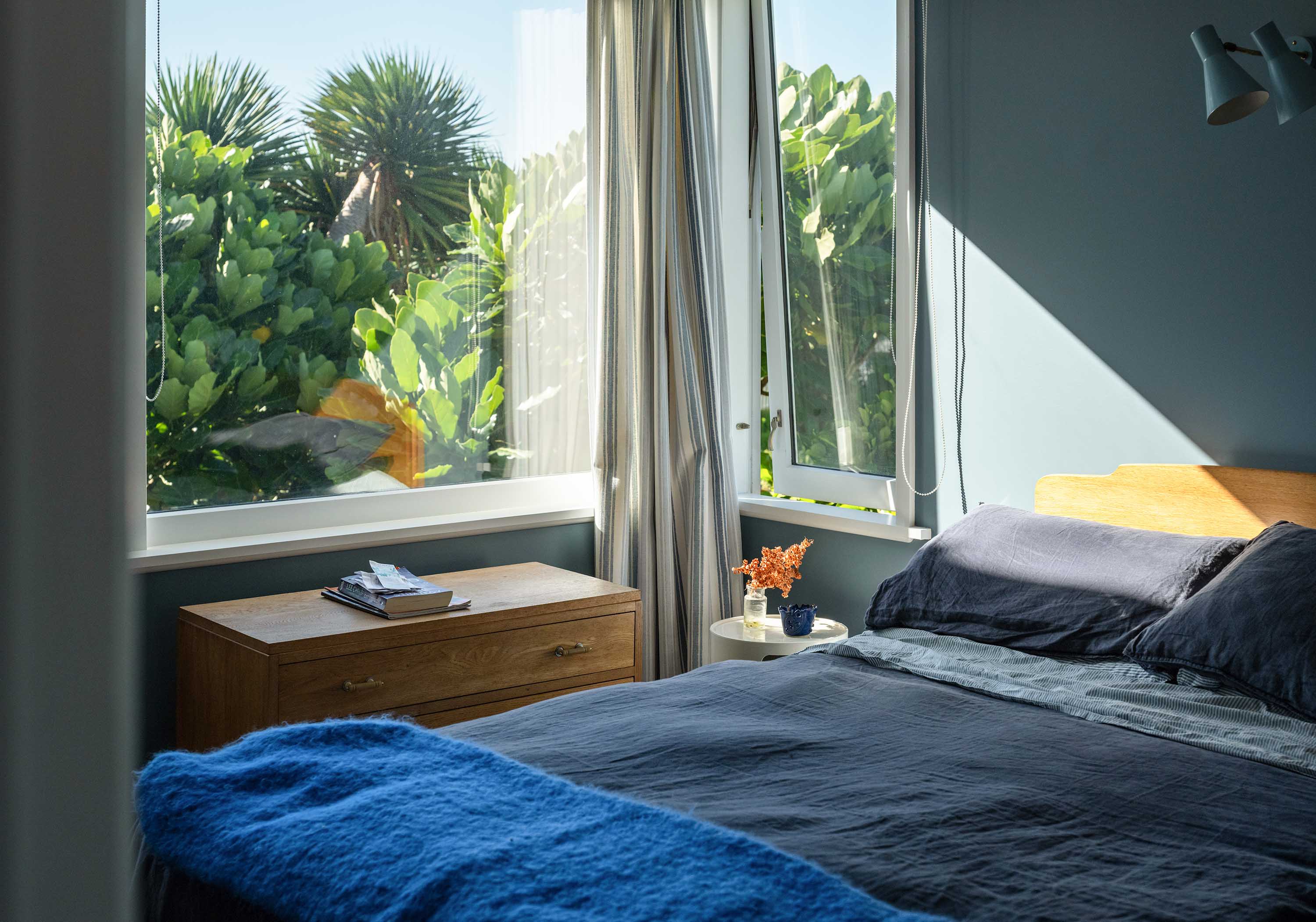
The same philosophy governed the interior colour palette, led by interior designer Trish Thomas, who had also worked with Dunlop on his Wellington home. The green walls, the red on the recovered sofas, the pink in the girls’ room, the blue in the guest room were all drawn from hues already present in the house – in old wallpaper, in faded cushions, in the original paint beneath the linings. “Everything was very carefully curated to be consistent with the history of the house,” he says. The exterior colour, a deep red-oxide that’s bold and confident against the vivid lawn came from a similar act of interpretation. “It originally comes from red-oxide paint, so it is a heritage colour,” Gardyne explains. “It was simply to move it away from what was a very old-world, English feel, to something that had more of a connection to the culture of this country.”
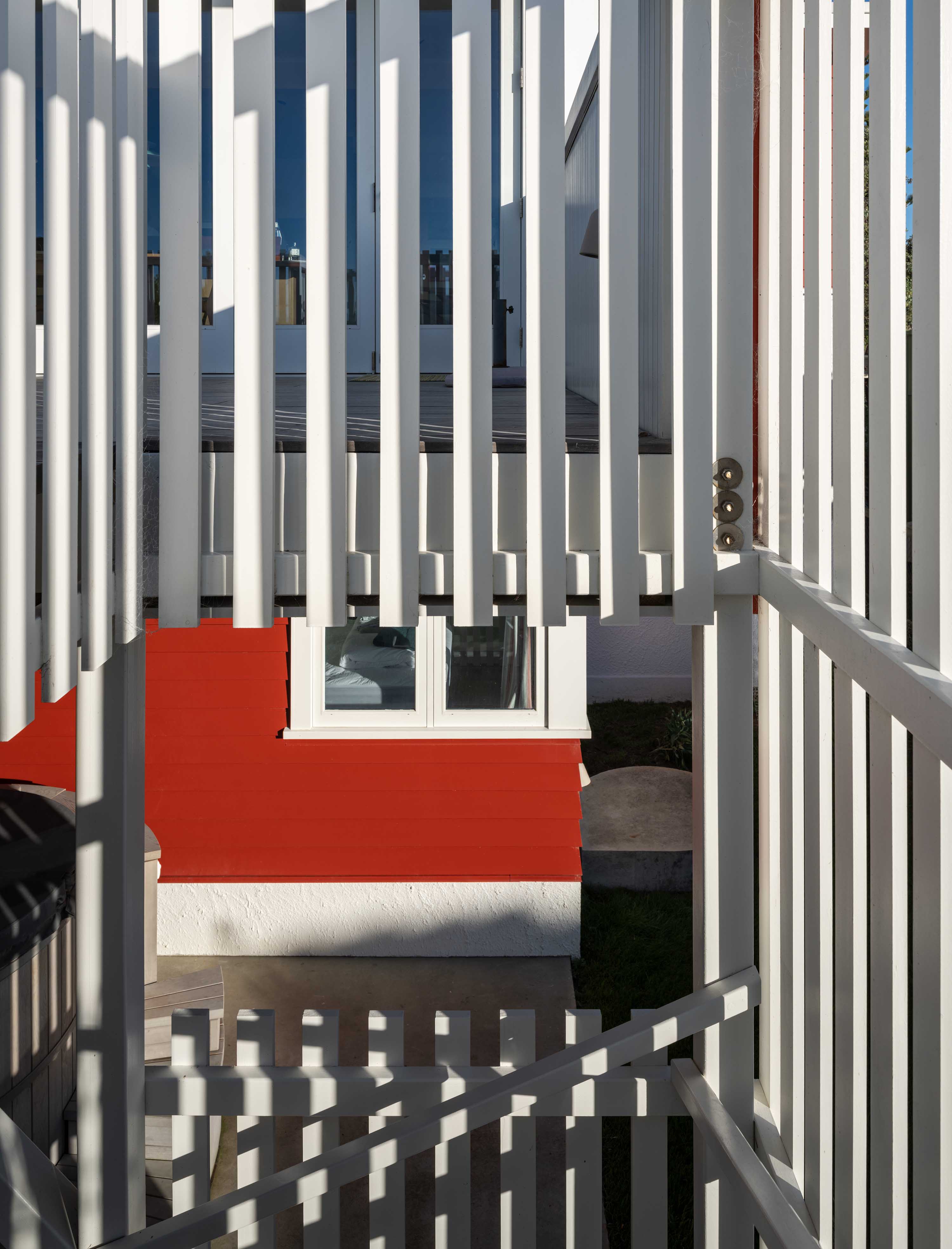
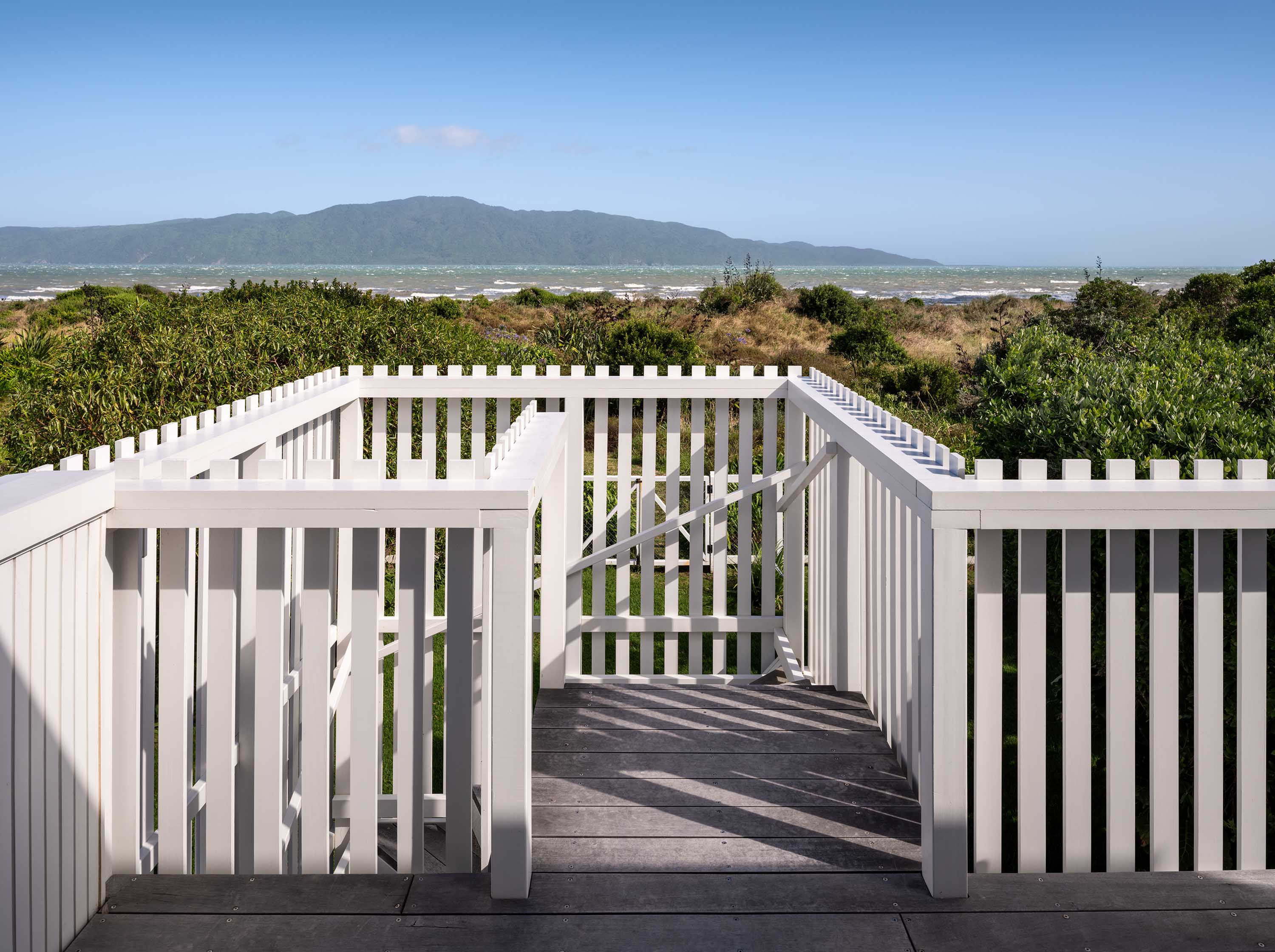
The vertical timber slatting that ties the new additions to the old structure was another considered decision. A glass balustrade, Gardyne felt, would be impractical in the salt air and aesthetically foreign to the mid-century house. The timber work, meanwhile, creates patterns of light and shadow that shift through the day, knitting decades of building into a coherent whole. Dunlop and his partner and dogs now drive up from Wellington every fortnight, 50 minutes on the motorway, arriving in a different climate, a different light, a different life. His brothers and sisters and their families still use the house from time to time. Grandchildren and great-grandchildren sleep in the bunks Dunlop's grandfather once slept in, under that Wild West wallpaper. And now, 70-odd years after it was built, with five generations passing through, it’s being used more than ever.
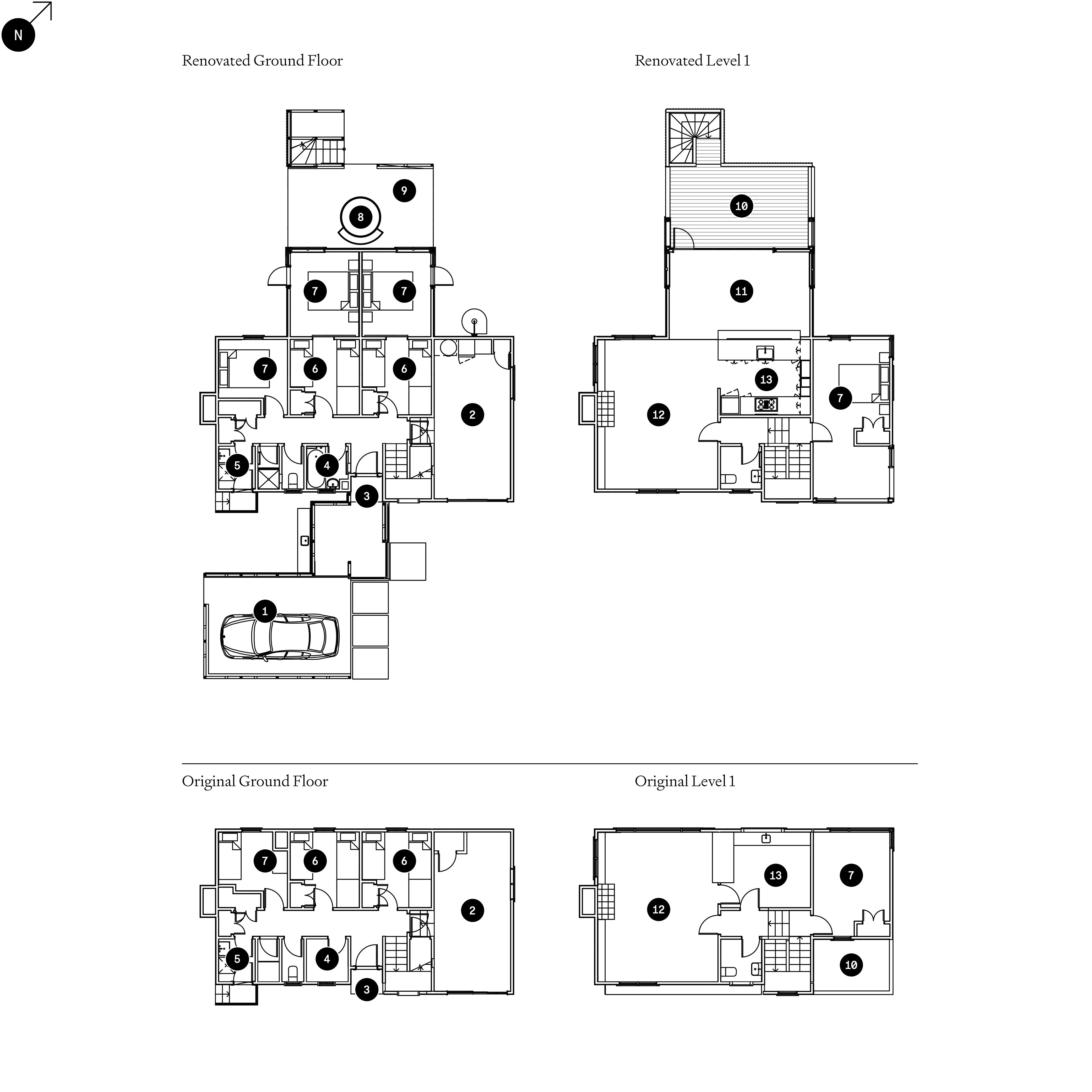
1. Carport
2. Garage
3. Entrance
4. Bathroom
5. Laundry
6. Bunkroom
7. Bedroom
8. Hot Tub
9. Terrace
10. Deck
11. Dining
12. Living
13. Kitchen
Related Stories: