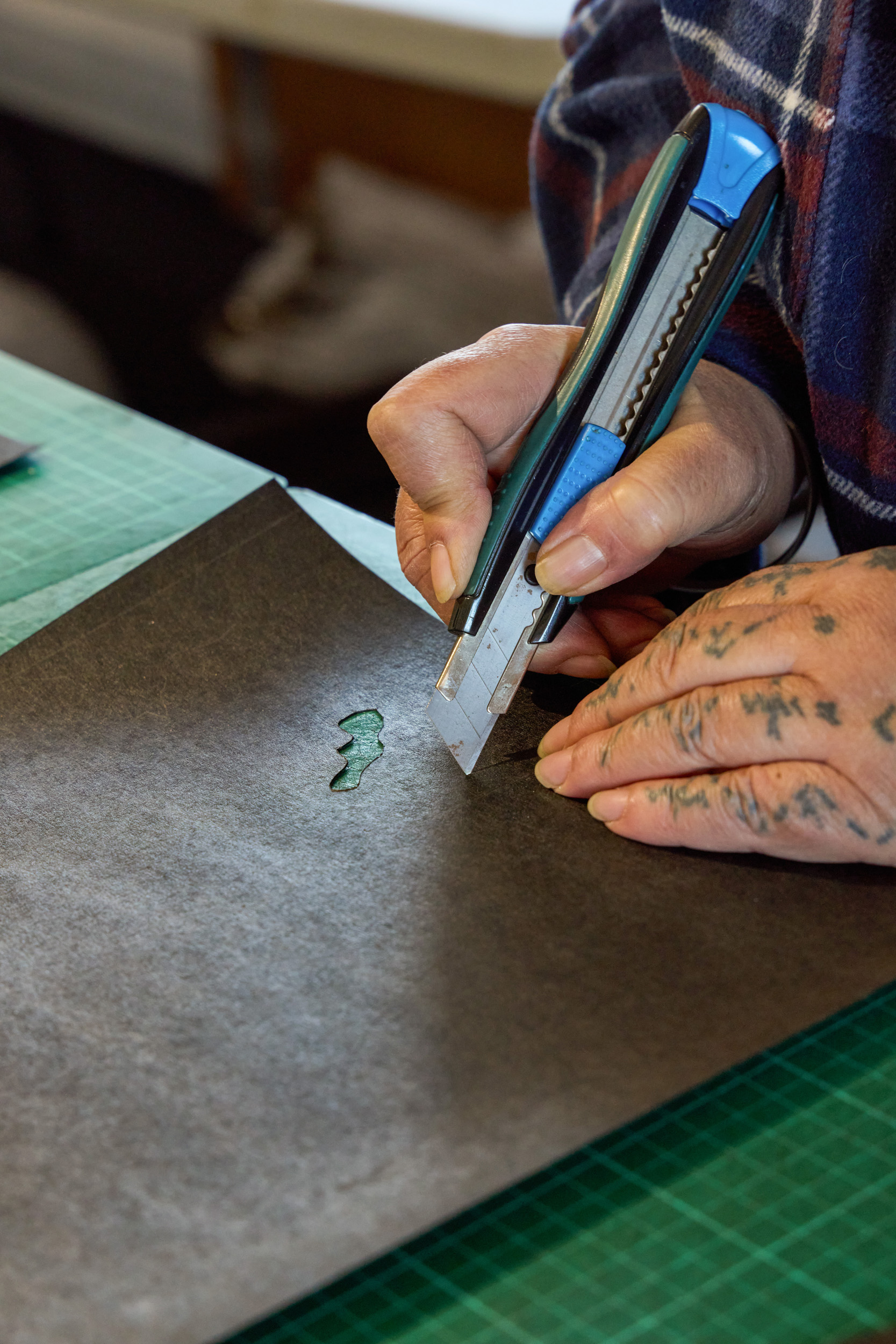
Lonnie Hutchinson (Ngāti Kūrī ki Ngāi Tahu, Samoan, Celtic) is an extraordinary multimedia artist whose practice, ranging from sculpture and installation to architectural design and performance, at every step acknowledges and is nourished by her Polynesian heritage.
Although Hutchinson’s work is primarily three-dimensional, its initial source is drawing. She finds influences in Polynesian aesthetics – advertising, street art, hip hop – reinterpreting them in the interplay of positive and negative space to explore historical and contemporary injustices against the peoples, particularly indigenous women, of the Pacific. Moving between past, present and future, she investigates the in-between, neglected and spiritual spaces of Pacific identity, riffing on racism and deconstructing myths and stereotypes.
“My art is inspired mainly by whakapapa,” she says. “My race is not one but many, which is my identity. I am of Māori, Samoan, Tongan, Hawaiian, Portuguese, English, Scottish, Irish, Welsh and Scandinavian descent. My DNA revealed this, but I knew through stories and oral discussion with family members over the years, some who have since passed, this was pretty accurate. There are many like me who share many different bloodlines.
“When people ask you, ‘Are you more this than the other?’ When white people – mostly naïve people, smart-arse people, some want to make a big joke of it – ask, ‘Which part of you is Samoan and which part of you is Māori?’, I respond, ’It’s not a competition.’ I don’t wake up and decide I’m more one than the other today. I am who I am. I’m a collective of cultures, and I’m proud of that. I’m inclusive of all indigenous women’s craft practices. That’s including my Scottish and Irish ancestry. I’ve always been drawn to women’s history, their lives, accomplishments and their truths as human beings.”
True to that rallying slogan of second-wave feminism, the personal is political. “I think we are all political to some extent,” she says. “You don’t have to be a loud activist all the time. Subtlety and continuity works too. They are the same thing. In my art, I try to keep women’s identity and stories alive. Repetition of motifs and patterns that repeat a formal dialogue in paper, underpinned by a conceptual narrative.”
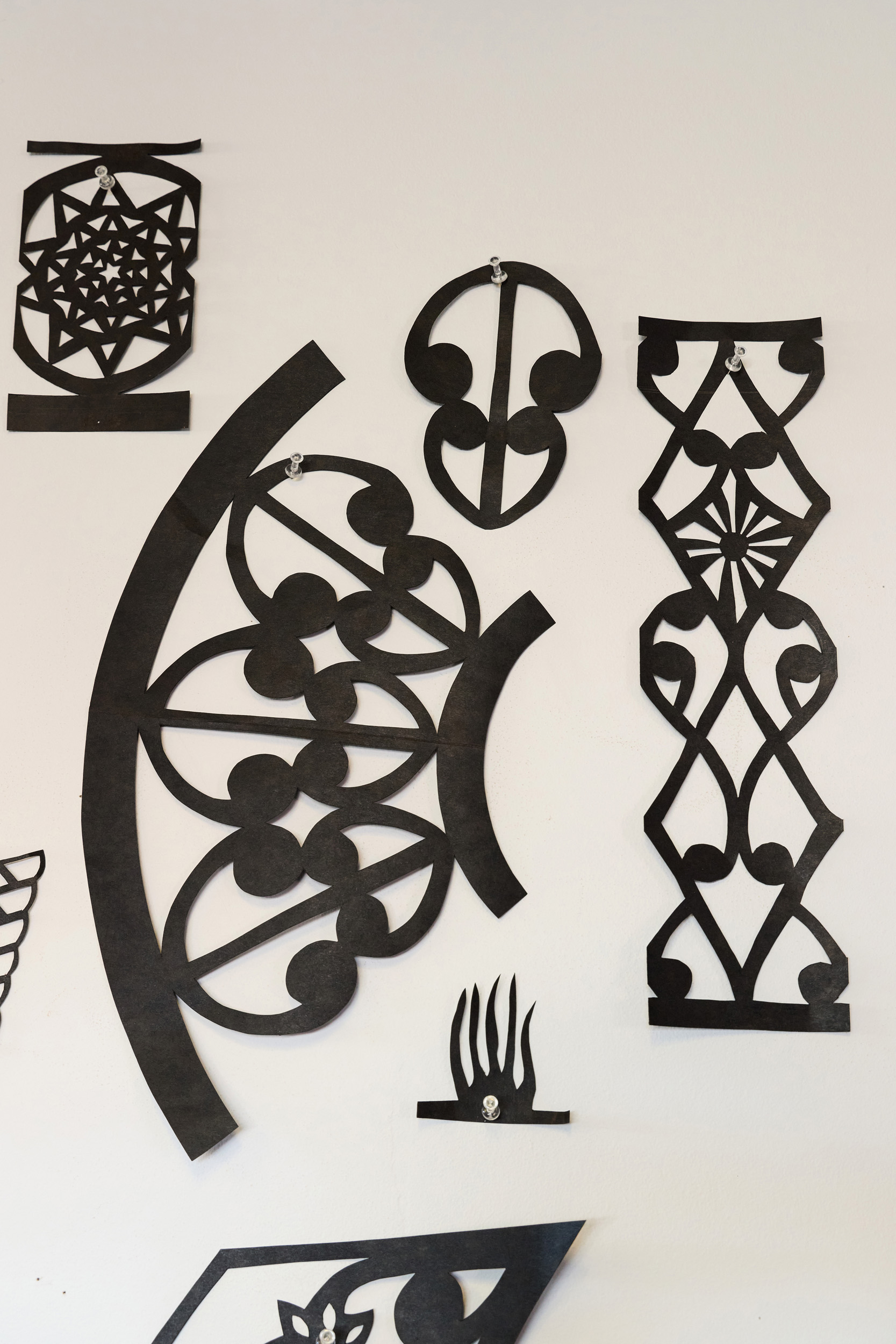
In many ways, it is that positive and negative space, those things alluded to and given presence by their absence, which give Hutchinson’s work much of its power. The shaped voids are like the people pushed to the margins by colonial capitalism, and the things left out of the discourse. The cutout is the artist’s signature across media, whether it be black builder’s construction paper, acrylic, aluminium or Corten steel. Recalling tivaevae and tapa, the artist derives her motifs from her cultural heritages and figurative references to the effects of colonisation.
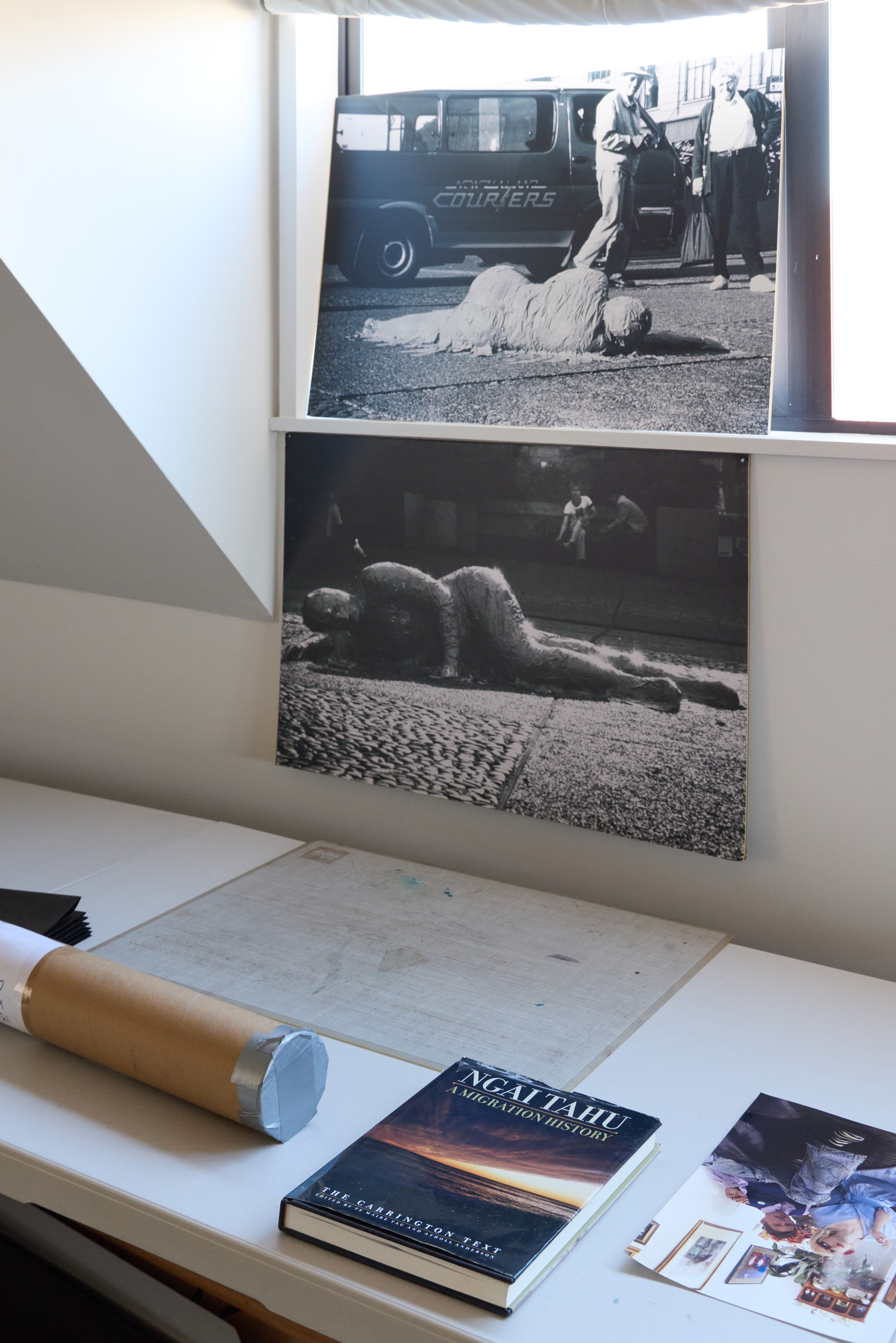
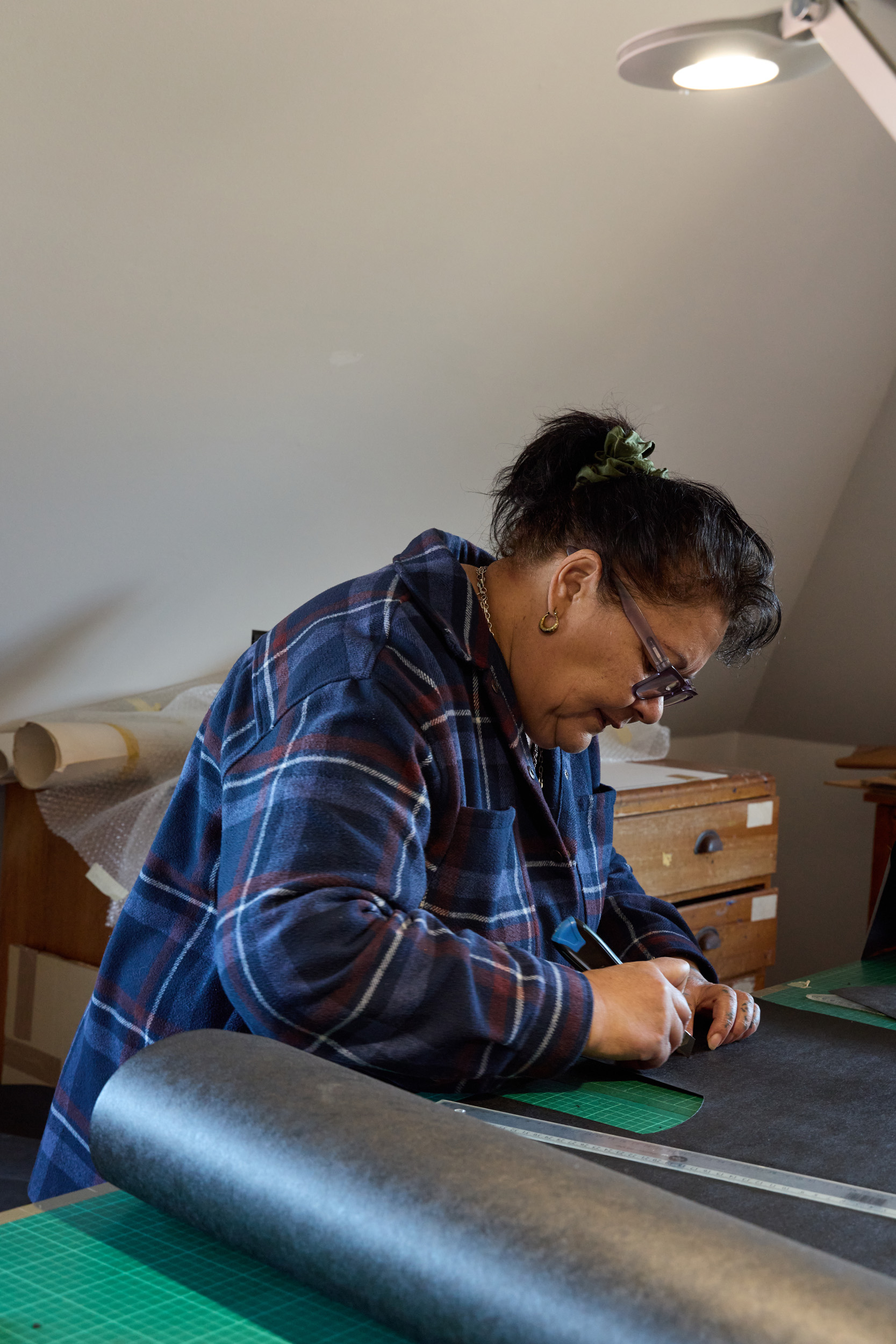
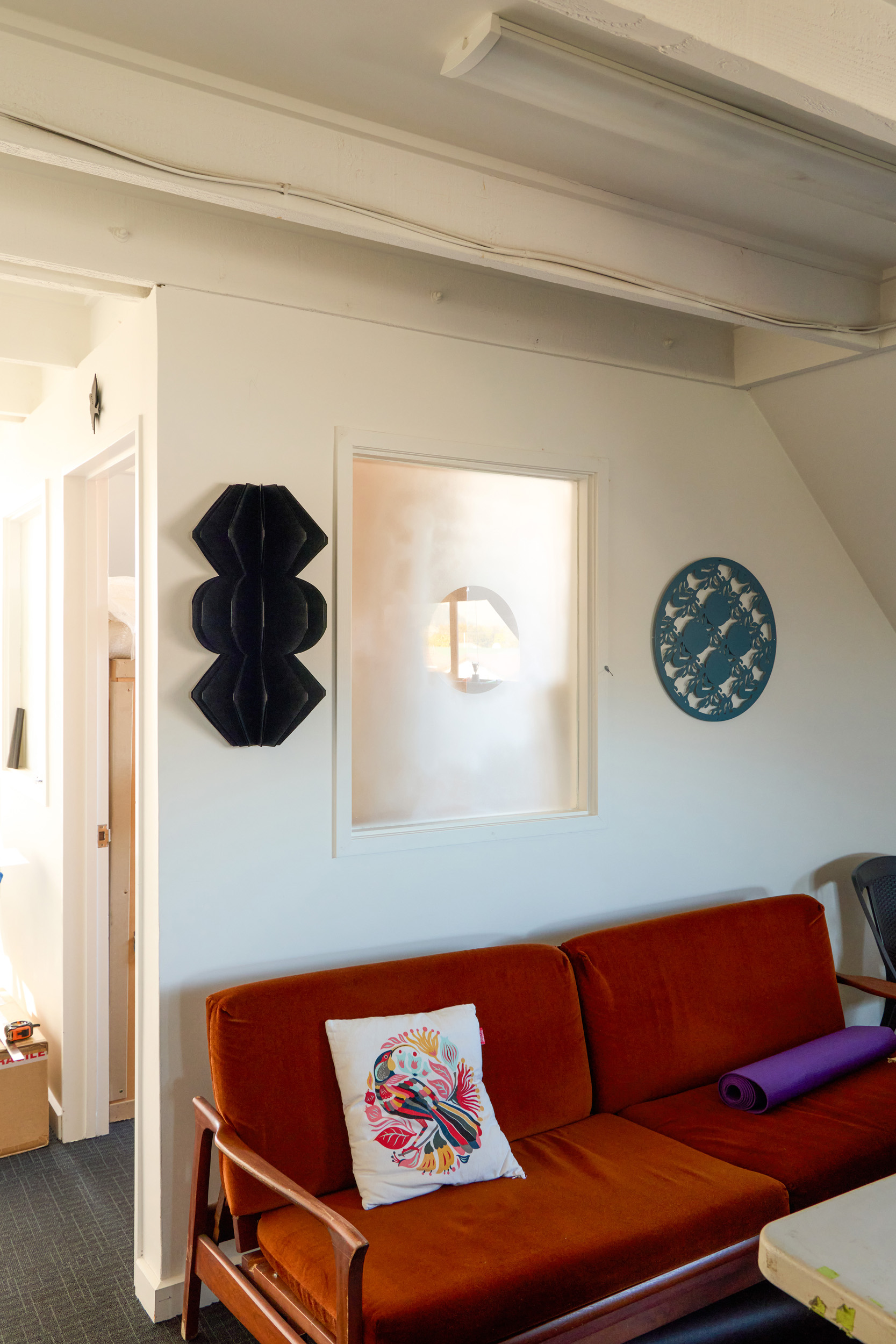
“I like the cutting,” says Hutchinson. “To remove material to define a shape. My favourite material to cut is black builder’s paper.” Cutouts are an old artform. The French, Spanish and other cultures made cutouts, but she wasn’t aware of that when she started making them. “I started with mirroring kōwhaiwhai patterns, and it evolved from there. Every design starts with a cutout in builder’s paper, and some of those designs are digitised to make aluminium, steel and acrylic works.”
Hutchinson practices across a range of contexts. While she does make smaller sculptures, sought after by private collectors, she is perhaps best known for her public commissions, including Honoa ki te Hono Tawhiti (2011), 12 permanent wall works in Auckland Art Gallery Toi o Tāmaki’s extension; the vinyl-cut murals All that you breathe (2013) at Victoria University of Wellington; the concertinaed panel work Aroha ki te Ora (2020) at Britomart in Auckland; and Hana (2022), in the foyer of Te Pae Christchurch Convention Centre. These achievements were recognised in 2024 when Hutchinson was made an Arts Foundation Te Tumu Toi Laureate.
The turn to architectural intervention started with the Auckland Art Gallery refurbishment. “I’ve always been interested in the built environment and how that interacts physically and emotionally within our daily lives,” she says. “I think my very early performance works were contemplating those interactions with the public. My body being the introduced object in very public spaces in the site-specific performances of Can You See Me (1997-2022).”
It was an adjustment shifting from studio to building site, but Hutchinson took it in her stride. “It’s quite a bit about relationships with others,” she says. The design teams are large and include architects, interior designers, engineers, project managers, cultural advisors, maintenance and cleaning specialists, and various contractors. The artist works to the same conceptual brief too – but sometimes they have to advocate for a different approach.
Take her installation, Hana, at Te Pae in Ōtautahi. A work which features three koru-shaped, chandelier-like installations made from 11,000 glass and acrylic beads and is inspired by the Ngai Tahu creation story, and the concept of ahikā – keeping the home fires burning, Hutchinson had originally planned for a single suspended work. But the concept evolved once she started pacing out the site. “The space was huge, and one work would look insignificant,” she recalls. “Conceptually I was focused on the Ngāi Tahu creation story, so I had to have three.”
Through conversations with architects and project managers, she persuaded the team. “I had to bring in my own engineer at the start because of the complex architecture on that side of the building – the weight of three works was getting close to two tonnes.” To compensate, some very tricky and complex bracing had to be put into the ceiling. Now, hanging in the foyer, the work has become Te Pae’s signature piece, calling people into the convention centre. It makes people feel welcome, but it also sparks bigger questions – and no one can imagine the space without it.
Lonnie Hutchinson
Related Stories: