I first saw a pot thrown when I was about six, and thought, “When I grow up, I’m going to do that.” I messed around with ceramics in my late teens and early twenties before stepping away, then returned to it in earnest around 2014, after my mum died. I was doing too much – work, volunteering, constantly giving energy outward – and heading for burnout. I needed something for myself. So I came back to clay, and quickly zoned in on the potter’s wheel.
I try to bring a sense of place to what I do. I live around Whakaraupō Lyttelton Harbour, where the water and hills are so beautiful, so ancient, and I like to channel those colours and that geology into my work. Predominantly, I work with Nelson clays, but I’m starting to test and blend Canterbury clays with an eye to transitioning towards local materials. Pottery takes a lot of energy to transform clay into ceramic, so I try to offset that by being resourceful. I’ll often use found clay to create my surfaces and glazes, and incorporate ash that comes from my own fireplace and from those of friends and students.
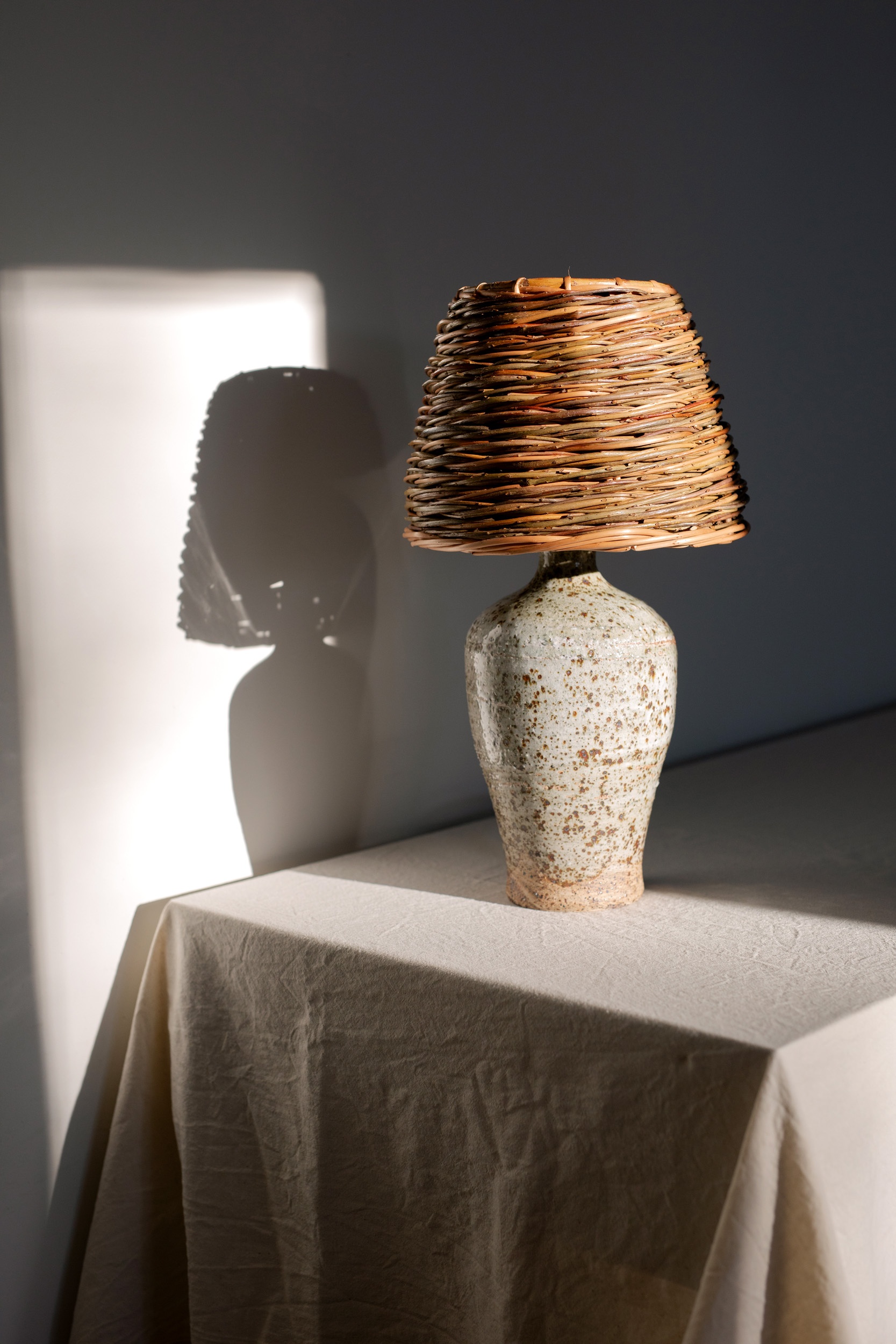
The lamp is something I’ve wanted to create for years. I’m not really a solo creator. I’m happiest working with others and responding to their ideas. Diana Duncan (@swampcitybasketry) and I had collaborated before on teapots with woven handles, so when the lamp idea came up, I asked if she’d weave a shade. As it turned out, she’d already been mulling over pendant lights.
Diana is a willow weaver, taught by a master, and is so talented. She weaves baskets, kete, trays, all beautiful things, and is about championing local materials, craft and skill. She cultivates willow from coppices, travelling around Canterbury and into the red zone to harvest it. Depending on the cultivar, there’s an incredible range of colours, reds, greens, yellows, pale beige, and even blue tones.
She’ll look at my surfaces and respond to them, matching the willow tone and woven form to the ceramic base. I love the idea that one day she might make a shade, and I’ll create a base in response. It’s an ongoing conversation. At the moment, I’m leading it, but I like that we can switch roles. My objects are beautiful on their own, but when two craftspeople and two materials come together, something special happens. It’s greater than the sum of its parts and it makes my heart sing.
The thing about making functional domestic ware is that the ideas and craftsmanship behind a piece reach their full potential when it’s used. A bowl on a shelf is one thing, but put something in it, and it comes alive. Behind every piece are thousands of hours of practice, trialling, failing, succeeding, but then it finds its place in daily life. It’s appreciated because it was made by hand, with care, with skill.
Winn Ceramics
winnceramics.co.nz
Related Stories: