
St Luke’s Mt Albert church was built in 1872, designed in the Gothic Revival style by Pierre Finch Martineau Burrows, with additions by Edward Bartley a decade later as its congregation grew. It is now a category one historic place. “They’re usually very wedding-cakey, but this one is really clipped,” says designer and academic Andrew Barrie, who has a bit of a thing for Gothic Revival churches. “It’s got no eaves. From an architectural point of view, it’s very geometric.”
By the time The Reverend Clare Barrie – who is also Andrew’s wife – started in 2009, little had changed at St Luke’s in half a century. The church had been maintained, but the site had evolved in an ad-hoc way, with offices in a hall built parallel to the original church, problematic accessibility, and meandering circulation around and through the buildings. A small Skyline garage on the site functioned as a meeting room and storage space for the choir. The GFC had scuppered rather grand plans for a new building connecting church and hall.
Possibly inevitably, Andrew Barrie was drawn in a decade or so ago to devise a simpler solution for the site. The need was multiple: better offices, better social spaces, better accessibility and rental income. “The building had to be able to wash its own face,” he says. “It had to be an asset, not a liability. It’s the classic thing with these old churches, they have lovely old buildings with very high maintenance needs and not a lot of income.”
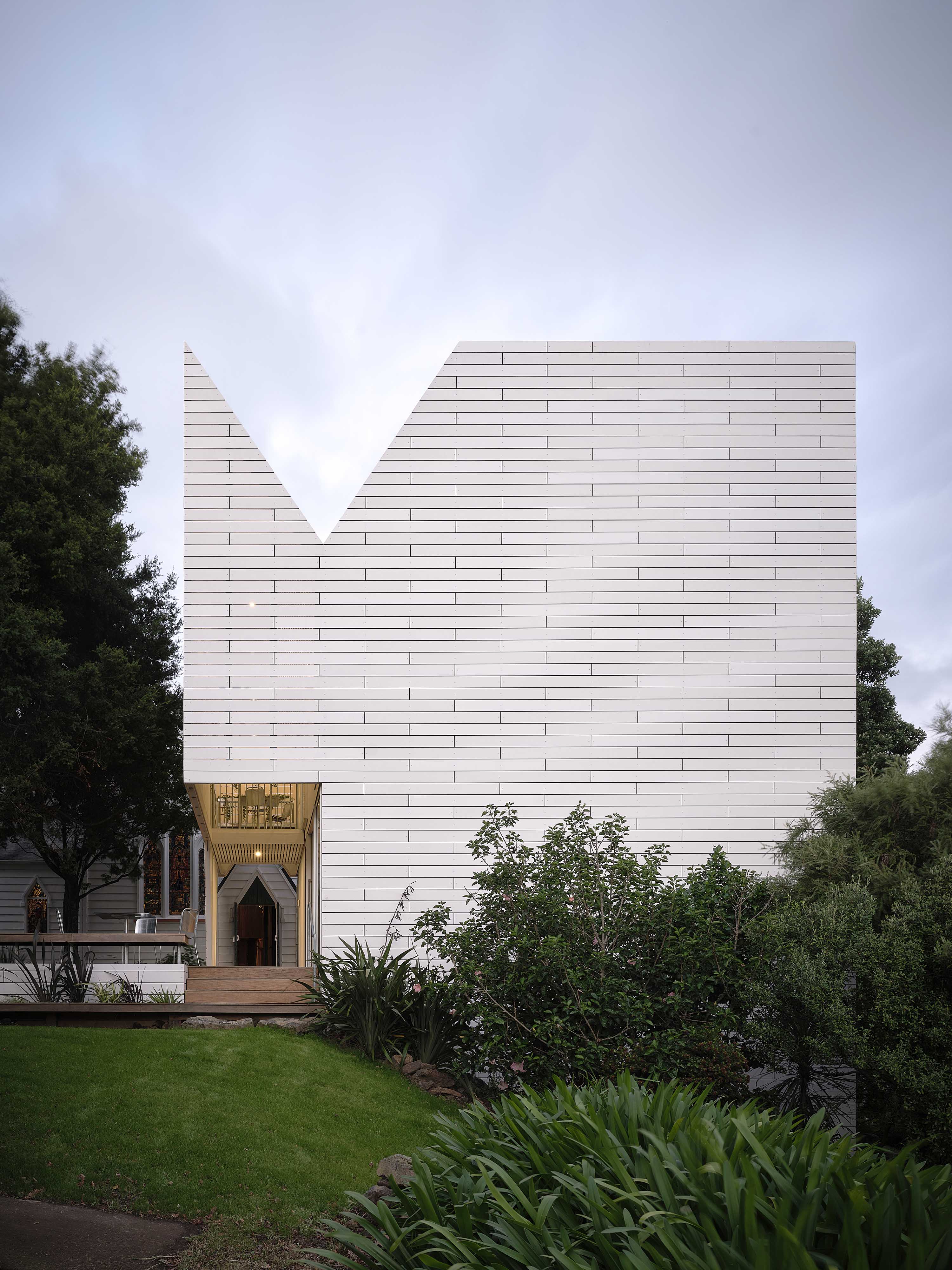
Eventually, after many discussions and sketches, Barrie devised a three-storey tower, built on the site of the old garage. There’s an office-for-rental at basement level, social spaces (for both the congregation and for hire) at ground level, and office spaces and meeting rooms on the top floor for The Reverend Barrie and an administrator. In front, built around a majestic tōtara planted to commemorate the centenary of the church, he designed a generous deck, level with the church floor, that solved most of the site’s accessibility problems in one simple move.
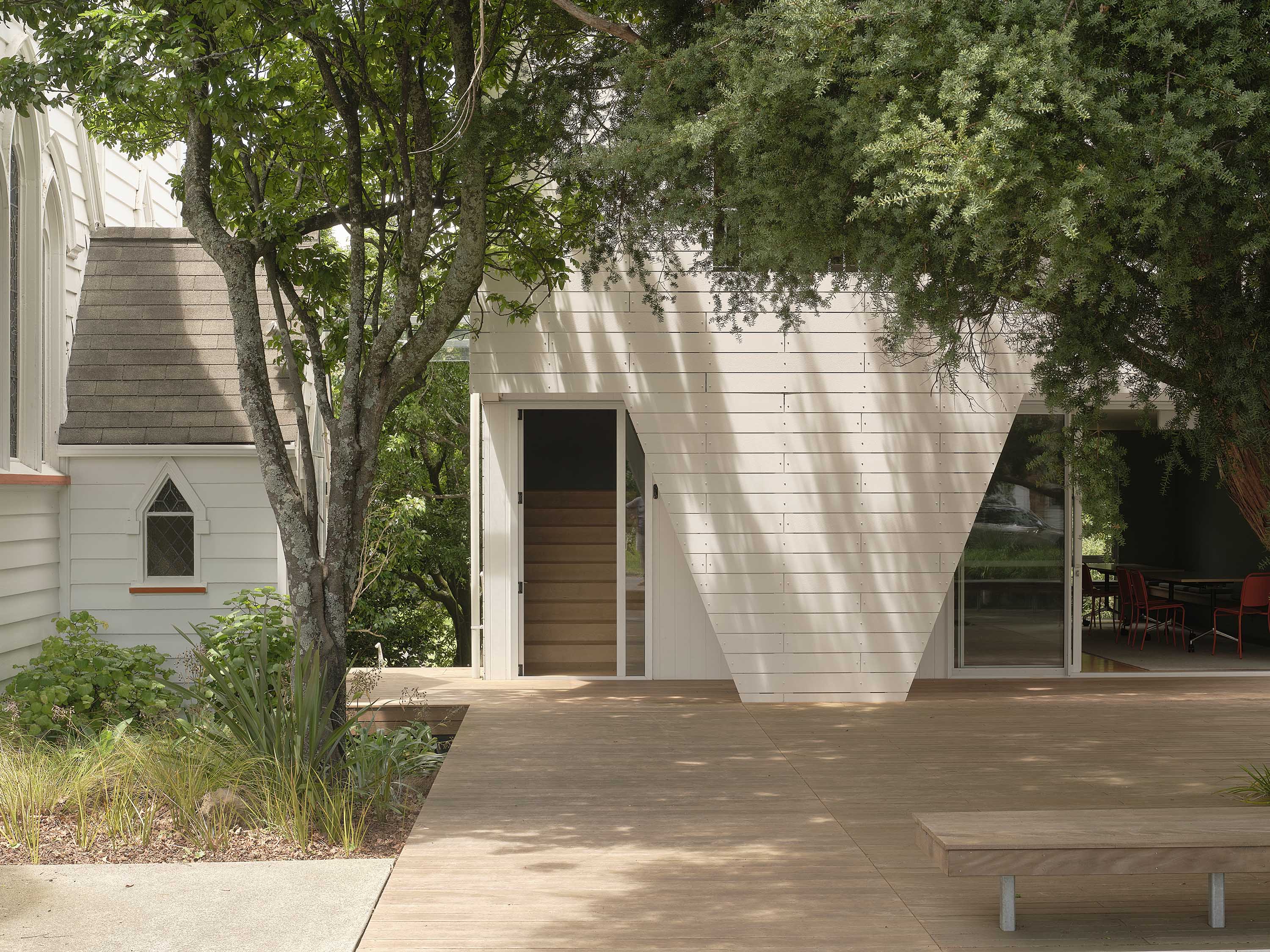
As noted, Andrew Barrie has an affection for Gothic Revival. “We wanted to make the great-great-grandchild of the original building,” he says, “so it has some resemblance, but acknowledges the passage of time.” As he puts it, they effectively took the idea of the original church and treated it like a cake, cutting a slice out of it. “But we cut out the weirdest possible slice.” There’s a familiarity to the tower. A rainscreen of white-painted fibre-cement boards speaks to the rough-sawn timber weatherboards of the church, while triangular roof shapes and gable pitches echo aspects of it exactly.

The budget was tight. It is a deeply practical building with a concrete- block base and a lightweight timber top. He deliberately kept it separate to the heritage-listed church. Instead of a link, he devised a glass canopy attached to the new building that stops 20 millimetres short of the church’s front porch. The congregation was deeply involved in the building’s construction. Rather than bringing a digger in over sensitive tree roots and next to a heritage-listed church, working bees were held to excavate the basement by hand. Seedlings and cuttings from around the site were gathered up, put in pots and nurtured at home for two years before being brought back as landscaping. Existing church chairs were stripped back, and powder-coated and painted to match the building.
Barrie’s one big architectural move was to extend the rainscreen out 1.8 metres to create a deep, lofty covered verandah. “The architecture stops here,” he says. “We knew we could make some drama, but only if it was the cheapest bit of the building.” The verandah covers the whole front façade: behind it, there’s a covered entry and a covered deck that looks out into the tree.
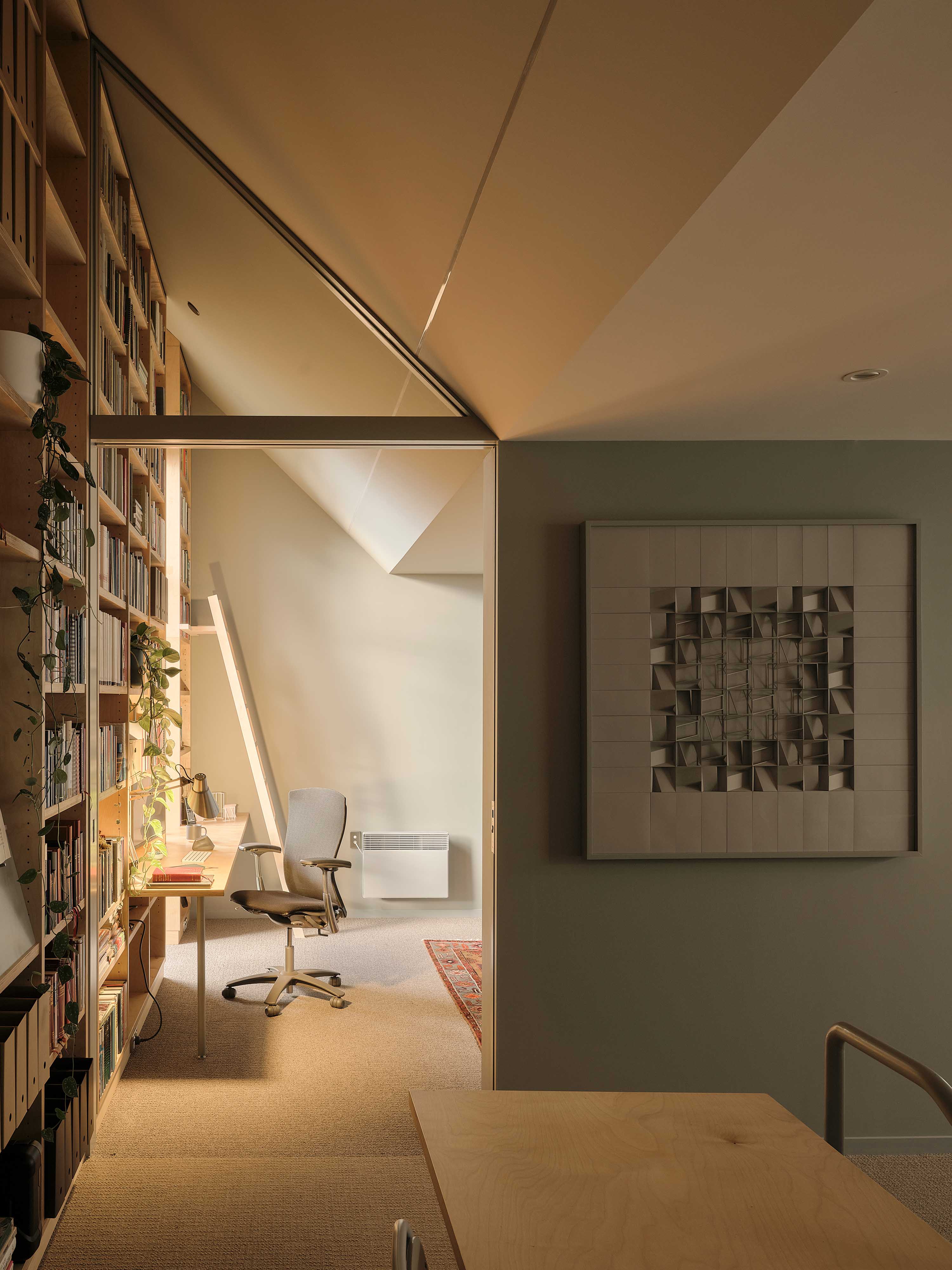
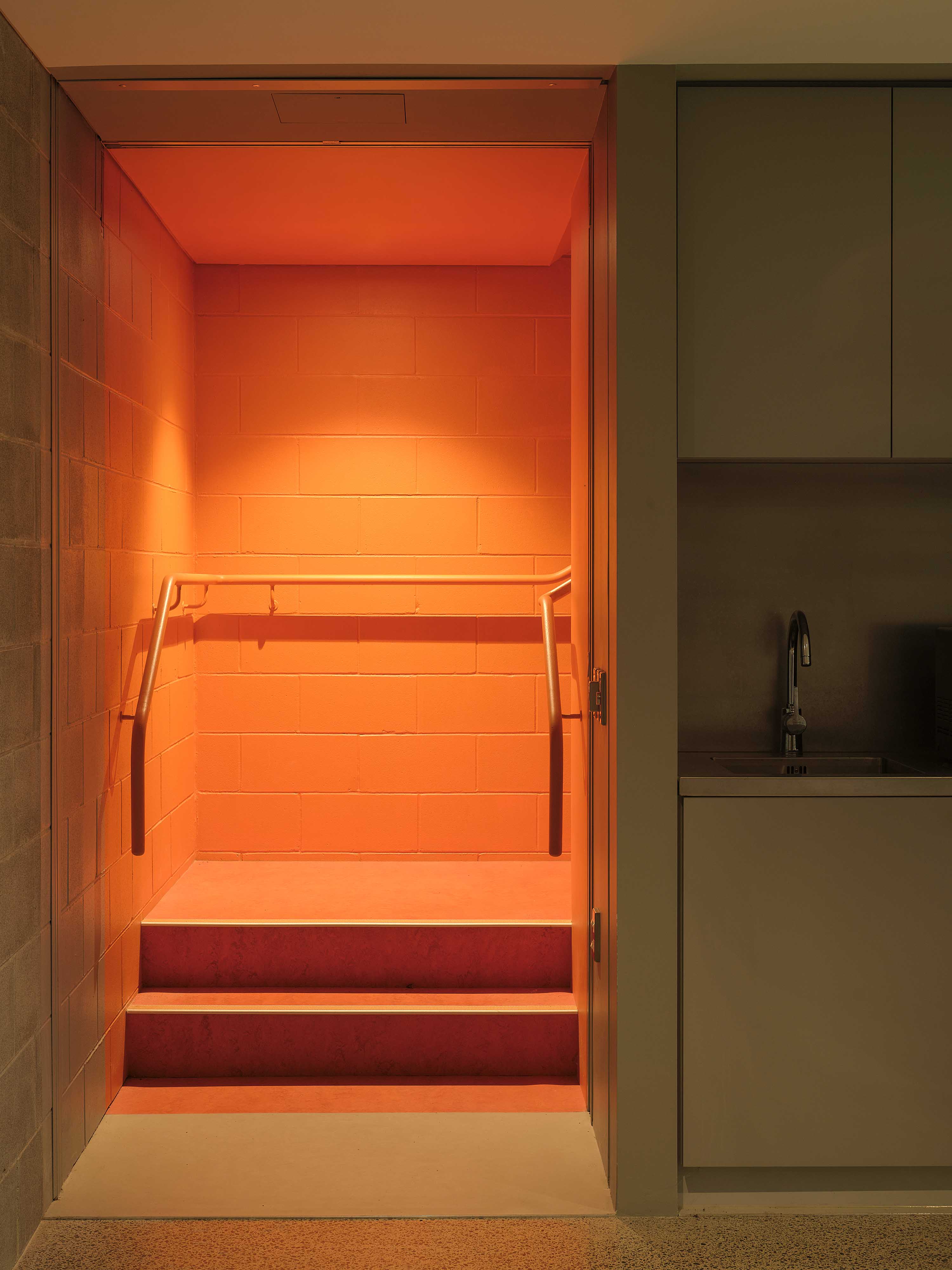
The details are key. Carefully placed windows offer sightlines across the whole church site, as well as to Ōwairaka and Maungakiekie. The rainscreen is precisely designed to the size of the fibre-cement boards, on a 600-millimetre module, all of which was worked out and drawn before the building went up. Inside, it’s just as rigorous, with a minimum of materials and colours: a concretey sort of grey, emergency orange, birch ply. Upstairs, the space is airy, with a wall of floor-to-ceiling shelves built from 30-millimetre birch ply. It feels generous, despite its frugal budget. “It really is a simple thing,” says Barrie. “There was a lot of talk about the respectable minimum.”
All of which is nice, except the real treat is reserved for the congregation. On Sundays, instead of traipsing around and through the church yard to the hall, they walk out the side door to the new building and have a cup of tea outside – sheltered from sun and rain by the enormous old tōtara.
Related Stories: