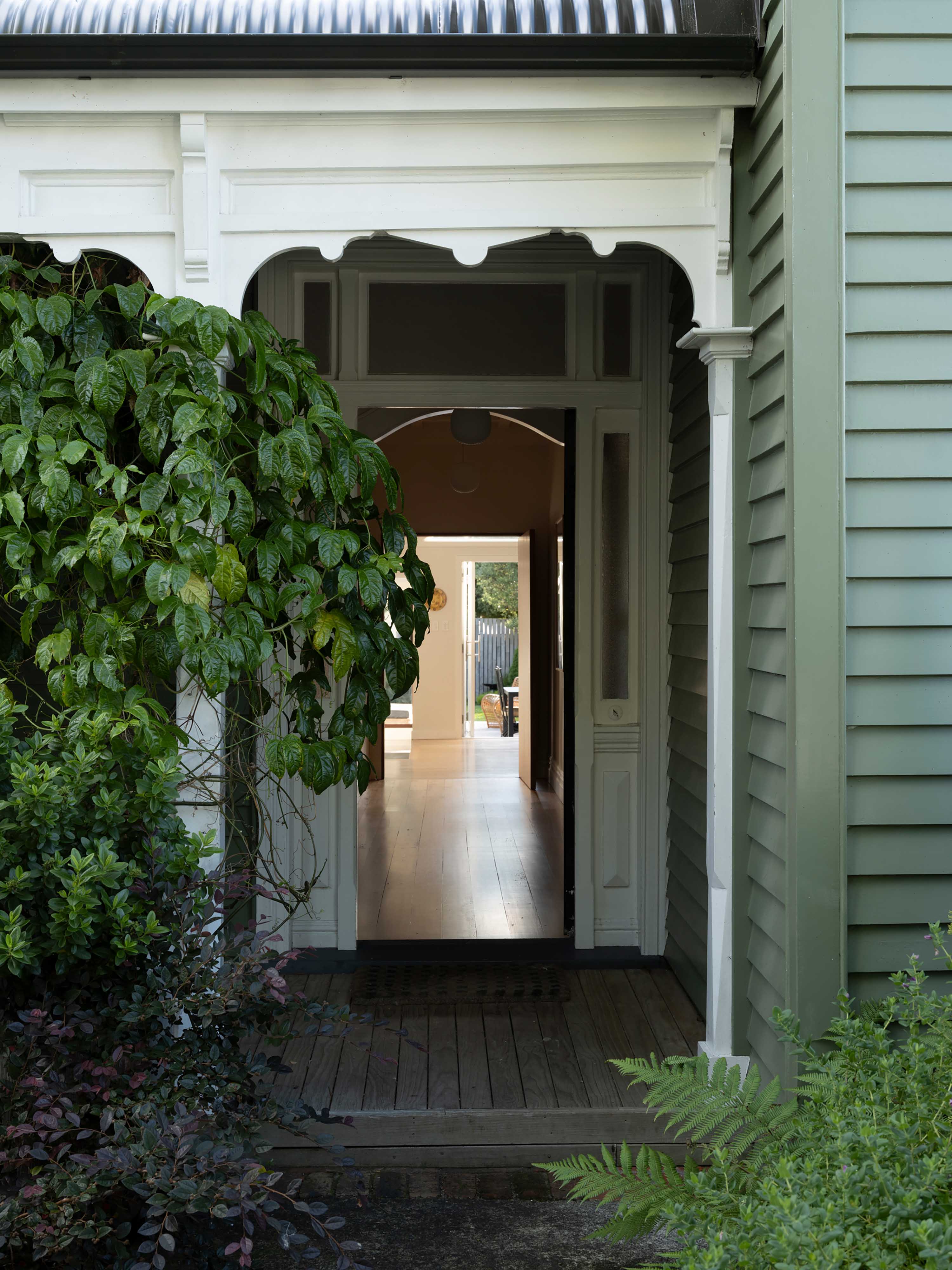
Hannah Chiaroni-Clarke’s day job is designing multi-residential apartment blocks, mostly for the developer Ockham Residential. Her designs have made quite an impact around existing neighbourhoods in Tāmaki Makaurau: the buildings have a sense of civic-mindedness, and a design approach that sets them apart from standard developer offerings. There’s brick, maybe coloured, and communal facilities including residents’ lounges and shared swimming pools.
When it came to renovating her own home – a delightful transitional villa in the Auckland suburb of Grey Lynn – she found herself operating at a very different scale. “This was the opposite,” she says laughing. “It was lots of detail and working out every tiny little thing.” Though it wasn’t completely new ground. In a previous life, she’d worked at a studio in New York specialising in high-end interiors. “But it was more tricky than I realised it would be, making decisions for your own house.”
Chiaroni-Clarke and partner Shaun Hayward bought the house in 2023, from a couple who’d owned it for 25 years. People often describe houses as having good bones, but this place had excellent ones. The previous owners had commissioned architect Briar Green to extend the home in two stages in the mid-2000s. Green is known for her sensitive, finely grained work on bungalow and villa renovations: her work delights in timber, with a lightly modernist influence and that certainly shows here.
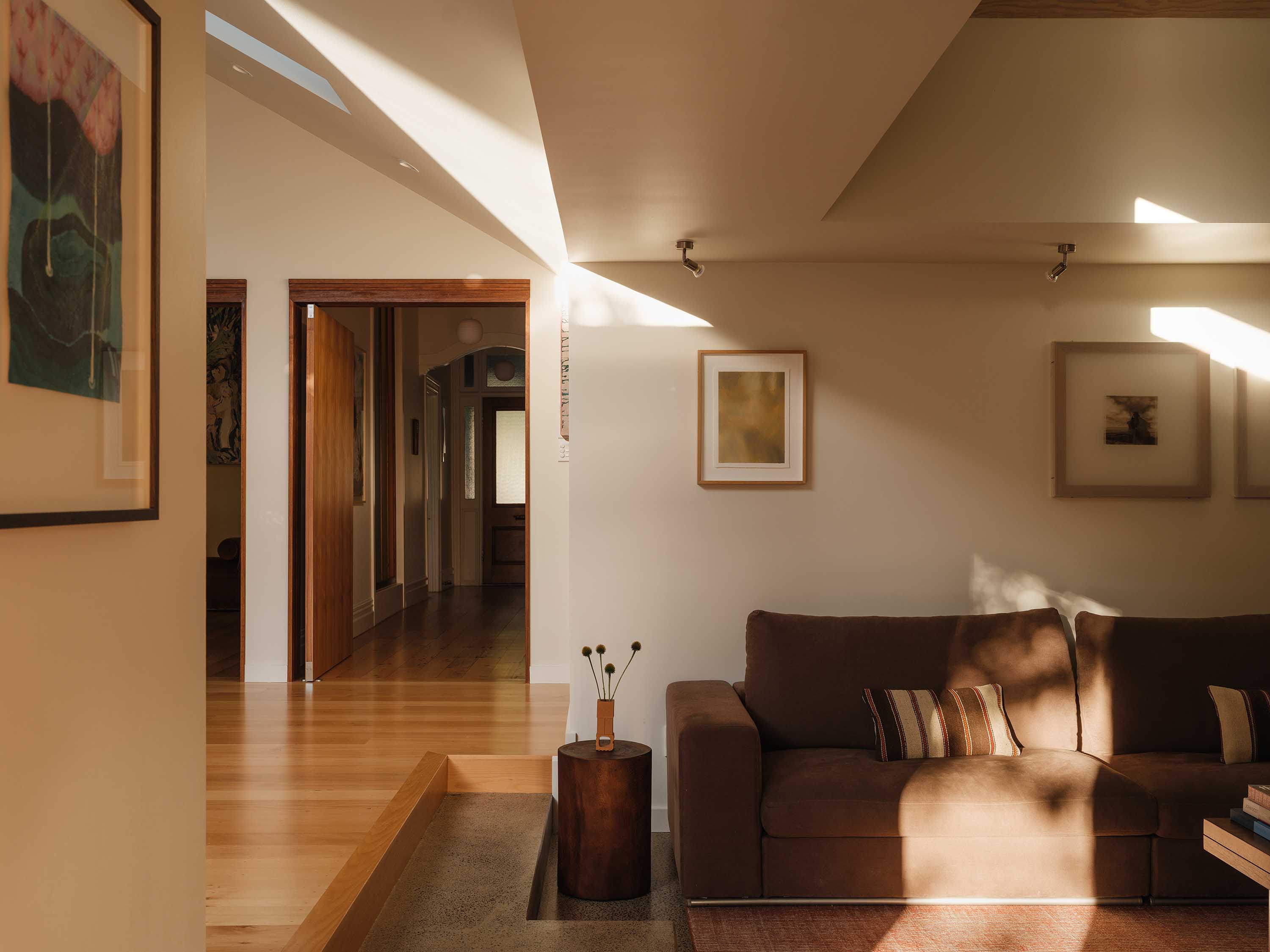
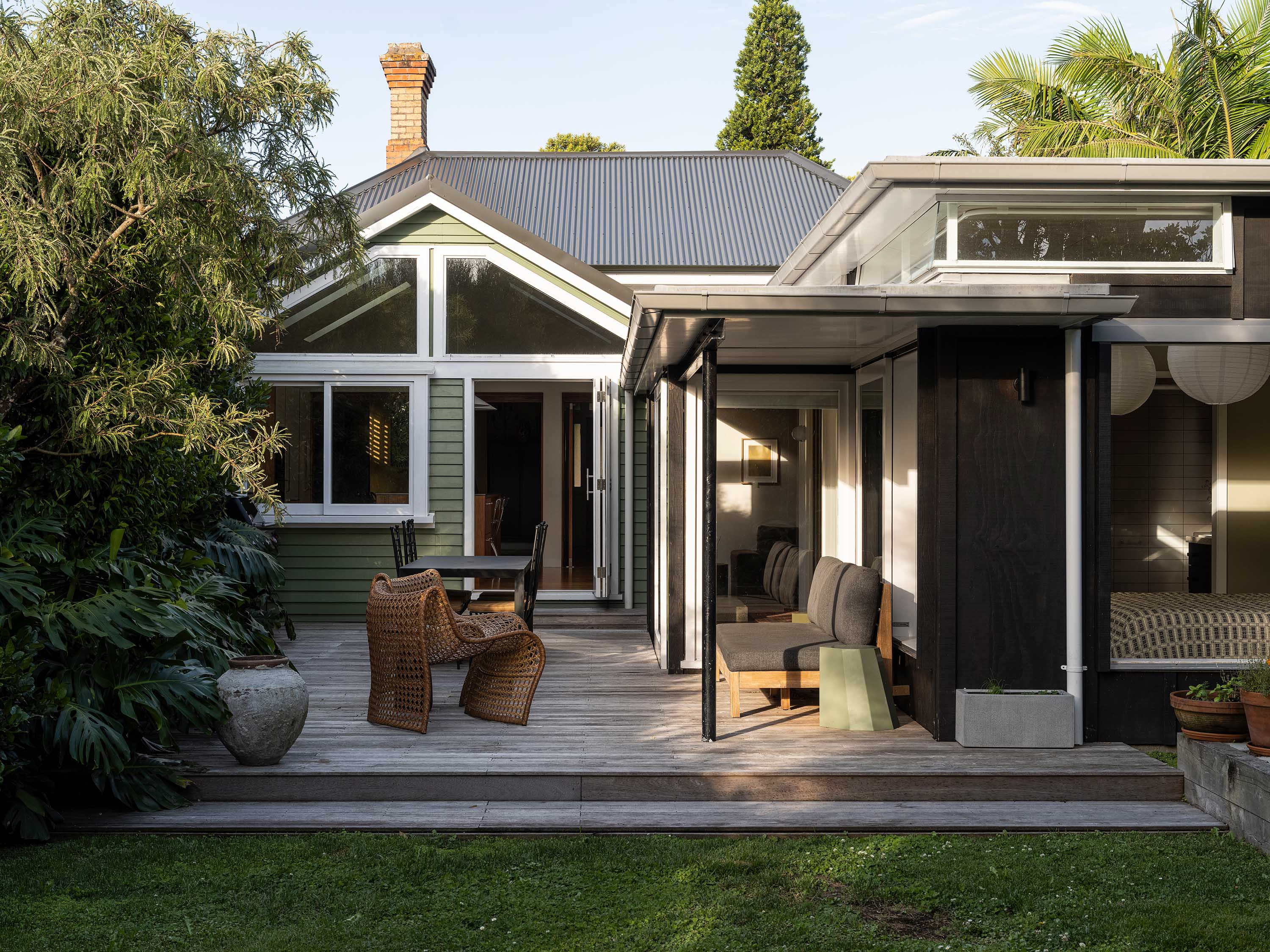
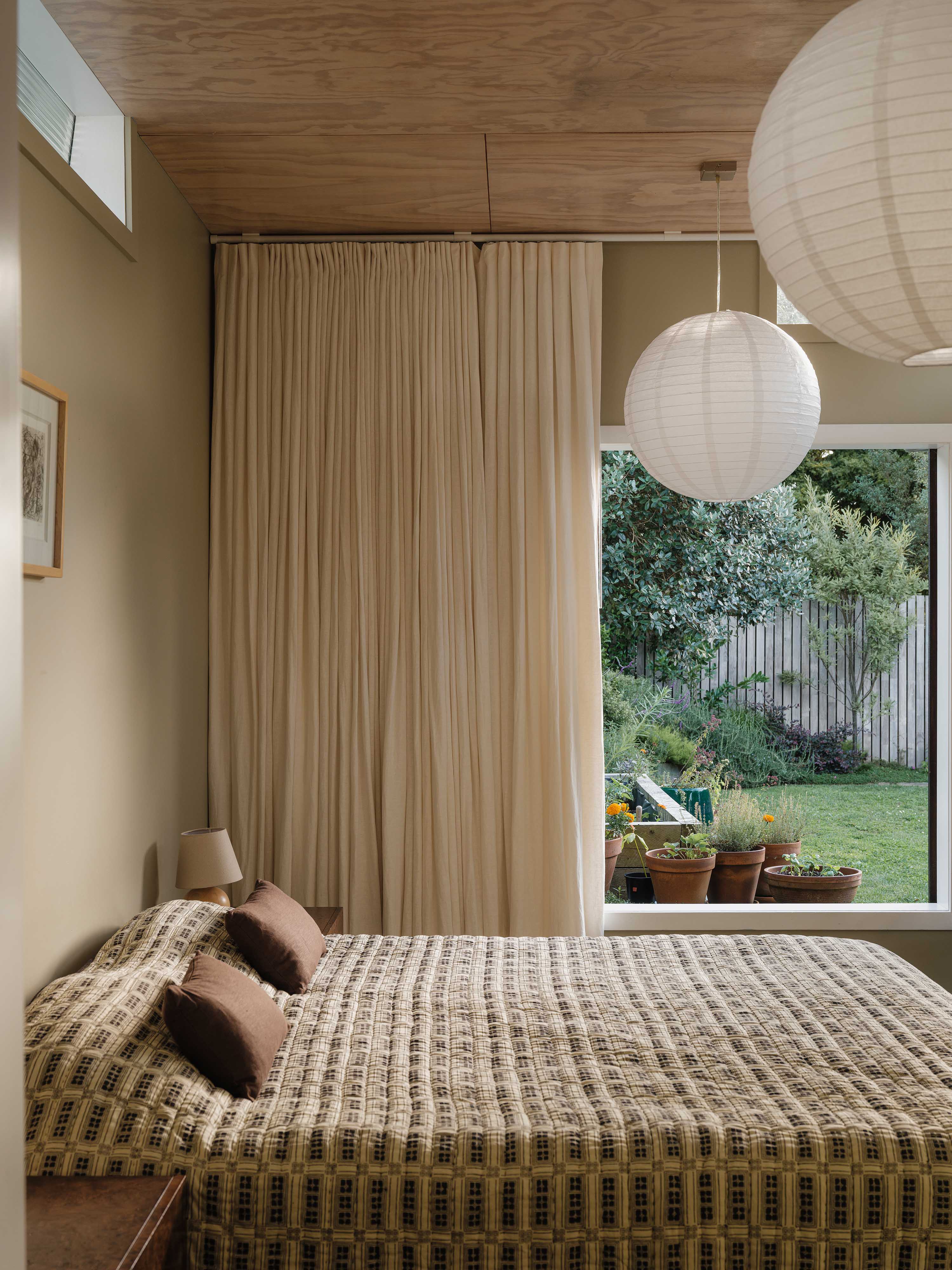
Green initially dealt to a rotten 1970s lean-to, replacing it with an airy kitchen-dining extension with a tall gabled roof and generous doors leading to a sunny northwest-facing deck. Then, a few years later, she designed a long, low, flat-roofed Japanese-inspired extension at ground level. This included a sunken living room a few steps off the kitchen, along with a generous bedroom, ensuite and walk-in wardrobe. It was that rare thing: a villa with everything in the right place.
Throughout, there are lovely details, including timber-and-perspex screens with a slightly mid-century feel that bring gently coloured light into internal rooms. When Chiaroni-Clarke and Hayward first visited, she could instantly see the possibilities. “It was just so different to everything else we looked at,” she says. But after 20 years of family life, the place was in need of a few updates. There was carpet throughout the original villa, covering up kauri floorboards. The kitchen, while generous, was a U shape, with a small dining area that felt out of proportion to the rest of the house. There was also a separate, formal living room that the couple ended up never using.
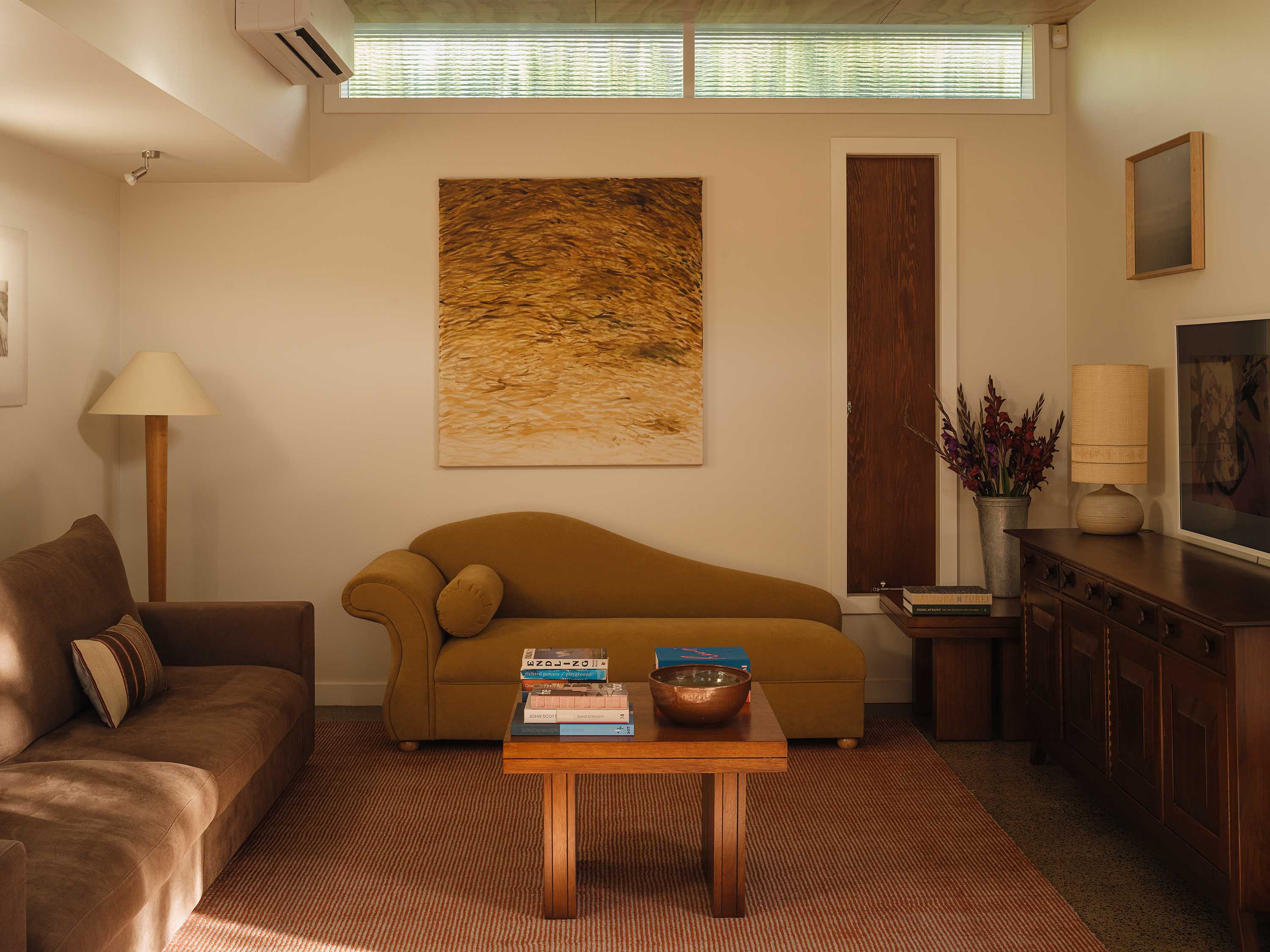
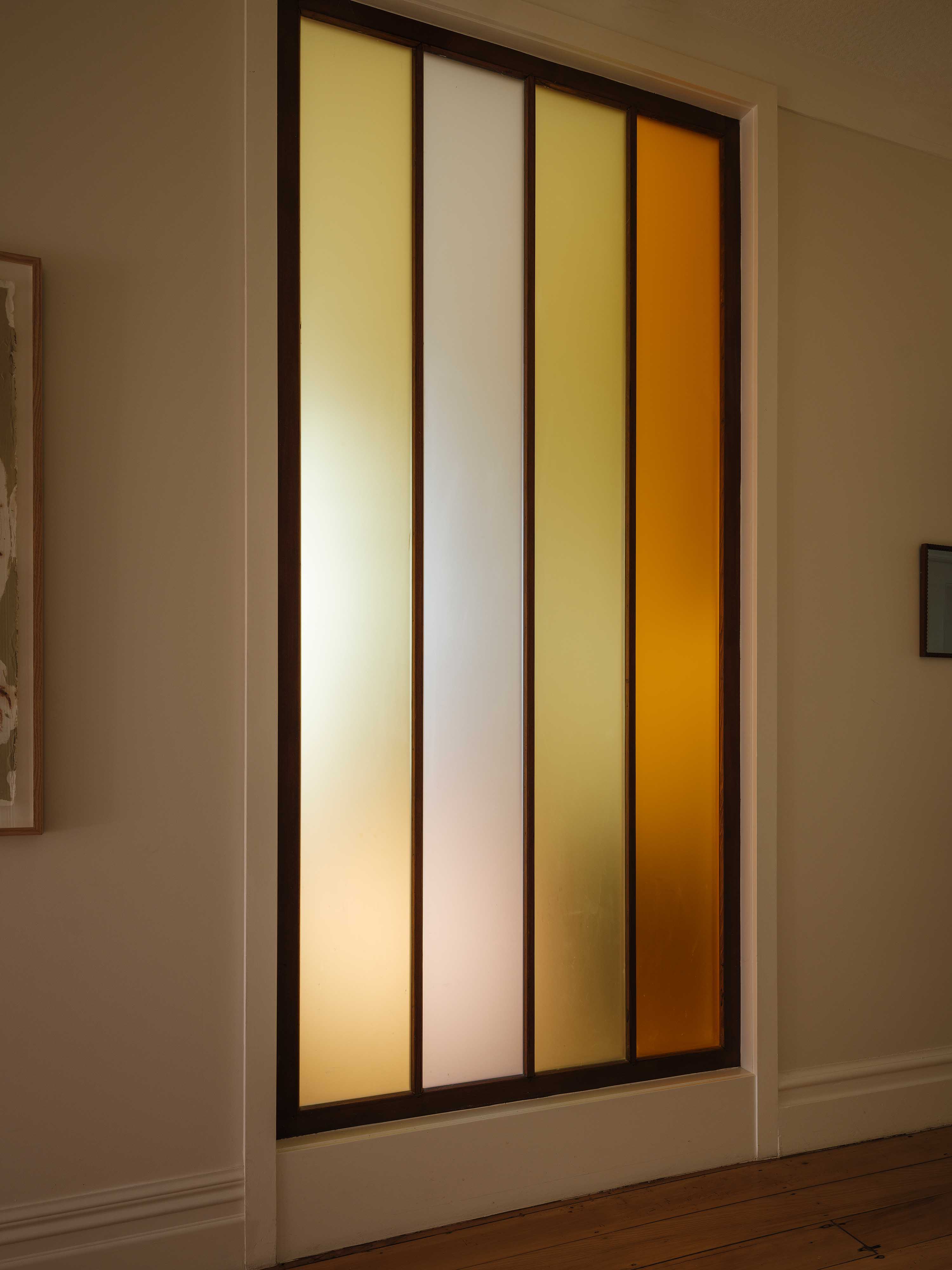
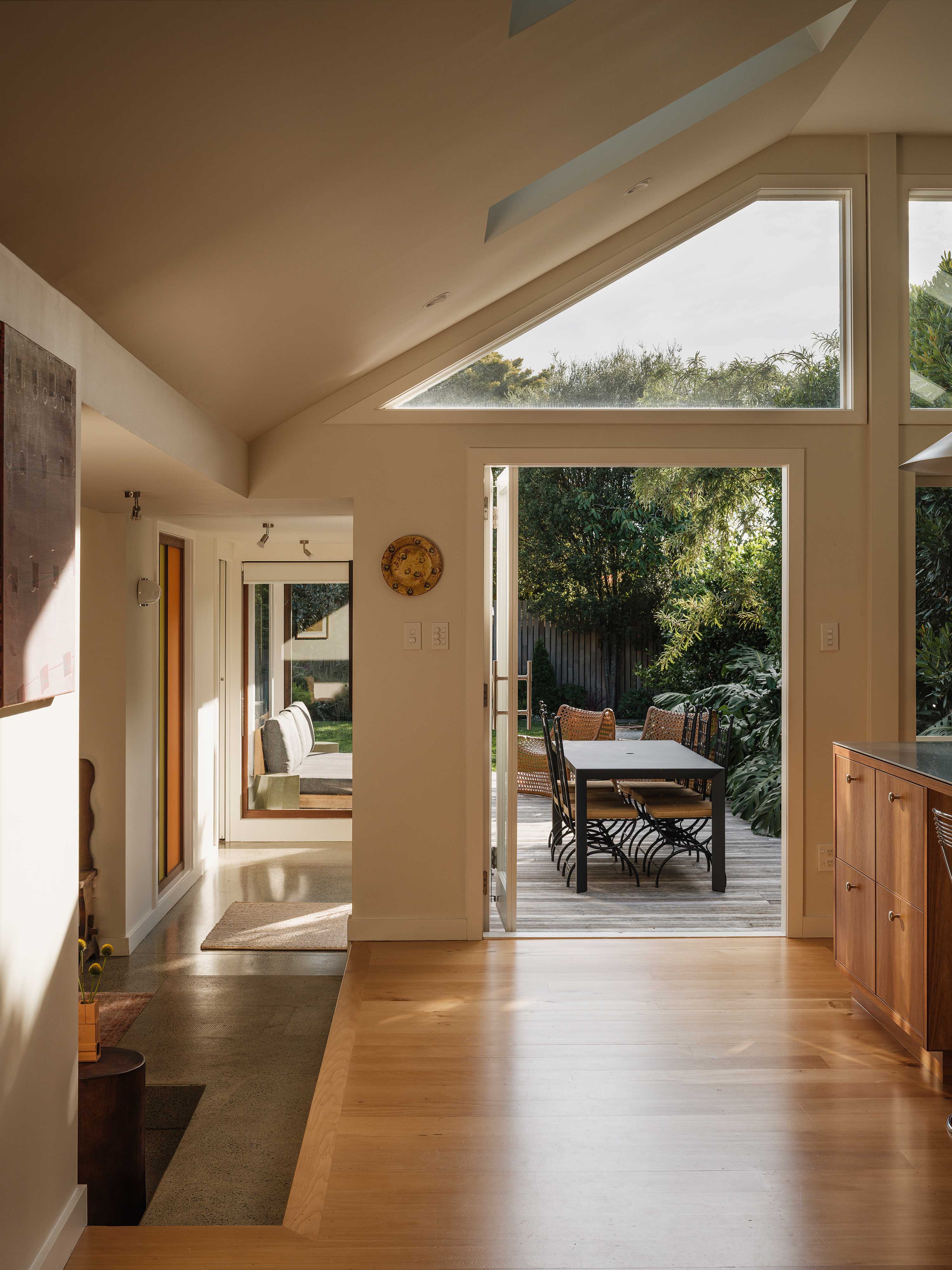

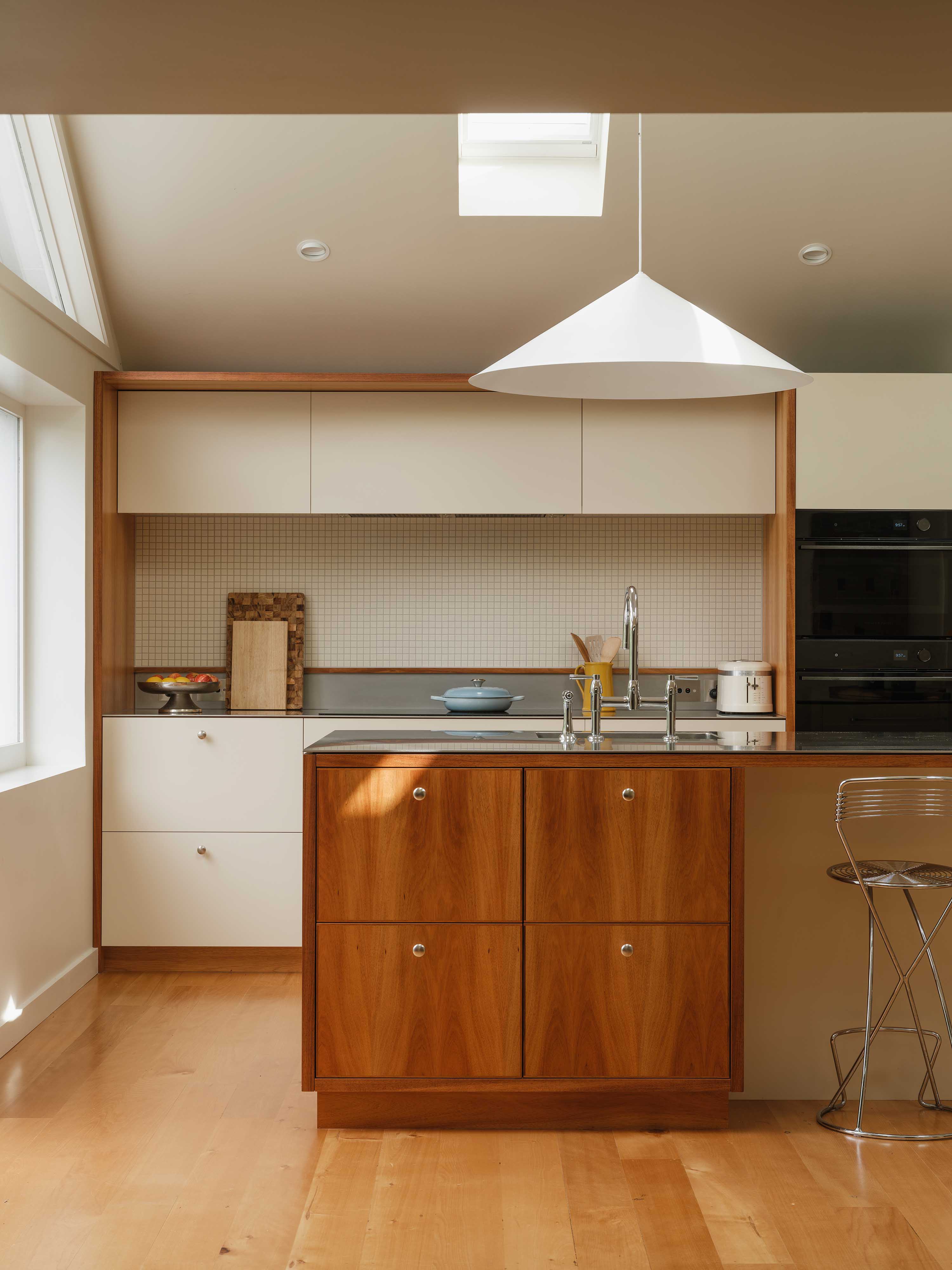
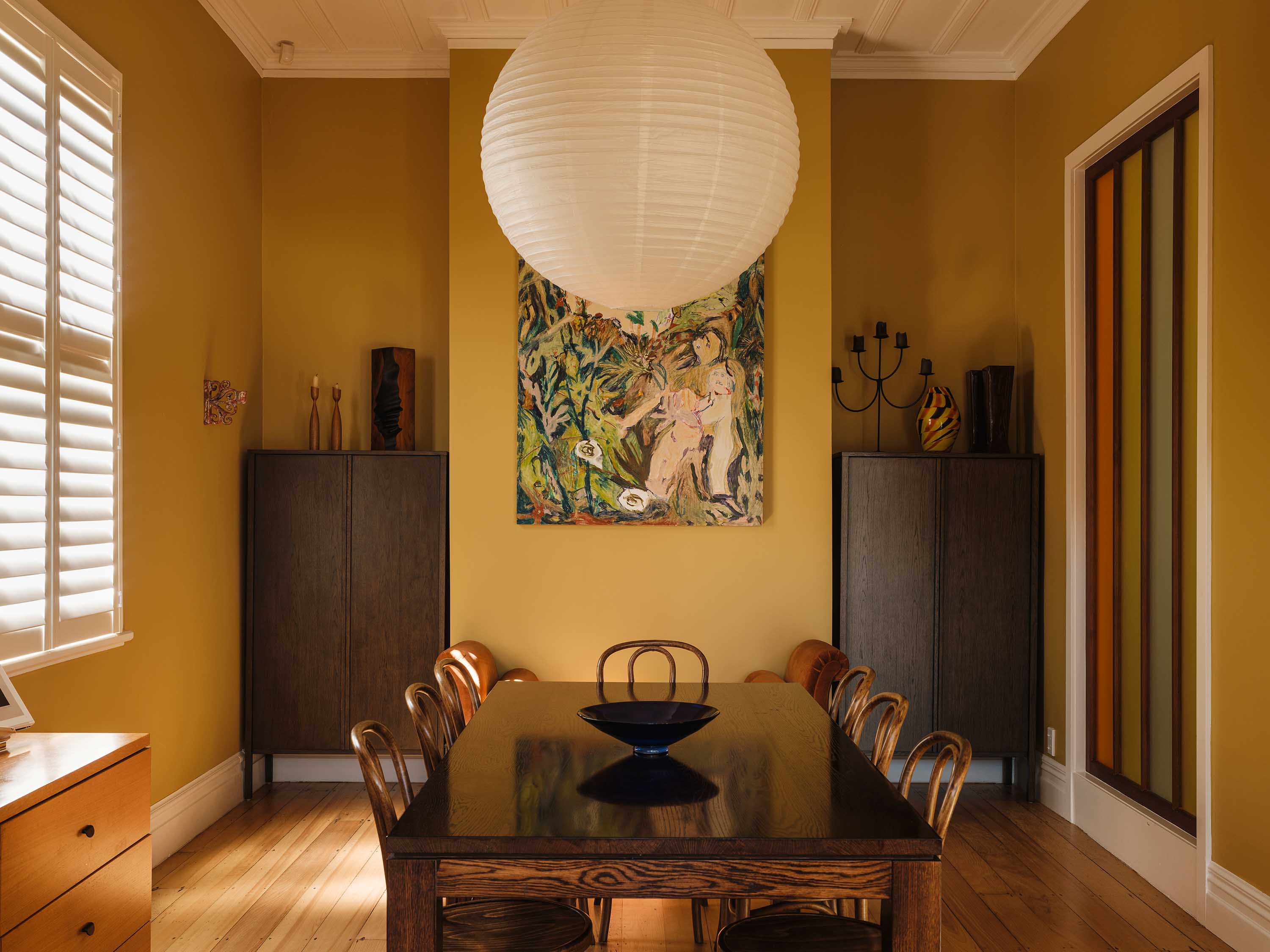
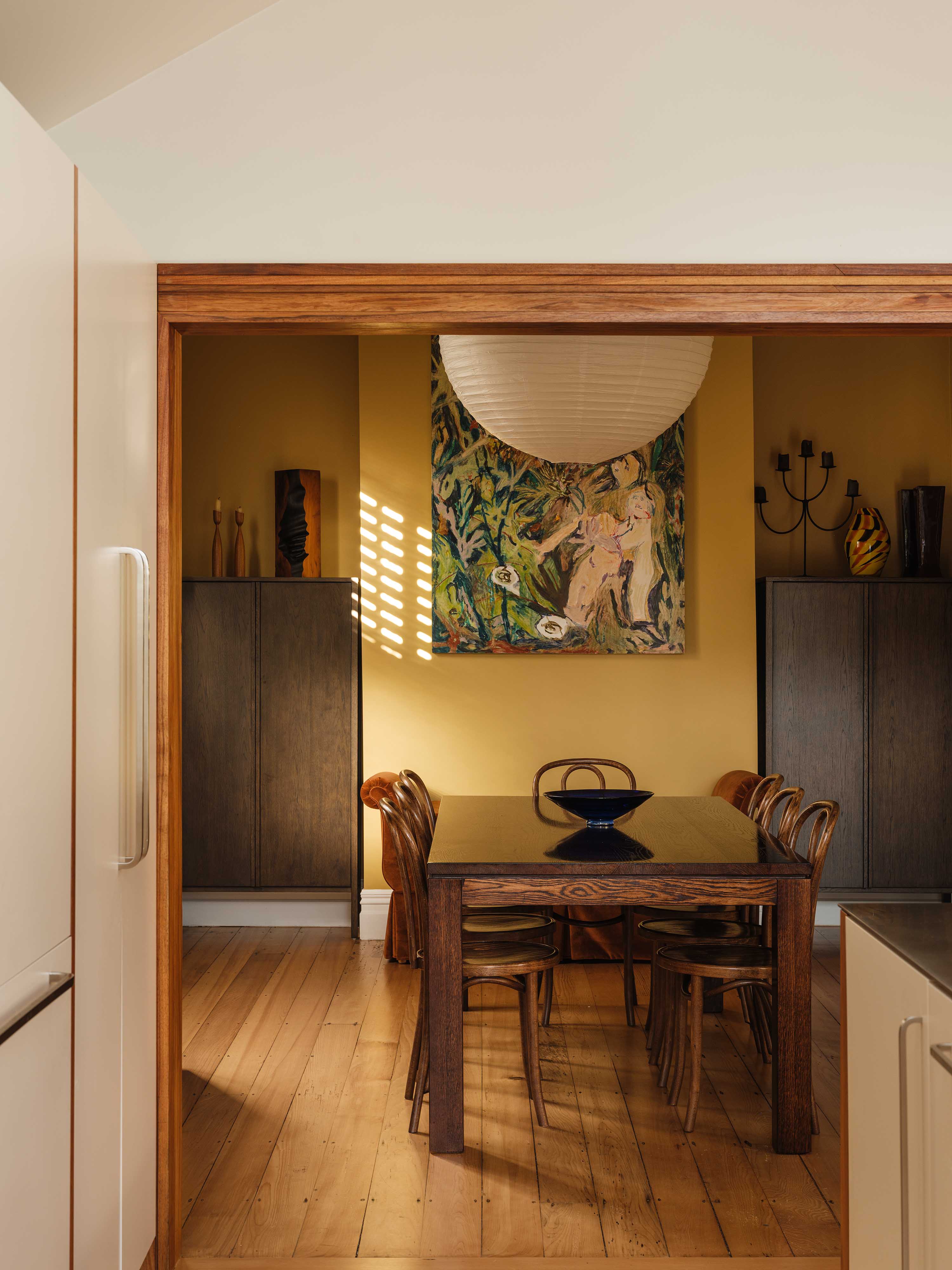
To begin with, Chiaroni-Clarke made small updates: polishing the timber floors and repainting throughout in rich tones, ranging from navy to rusty orange via a mustardy beige. In the main bathroom, she introduced terracotta floor tiles but otherwise left the room largely unchanged, retaining a delightful, and very early 2000s, bath-shower with the tub sunk into the floor. They reroofed, and tidied the garden. Then, Chiaroni-Clarke made her big move, opening up the wall between the kitchen and the formal living room. This created a much bigger space for the former, and turned the latter into a generous dining room. “Everyone said not to and that we’d need it when we have teenagers,” she says, “but we just never used it.”
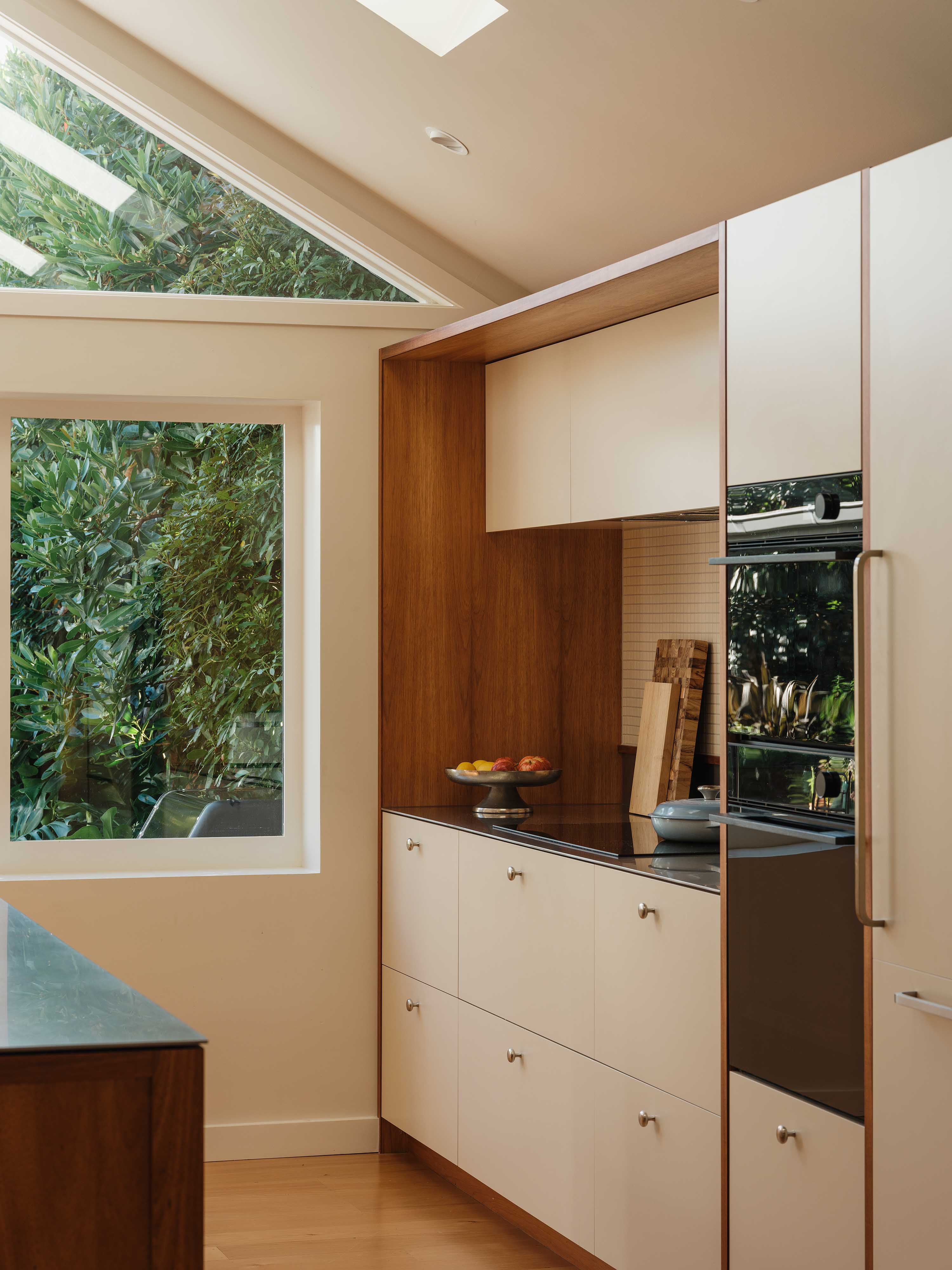
Her design completely reoriented the kitchen, now with a wide bank of cabinetry along the northern wall. A generous island bench acts as a kind of command post: from here, she can watch her kids – Bruno, who’s three, and Jasper, seven months – almost anywhere in the house. “I can see everything from the bench,” she says. “I can see the kids in the bath, in the living room, and I can see them outside playing in the garden.”
She was respectful of the work that had gone before, riffing on Green’s gently mid-century-meets-Japanese aesthetic. Cabinetry is Laminex French Cream, contained by a chunky Tasmanian blackwood frame. “I took quite a few cues from Briar’s work,” says Chiaroni-Clarke. “I wanted the kitchen to speak more to the extension – it didn’t need to be traditional.” In opening up the wall between the two rooms, she created a kind of threshold between old and new. The dining room has its high villa ceilings and a tall sash window, and it’s pleasantly shadowy. The kitchen has its tall pitched ceiling, lots of light, and a direct relationship with the garden through a sliding window and French doors.
On that threshold, she created a pivot door, separating the bedrooms in the front of the house from the living space. To this, she added a small detail of her own, a Tasmanian blackwood architrave around the opening with a faceted edge. It’s a subtle move, but an important one, celebrating the character of the original house in a contemporary way. “The villa just had so much detail – I felt like it was a modern take on that,” she says. “I really like living on the threshold between old and new.”

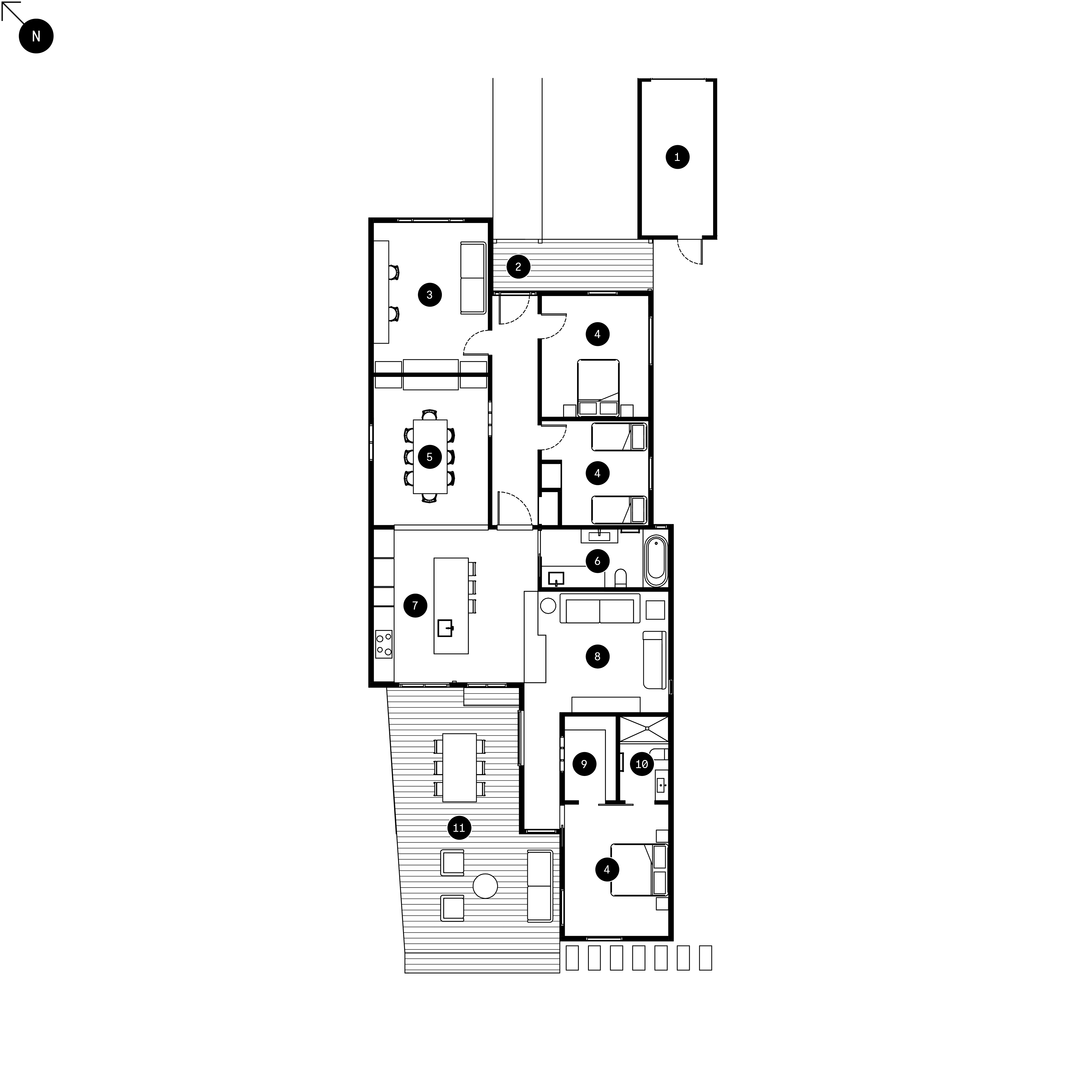
1. Garage
2. Entrance
3. Office
4. Bedroom
5. Dining
6. Bathroom
7. Kitchen
8. Living
9. Wardrobe
10. Ensuite
11. Deck
Related Stories: