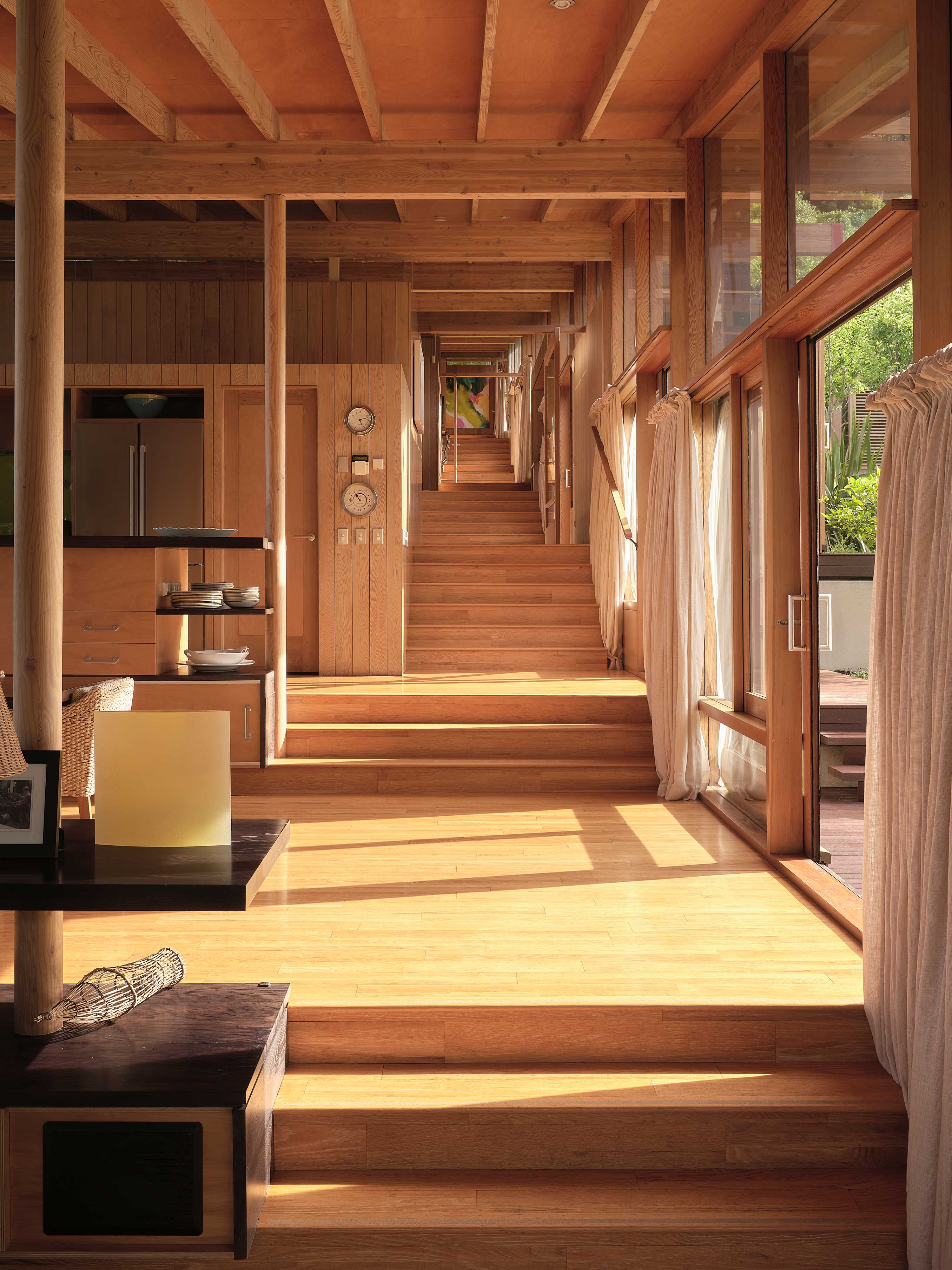
When the owner of this bush-clad bay on Moturua Island, in Te Pēwhairangi the Bay of Islands, first visited, there was nothing here but scrub and gorse, possums and rats. It was March 1985. The island was remote, without electricity, roads or any kind of services. “There was nowhere to buy food or, for that matter, anything else,” he wrote in a book on the history of the island, which covers its lengthy Māori occupation, as well as more recent events. “Furthermore, Opunga Bay was on an island and I did not own a boat.”
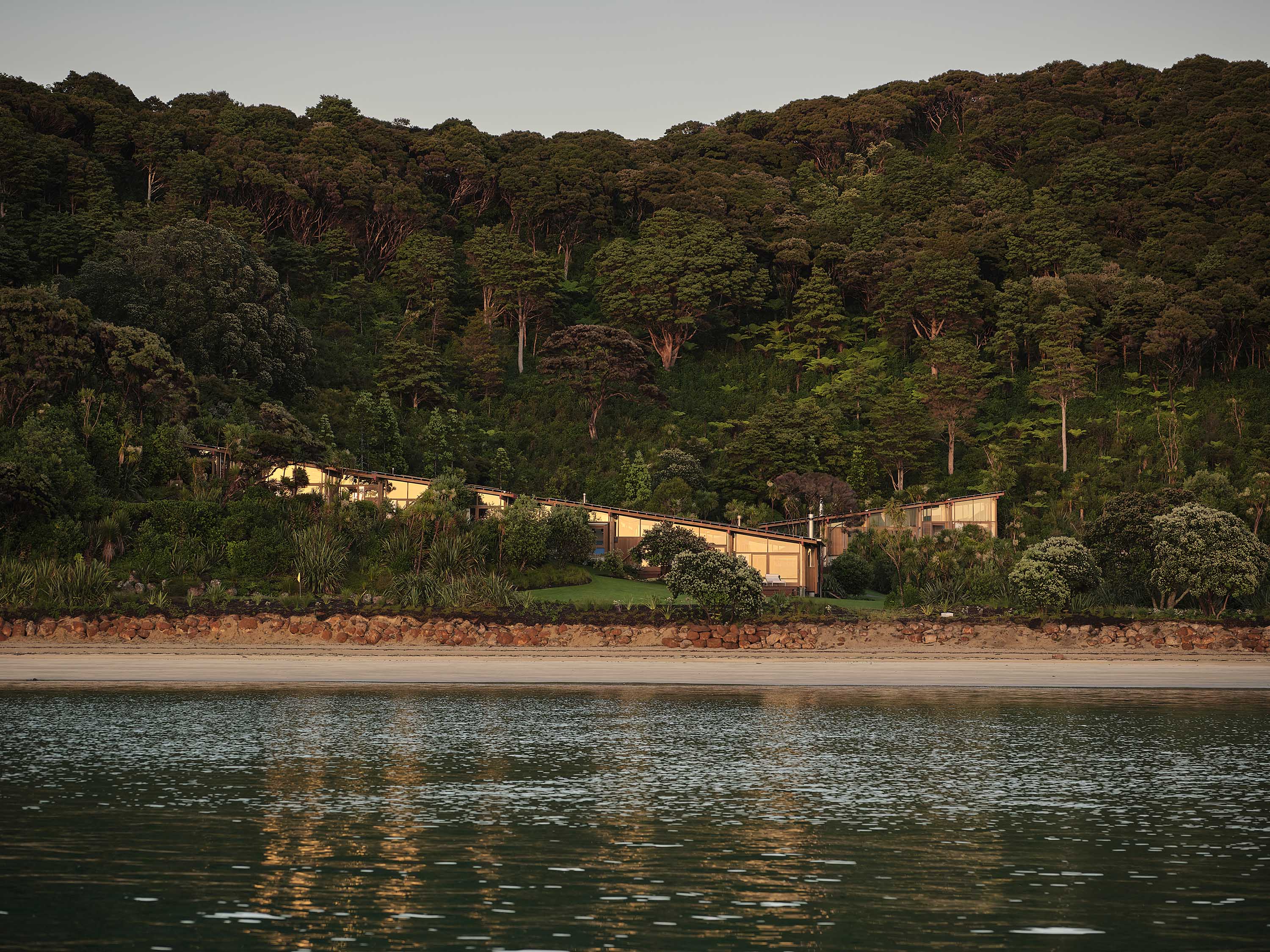
Such trifling necessities aside, the allure of the place was obvious. Opunga Bay is one of only two private pieces of land on Moturua. The rest is a Department of Conservation reserve, where they’ve spent decades eradicating pests, and reintroducing birds, including tīeke and kiwi. The view, looking over Kuiamokimoki Island back to the mainland, is restful. The beach is white sand, and the water is crystal clear. Ten years after buying the land at auction, the owner commissioned a house from Pete Bossley, of Bossley Architects, with whom he had already worked on a few buildings. At last count, the pair have collaborated on something like 20 projects. “I felt it immediately,” Bossley says of his first visit to Moturua. “It came together incredibly quickly – I did the first sketches in the chopper on the way home.”
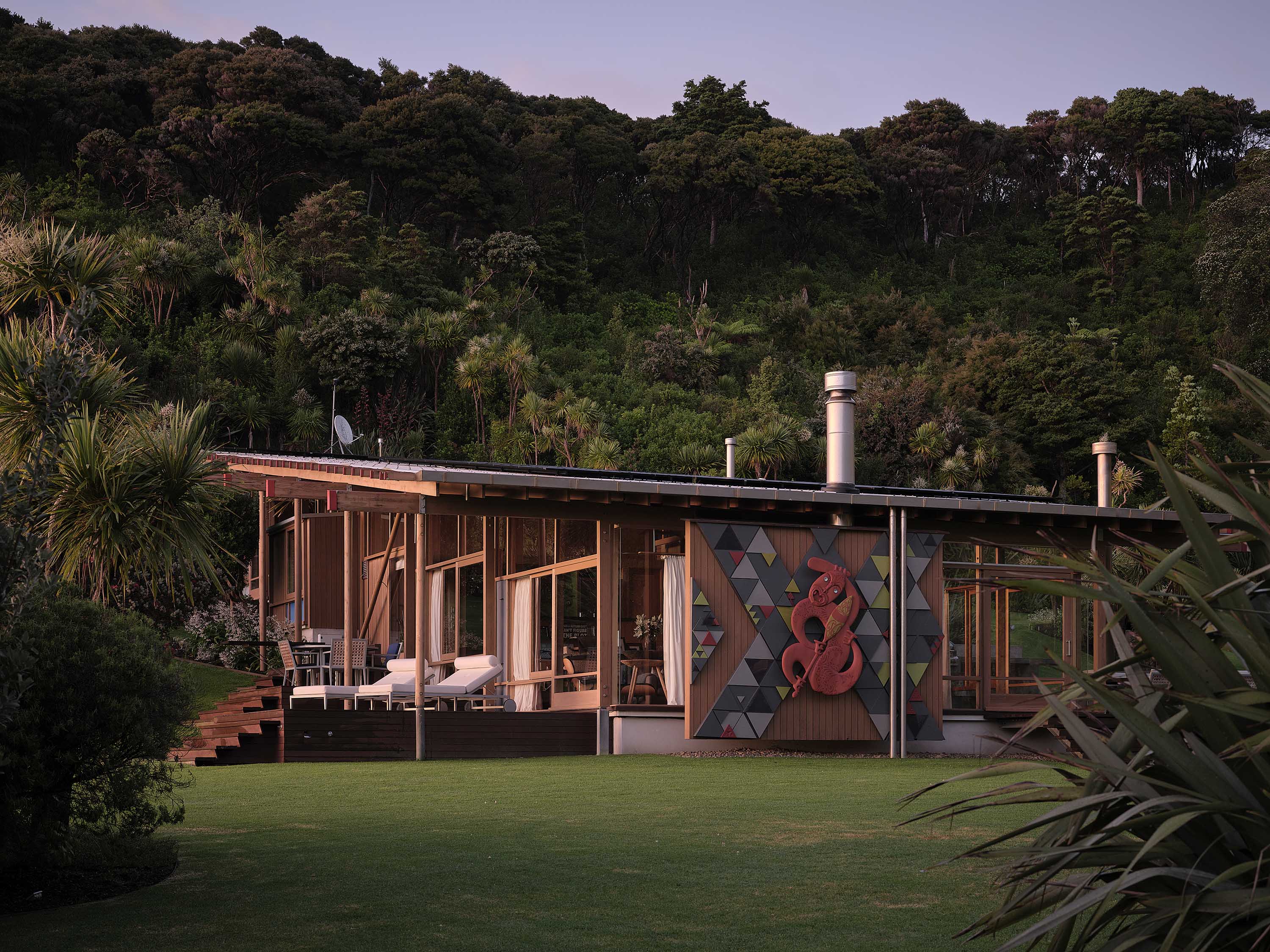
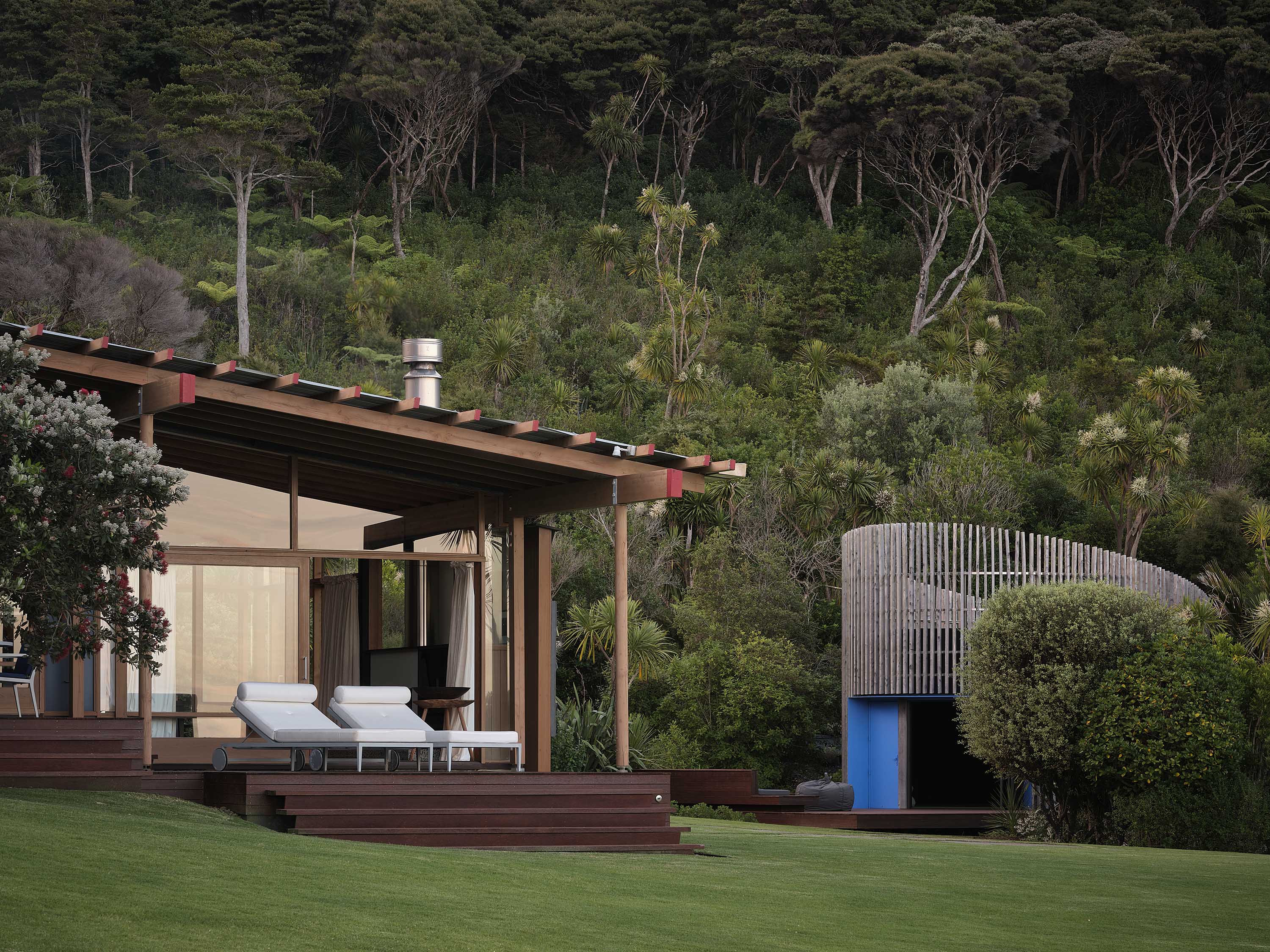
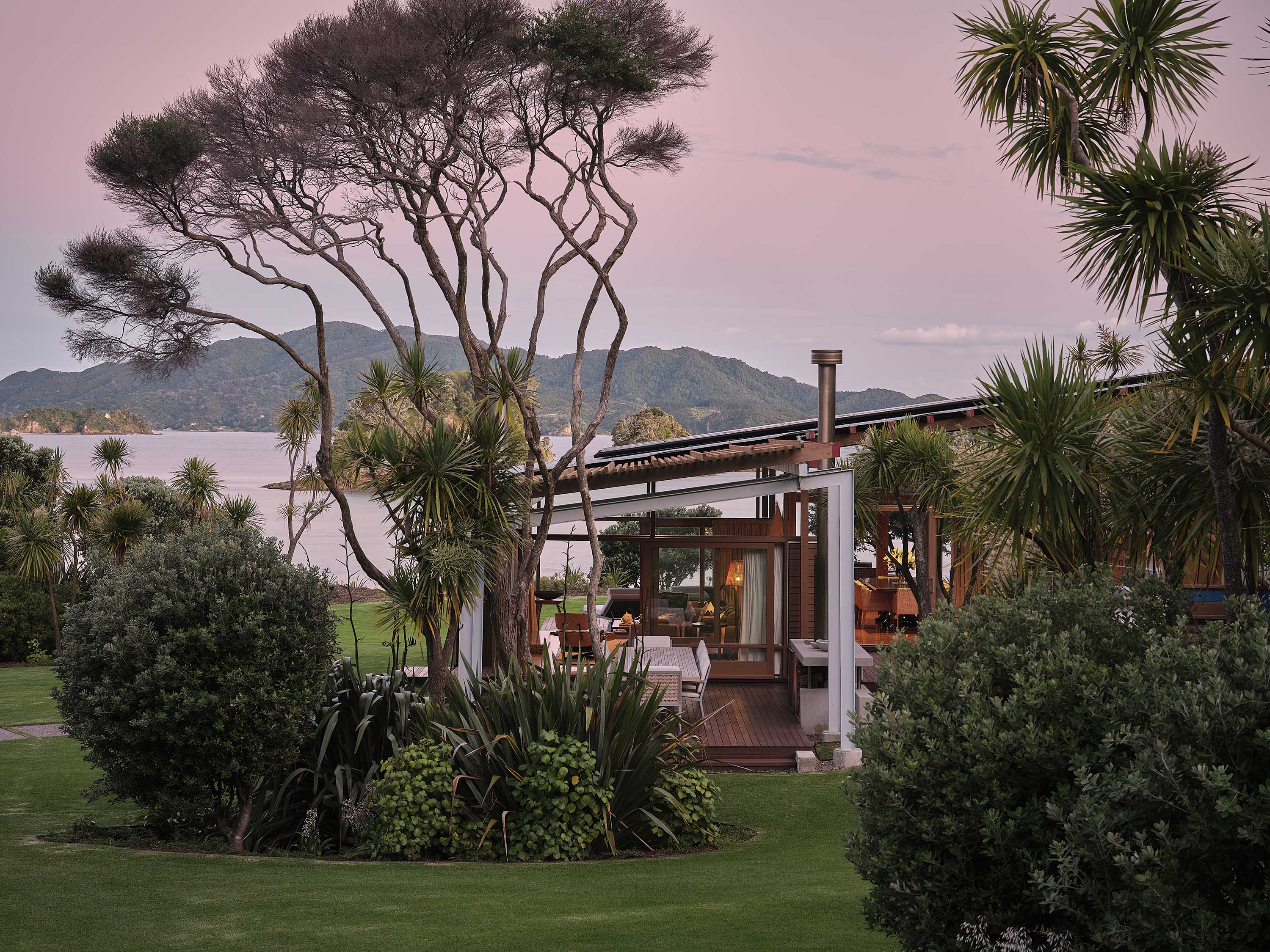
It has become one of the most important houses in this country’s architectural history, encapsulating our casual timber tradition in a structure that is quietly luxurious, and inspiring many houses since. It is, in essence, a roof held up by some sticks, as Bossley has previously put it – a distinctively Antipodean approach that plays to “that thing where we all believe we’re living on a tropical island”, he jokes. “I wanted it to be as minimal as possible – not hard-core minimalist, but comfortable. It was a delicate balance between how little you needed to hold the roof up, and how much you need to create comfortable spaces.” Instead of placing the house square in the middle of the bay, he pulled it off to one side, leaving a wide circle of grass and garden in the middle of the bowl. “My first impression was that we needed to leave the bay open and move the house away,” he says. “I really felt we shouldn’t bugger up the bay with a big building in the middle of it.” That also gave him – eventually – room to build a succession of structures around the edges of the lawn, creating a kind of encampment of buildings, but we’ll get to that in a bit.
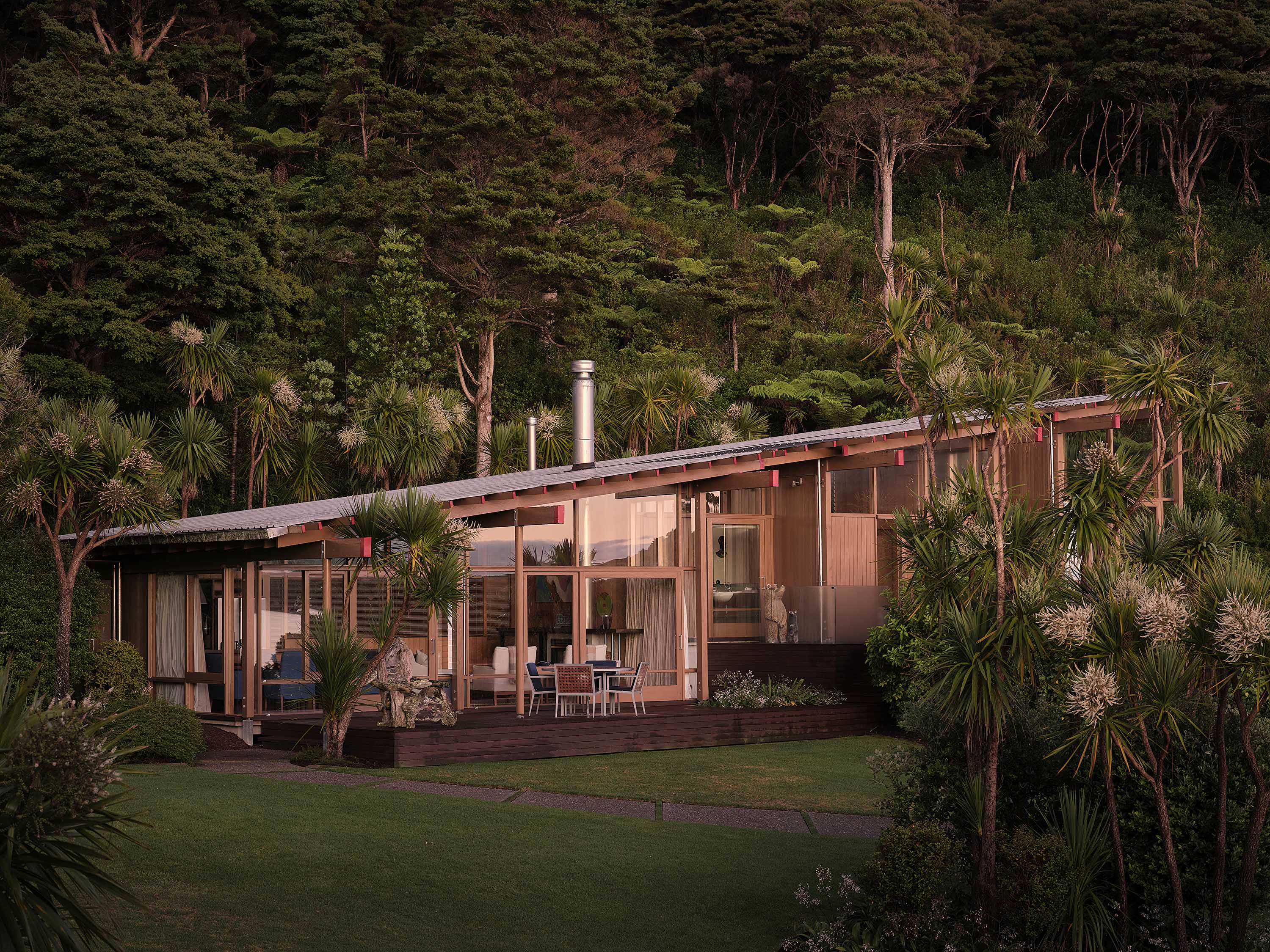
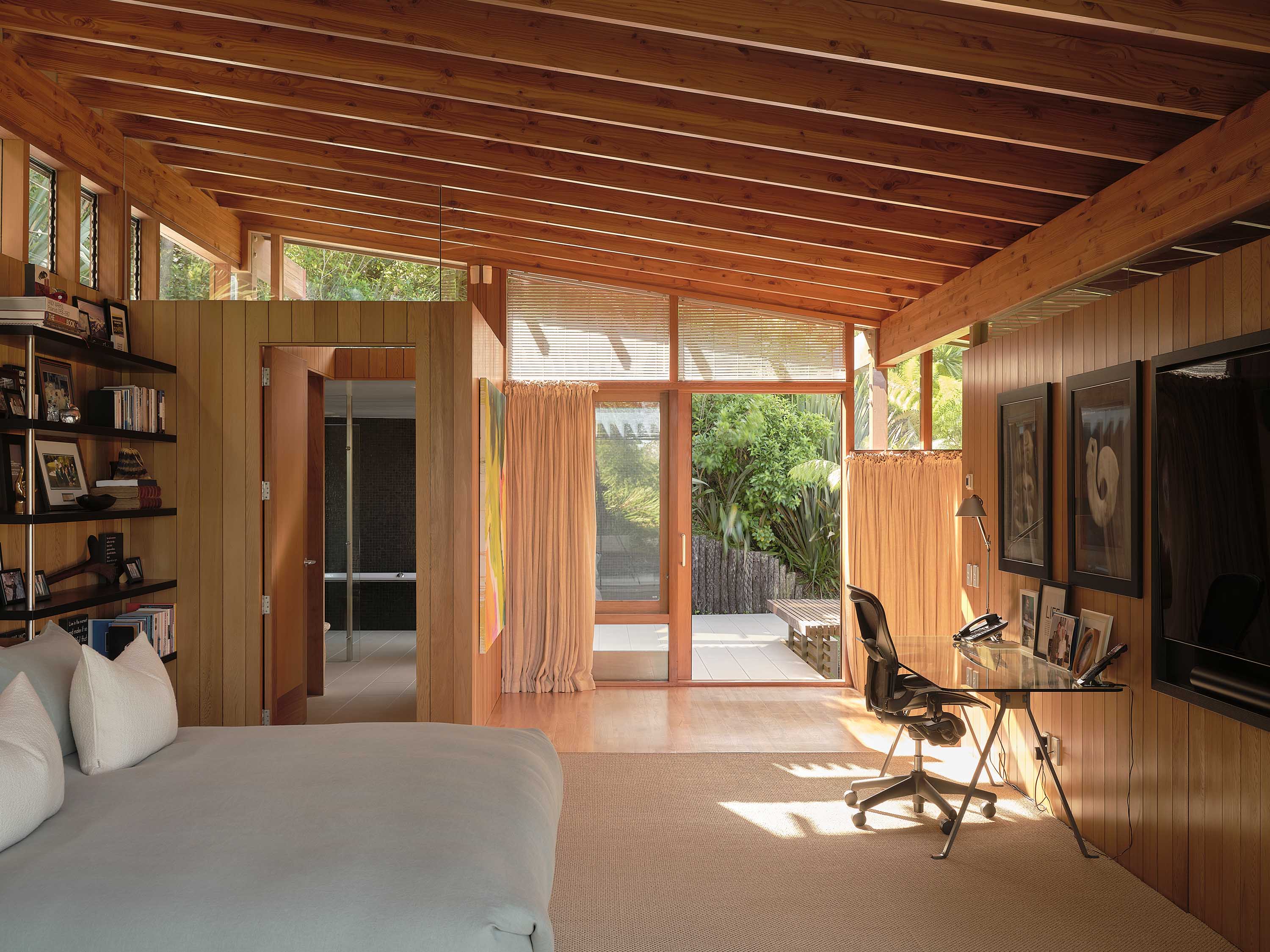
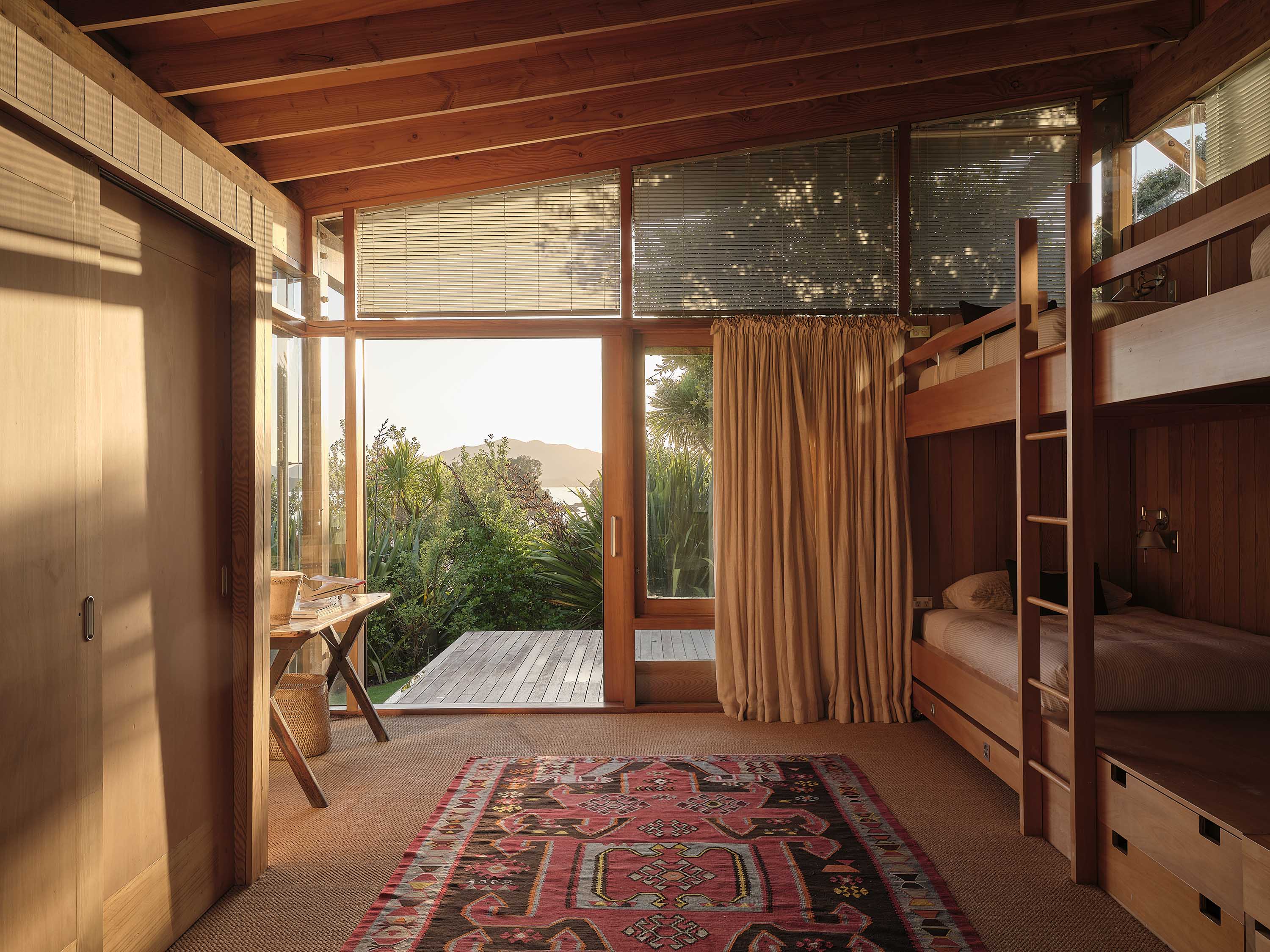
His opening gambit gave the house one of its defining features. It sits on a gentle slope to the southern side of the bay, running southwest to northeast. The plan steps up the land, each room on its own level: living, dining, kitchen, bathroom and laundry, a bunkroom, bathroom, further bedrooms and – added a few years after the house was first completed – a main bedroom with wardrobe and bathroom. A wide gallery on the northwestern side acts as a kind of spine, with spaces hanging off it. The line of the building dances in and out depending on the size of the rooms, beneath a broad sheltering roof that is wider at the ends, with a waist in the middle and bites out of its southeastern elevation that create a series of courtyards.
If you approach the house by water, as I did, it takes a long time to appear. The boat pulls into a jetty on the next bay over, shared with another property. Then, a tunnel under the headland takes you through to Opunga Bay. They weren’t allowed to construct a boardwalk around the headland or build their own jetty, and there’s an historic pā site on the top. While brutal, it’s the right thing to do: the tunnel disappears entirely. Around a corner and across a lawn, you approach the house at its thin, northeastern end. Up a few steps, you enter directly into the living space. There is a delightful dance through the house: three steps, then a landing, a few more steps, then a landing, as well as places to sit and contemplate the view in the sun – a window seat here, a small living area there. Every room has its own relationship with the land outside, and with the view. Each room runs out to a deck that steps out onto the lawn.
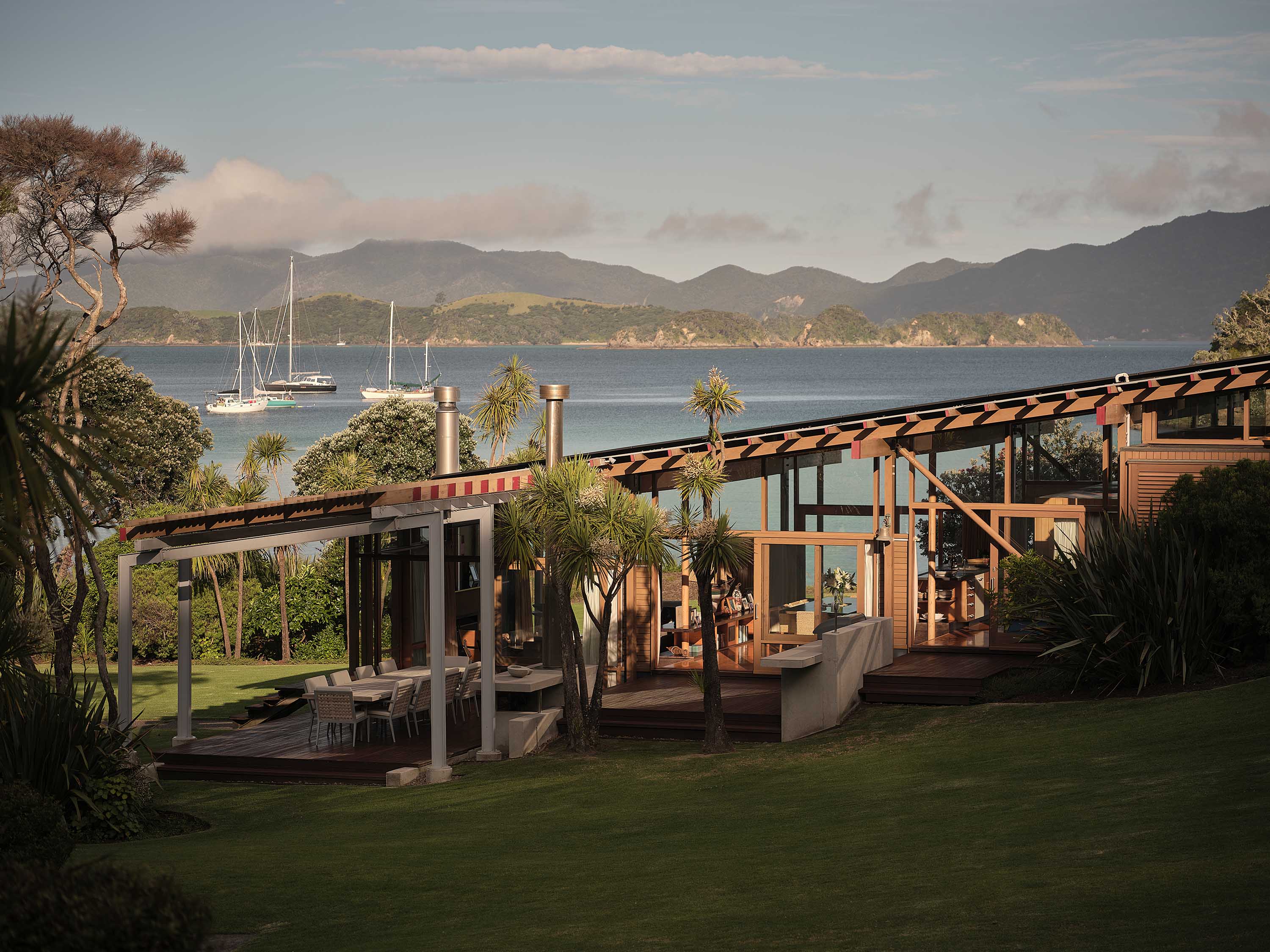
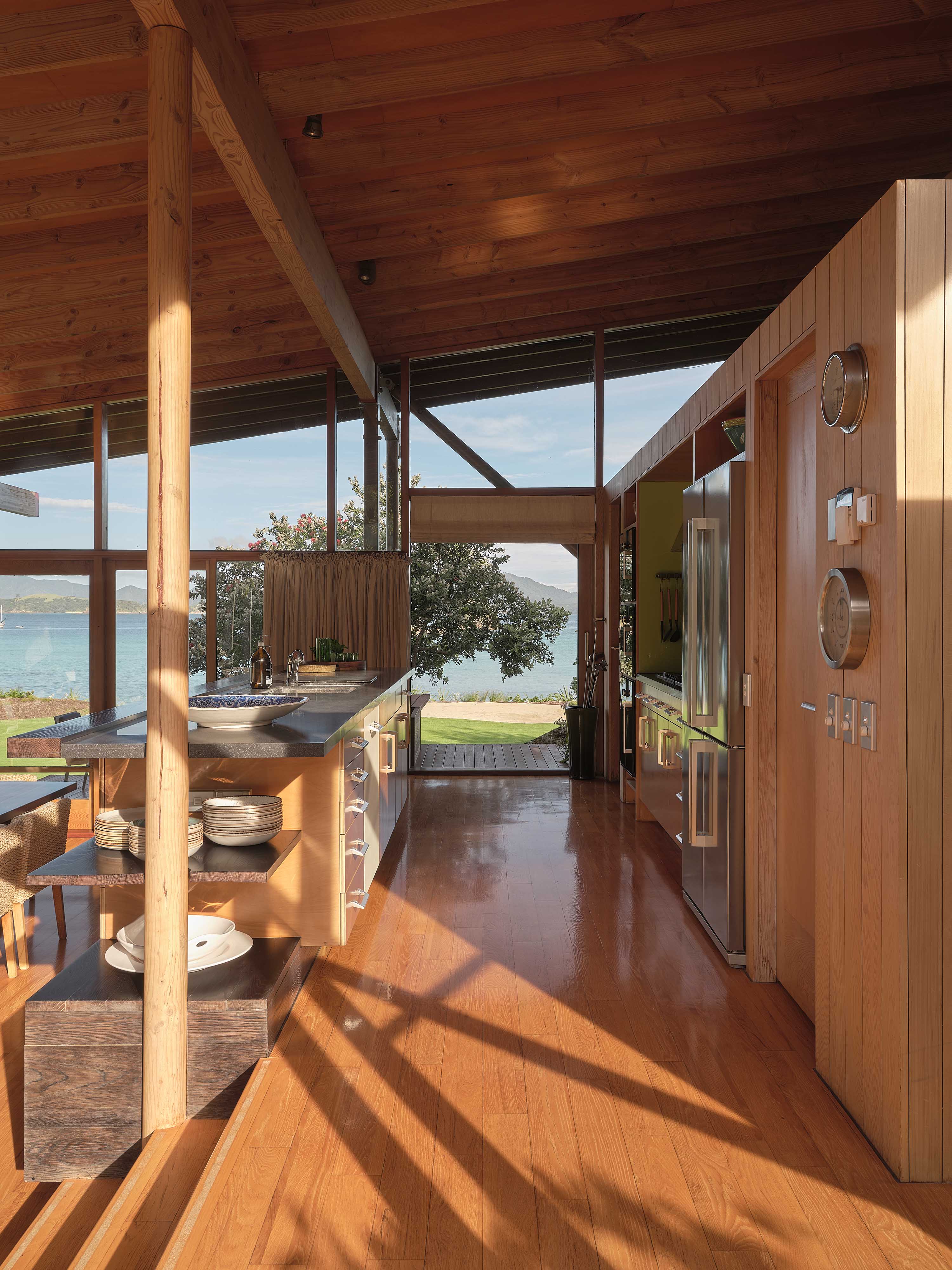
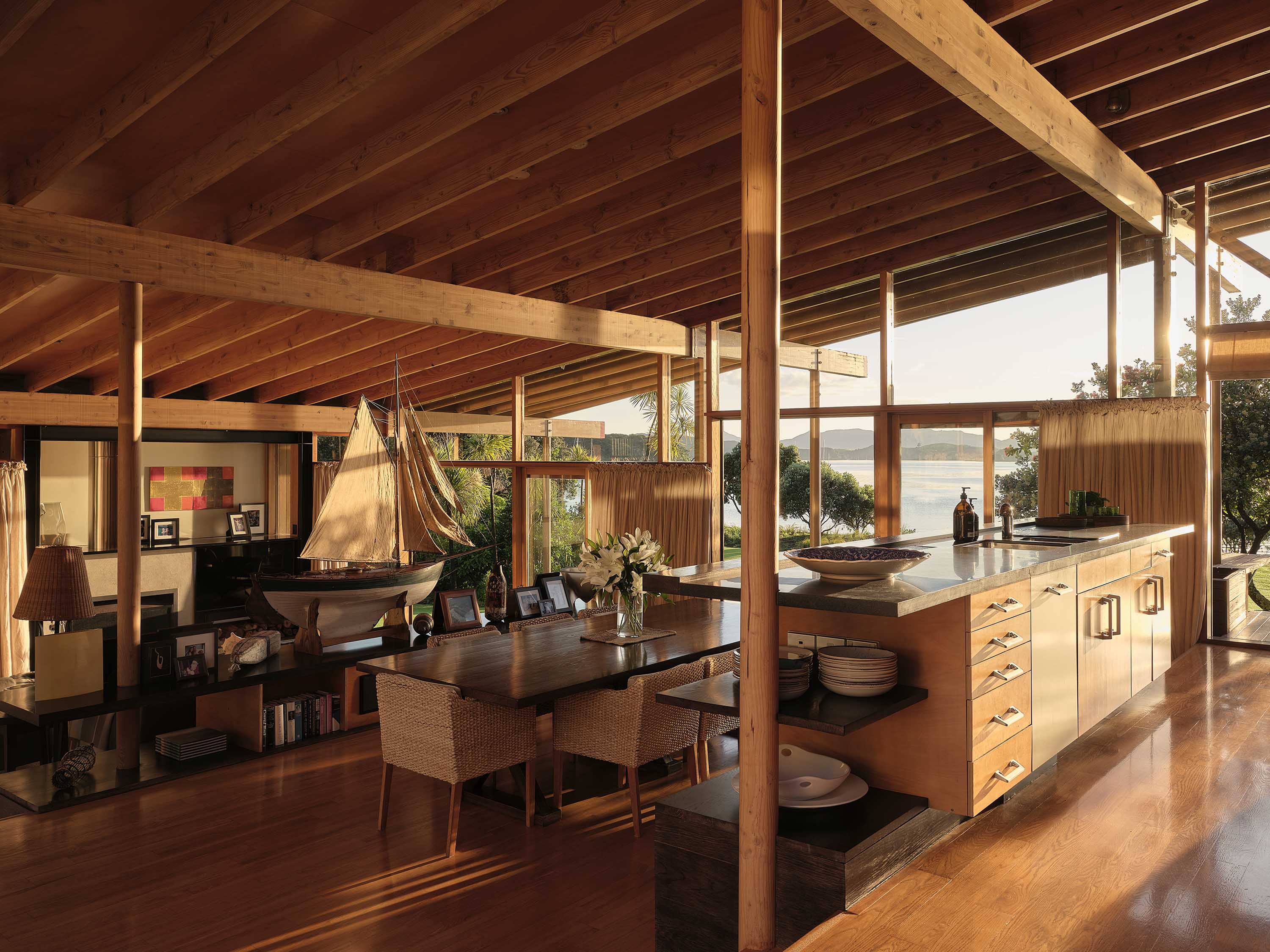
There’s a looseness to the whole thing, despite its structure. “I quite enjoy the fact that it’s a rigorous house in terms of the skeleton,” says Bossley, “but then the skeleton itself isn’t rigorous.” Too often houses built like this create traps for their architects: a strong grid that pulls the design into awkwardly scaled spaces. Here, each room is as big as it needs to be, and each level is where it needs to be. You can see where Bossley has played with the grid: the kitchen cabinetry sits inside the framework, with a semi-circular cutout around one of the poles. Spaces are surprisingly modest in size. “We always try and make our houses comfortable,” he says. “The spaces are relatively small, and they feel smaller because of the steps and the changing levels.”
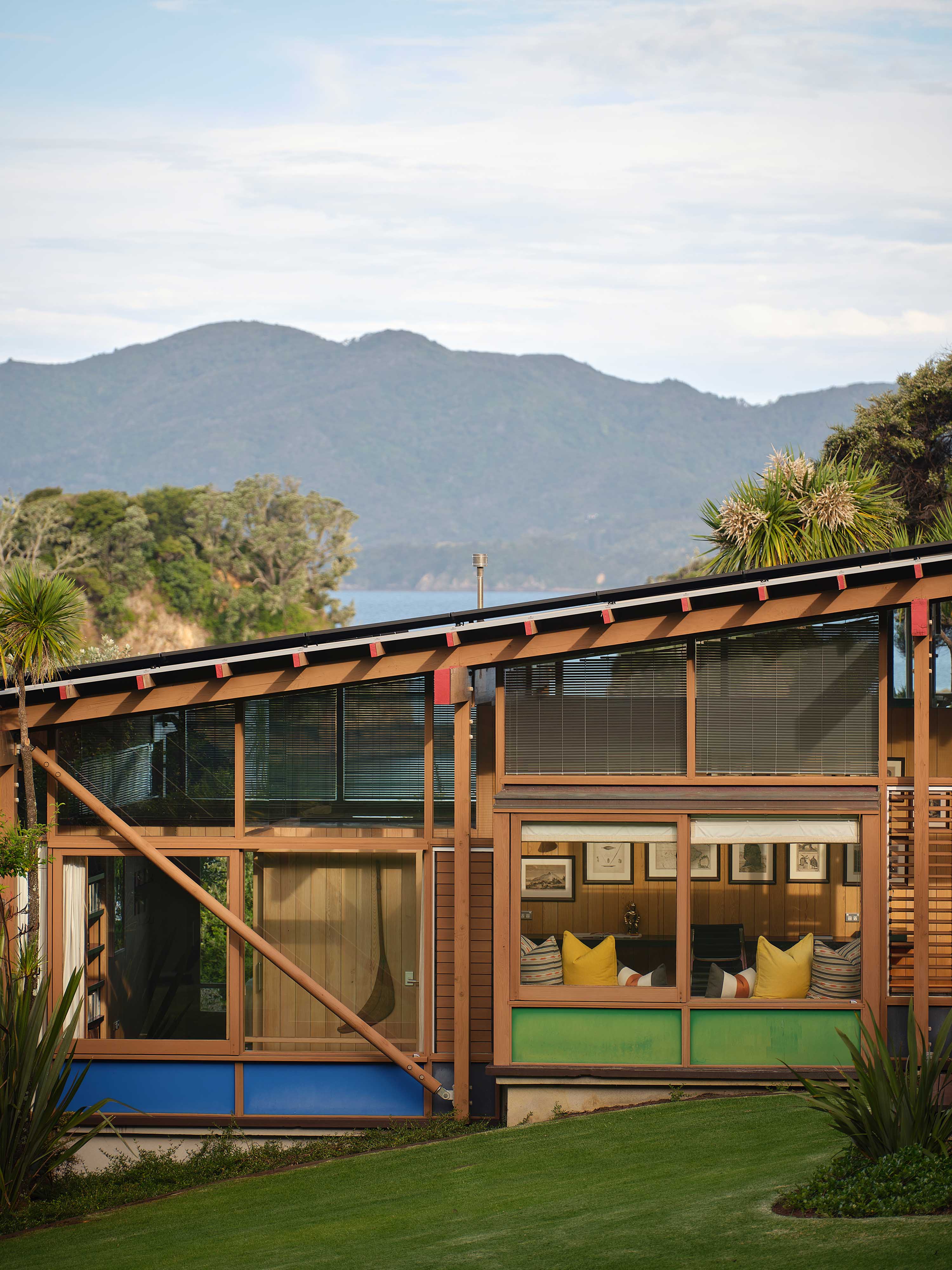
The roof follows the slope of the hill, with a series of boxes and open spaces sitting beneath it, the tectonics of the house on display. Bossley’s minimalist idea – that roof held up by sticks – played out in a thousand hand-sketched details, a series of timber portals marching up the slope, round poles and square beams; the corrugated roof itself pulled back from the rafters, which are capped and painted. Outside, round timber poles sit on identically sized round concrete plinths, which is a lovely touch. Walls are mostly glass, but framed by timber so you don’t feel exposed. “It looks so simple, but it’s unforgiving – there’s nothing hidden. For the builder it was really demanding, even the junctions between the laminated beams and the rafters have no exposed fixing, it’s all drilled and glued.”
Initially, the owner wasn’t sure how he’d go on an island, so he committed only to the house. Then, when it turned out that, actually, it was rather wonderful and all worked beautifully, he built more accommodation. First was a guest house up the slope in the same manner as the original house, followed by a helicopter hangar and gym, which also houses a commercial kitchen, plus a bunkroom and TV room. Then, he added a boatshed in one corner of the bay, topped with a caretaker’s cottage, all designed by Bossley. Finally, three years ago, Bossley’s co-director Finn Scott designed a golf simulator and cinema in an egg-shaped building of timber slats that sits in the middle of the site. The owner still consults the architects on projects, including the full solar grid installed last year, and they visit once or twice a year.
It’s an idea Bossley has gone on to explore in a number of other projects. “You scatter the buildings around the site in such a way that it creates space, and develops from whatever the landscape is offering,” he says. “It reinforces what is already there, rather than banging a hole in the ground. And then you get that lovely thing where you can be in a house and look across at the other house, rather than having all the architecture in a lump in the middle.”
I was lucky enough to visit in autumn, when it was still warm enough to swim. I walked out through a small courtyard and onto the lawn, then down to the beach and into the water, and from there the house – and its neighbours – sat lightly on the lawn. After, I wandered back, stopped by the outdoor shower looking out at the sea, and made myself dinner in the kitchen, which feels like a kind of command post. The sun went down and the lights around the site came on, and despite being in a glassy kind of box, there was really only a feeling of peace and serenity.

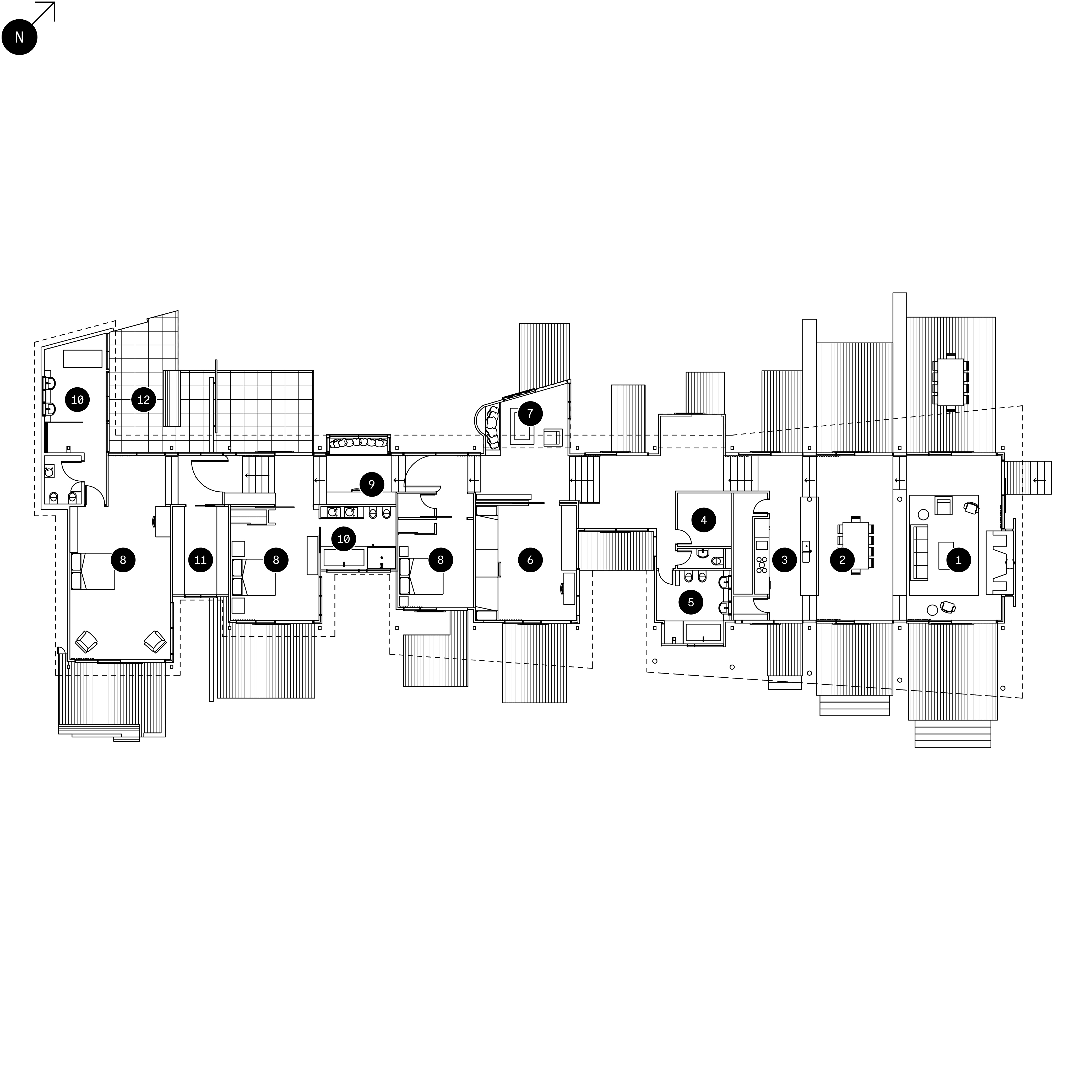
1. Living
2. Dining
3. Kitchen
4. Laundry
5. Bathroom
6. Bunkroom
7. Playspace
8. Bedroom
9. Office
10. Ensuite
11. Wardrobe
12. Terrace
Related Stories: