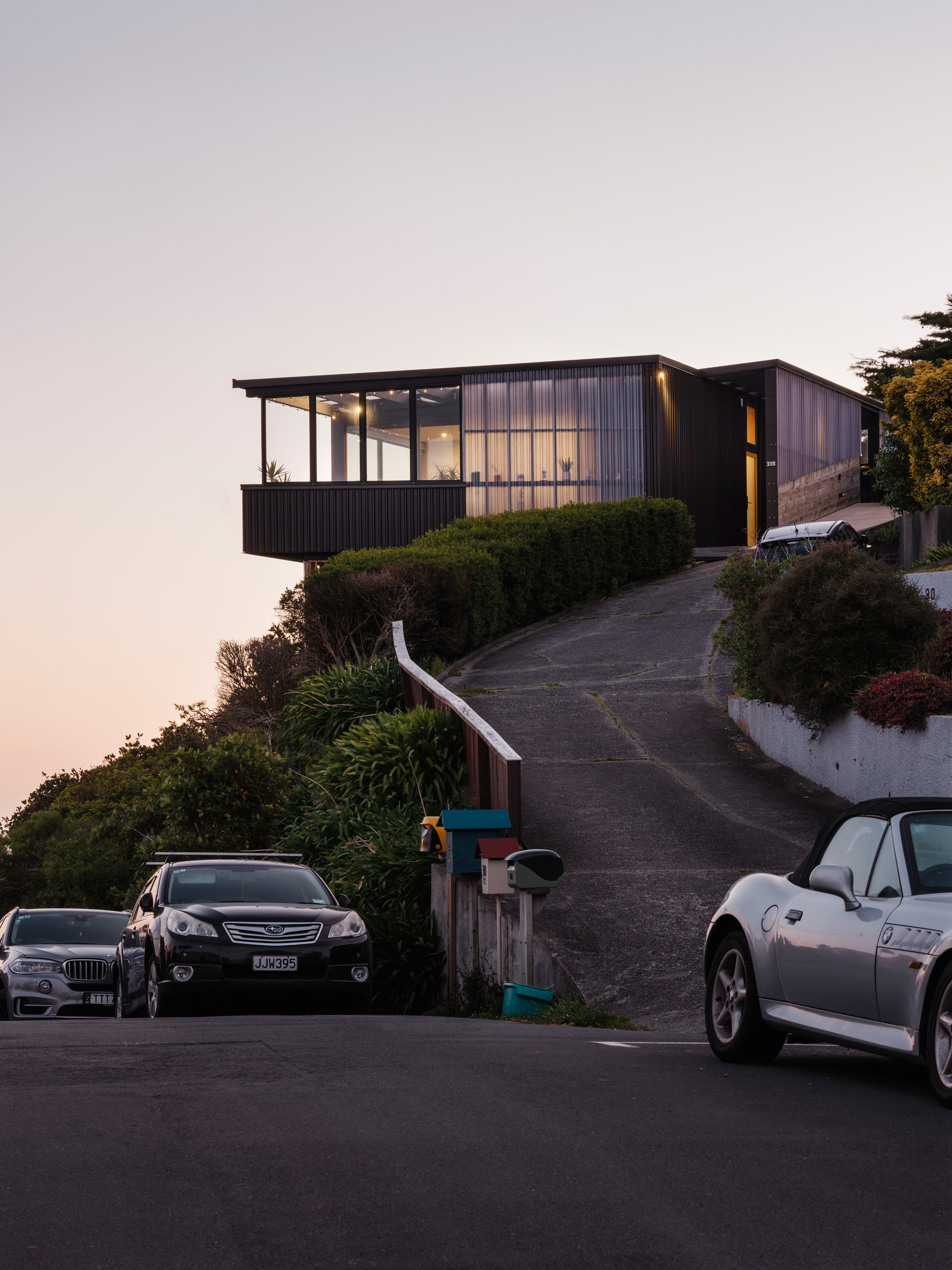
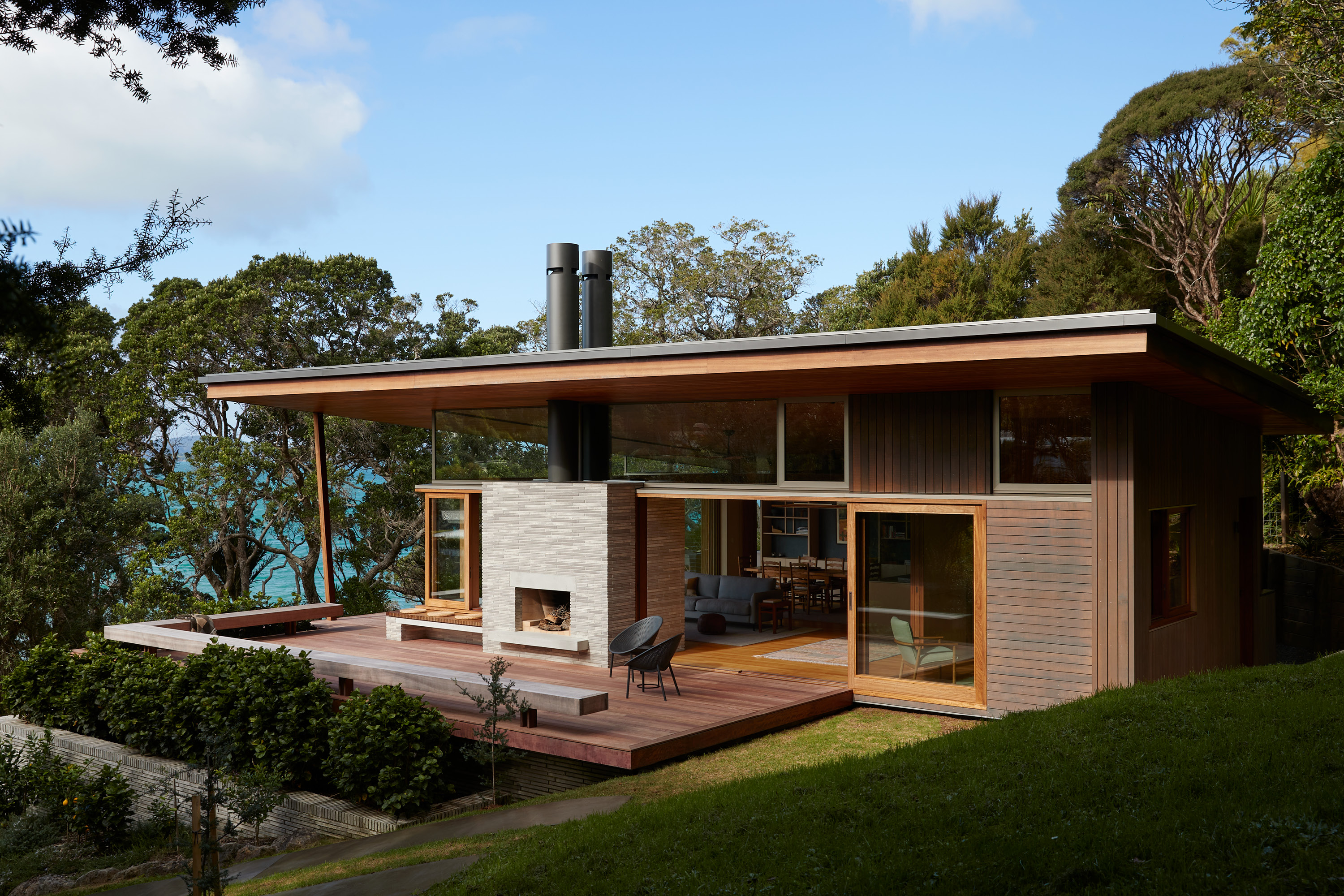
In 2013, RTA Studio’s Richard Naish designed a hillside home in an unpopulated corner of Lake Wānaka. Part of an ecologically sustainable subdivision, the project was governed by extremely stringent building covenants, and the result was an award-winning design — a masterclass in environmentally focused architecture. So when the property changed hands a few years ago and the new owners required a bit more space, it’s little wonder they went to Naish. “The original design was a bit unusual, definitely bespoke to the original owners,” explains the architect. “So the client decided to add a guest studio.”
It was to be a standalone space for visiting friends and family. “They wanted the feel and hospitality a hotel could offer, but with the domestic character of a small house,” says Naish. In a way, the big design decisions had been made, as they wanted the studio to mirror the materiality of the main house. For good reason, too; the aesthetic is just as relevant today as it was in 2013. “We wanted to make something of the main house, so it felt like a coordinated, unified project,” Naish says.
The guest pavilion stands with its heel dug into the hillside, looking out towards the lake. The studio employs the same expansive glazing and locally sourced schist as the principal residence, and the reddish tōtara that lines the entrance was even sourced from the same run as the original. It’s an old wood that was felled in Rotorua in the 1930s then abandoned for decades. “The little speckles you see in it — that neat pattern — are holes that worms have eaten out,” explains Naish. “We’re pretty lucky to have got that same timber source.”
The studio is self-contained, to a point, its 108-square-metre footprint divided between an entrance, living area, bedroom, wardrobe and ensuite. There’s also a second bathroom, so guests (of guests) need not traipse through the sleeping quarters. There’s no kitchen — dining takes place in the main house — but like any fine hotel, there’s space to make a decent cup of tea.
The stone continues inside, where a suave move sees a double-sided fireplace punch through the wall that separates the living space and bathroom. A timber skin of recycled rimu flooring and Southland beech ceilings offsets the masonry. Naish also incorporated a workspace into the living area, so the studio doubles as a home office. The desk is positioned with views of the native trees, and the bush presses right up to the deck – one proud kānuka punching straight through it. “That was quite a cool thing to do, but it’s almost a requirement,” explains Naish. The onerous restrictions placed on the site’s “Outstanding Natural Landscape” classification meant there could be very little interference with the land.
“It made access really tricky,” says Naish. “Everything had to be literally hand carried to site from the driveway, and we could only use a little digger for groundworks.” Thankfully, the original builders were back on board, so everyone understood what they were up against. Now, the guest studio sits contentedly alongside the original home as if it were always there. When it was finished, the owners decided to spend a night in the space to experience it firsthand. “They moved back into the main house about a month later,” says Naish. A fine review indeed.


Related Stories: