_graded.jpg)
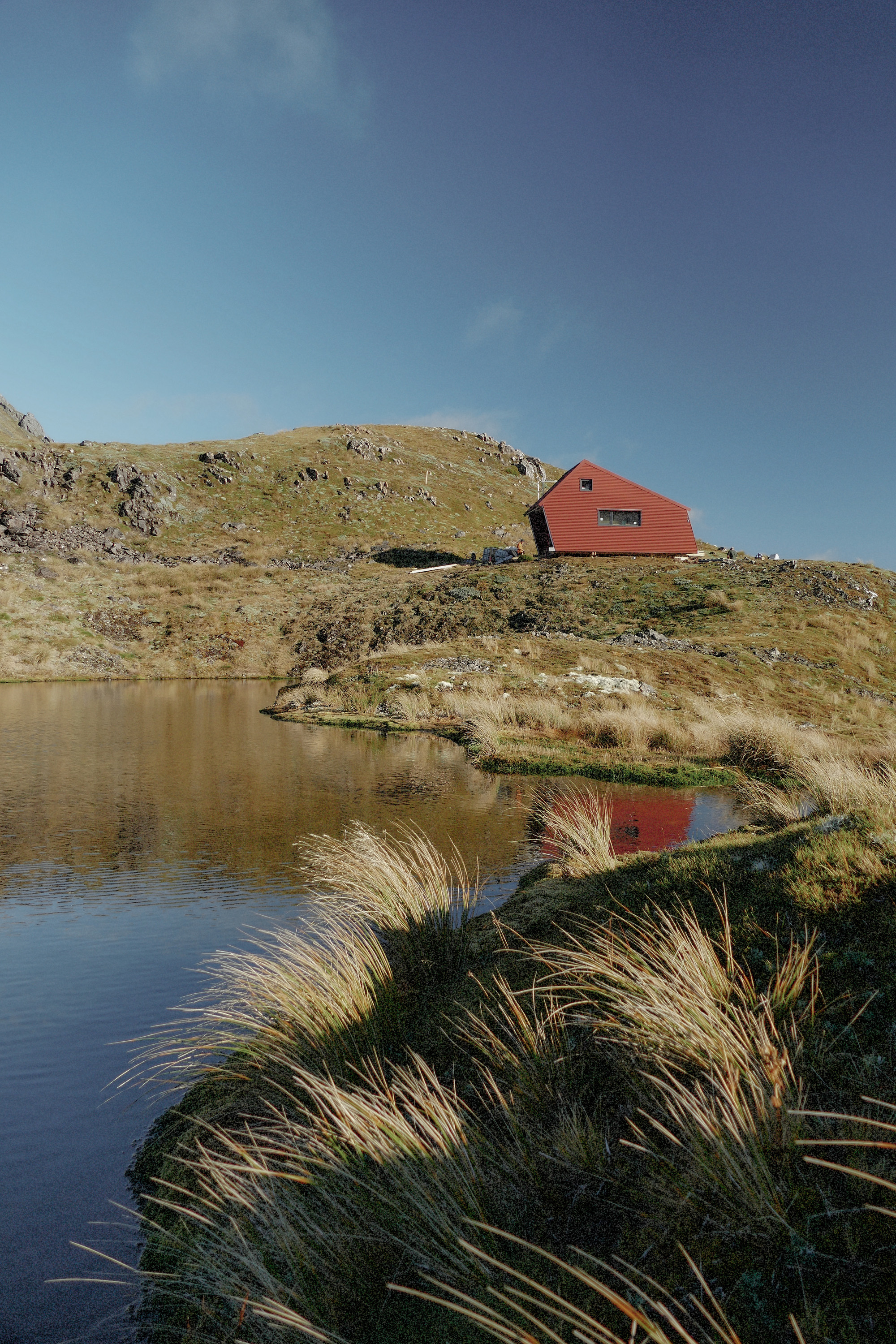
Brass Monkey Hut is in the Lewis Pass and replaces a 1970s two-bunk hut thanks to a bequest by the late Jackie Winters. Designed by mountaineer and architect Graeme Jacobs, the backcountry stopover can only be reached by foot, and needed to withstand heavy weather, countless trampers and curious kea. Pocket collaborated closely with Jacobs from early in the design stage to deliver the architectural vision. “It’s a very long round trip to the nearest hardware store if you forget anything,” says Pocket’s Andrew Clunie of the prefabricated approach.
HERE: The hut was prefabricated off site in panels. Why?
ANDREW CLUNIE: The drivers for this were speed of construction on site and quality control. The hut was built by an amazing team of builders and volunteers camping in alpine conditions, so it was important that each trip up the mountain allowed as much progress as possible in the limited weather windows they had.
The whole hut was assembled in the builder’s yard in Kirwee, so I could inspect most of the critical structural details before it was taken apart and delivered to its final location. This streamlined the verification process needed to ensure compliance with the structural design.
HERE: Everything was choppered in. How did that impact the design?
AC: The prefabricated panels needed to be below a certain size and weight to be safely manoeuvred by helicopter. This required careful planning and detailing between Graeme and me. There are several critical structural components that couldn’t be joined, so we started by keeping them within whole panels, then worked out the panel splits from there.
HERE: Tell us about the materials.
AC: The hut framing is all timber; this was a prerequisite of the early design discussions with architect Graeme Jacobs. It’s light, it’s easily workable, and it’s durable, with standard treatments.
HERE: A hut like this needs to perform with essentially zero maintenance for long stretches. How do you engineer for longevity?
AC: Structurally speaking, it’s relatively simple – specify appropriate timber treatments and keep any exposed bracketry in stainless steel. The harder bit is controlling moisture when you want a building to be well insulated and relatively airtight. Warm, wet trampers on the inside coupled with cold backcountry conditions and minimal heating can lead to a lot of moisture where you don’t want it – inside the wall and roof framing. This can result in long-term issues with rot and mould.
Graeme is an expert in detailing buildings to make sure this moisture can get out. This smart detailing, which we integrated into the structural design, will ensure Brass Monkey Hut has a long life and provides a safe and healthy environment for those taking refuge within it.
HERE: What was the biggest challenge?
AC: Designing for the environmental conditions meant the structure needed to be very robust – small but mighty! It is designed to withstand wind gusts of more than 250km/h, high seismic loads due to the hut’s proximity to the Alpine Fault, and to have five time as much snow on the roof compared to a typical site in Christchurch. This site had it all, but these are exactly the sort of challenges I love as a structural engineer.
HERE: Favourite bits?
AC: The front deck below the kitchen window is a really special place to sit. It’s north-facing and sheltered from the wind by the sloping wing walls, which creates a quiet, calm and (sometimes) warm spot to soak in the enormity of the landscape around you.
HERE: What did it feel like to hand the hut over to the public?
AC: My overarching feeling is one of pride. I’m proud of being involved in such a unique project, one that many people will enjoy and will probably save some lives, but mostly that we achieved the vision of donor Jackie Winters, whose bequest funded the build. Her will reads: “A hut in a high, lofty place where solitude prevails.”
Pocket
Related Stories: