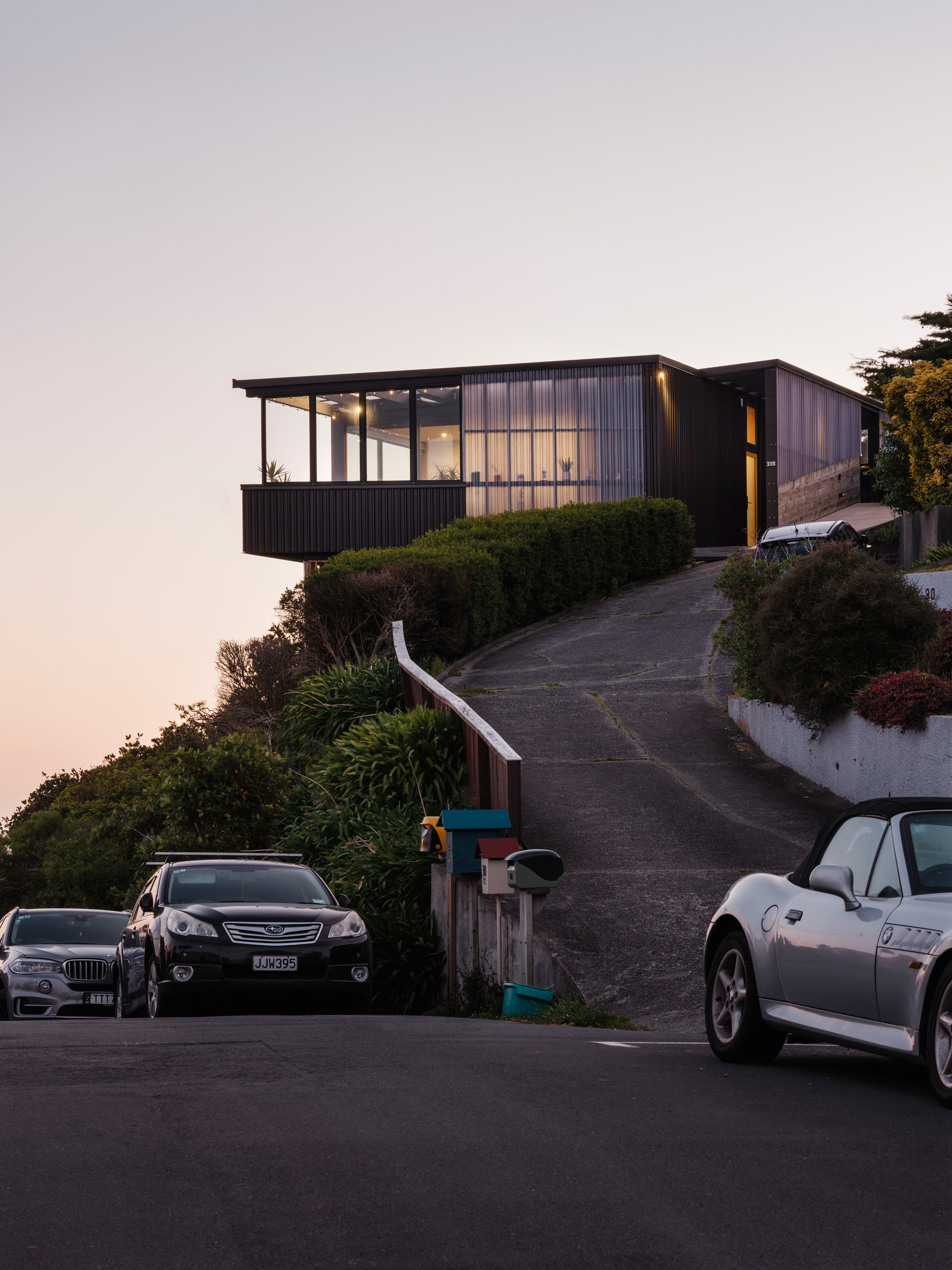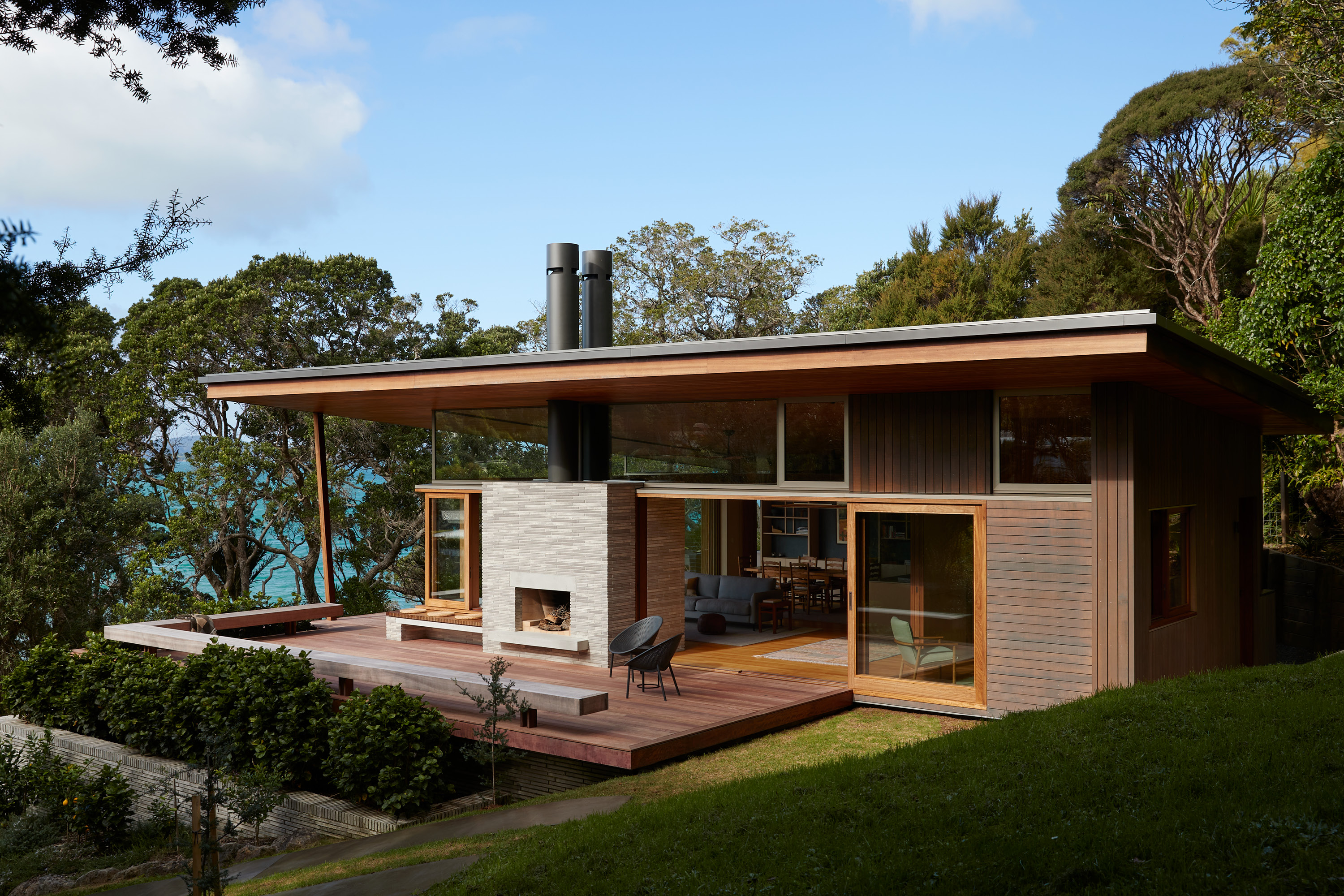
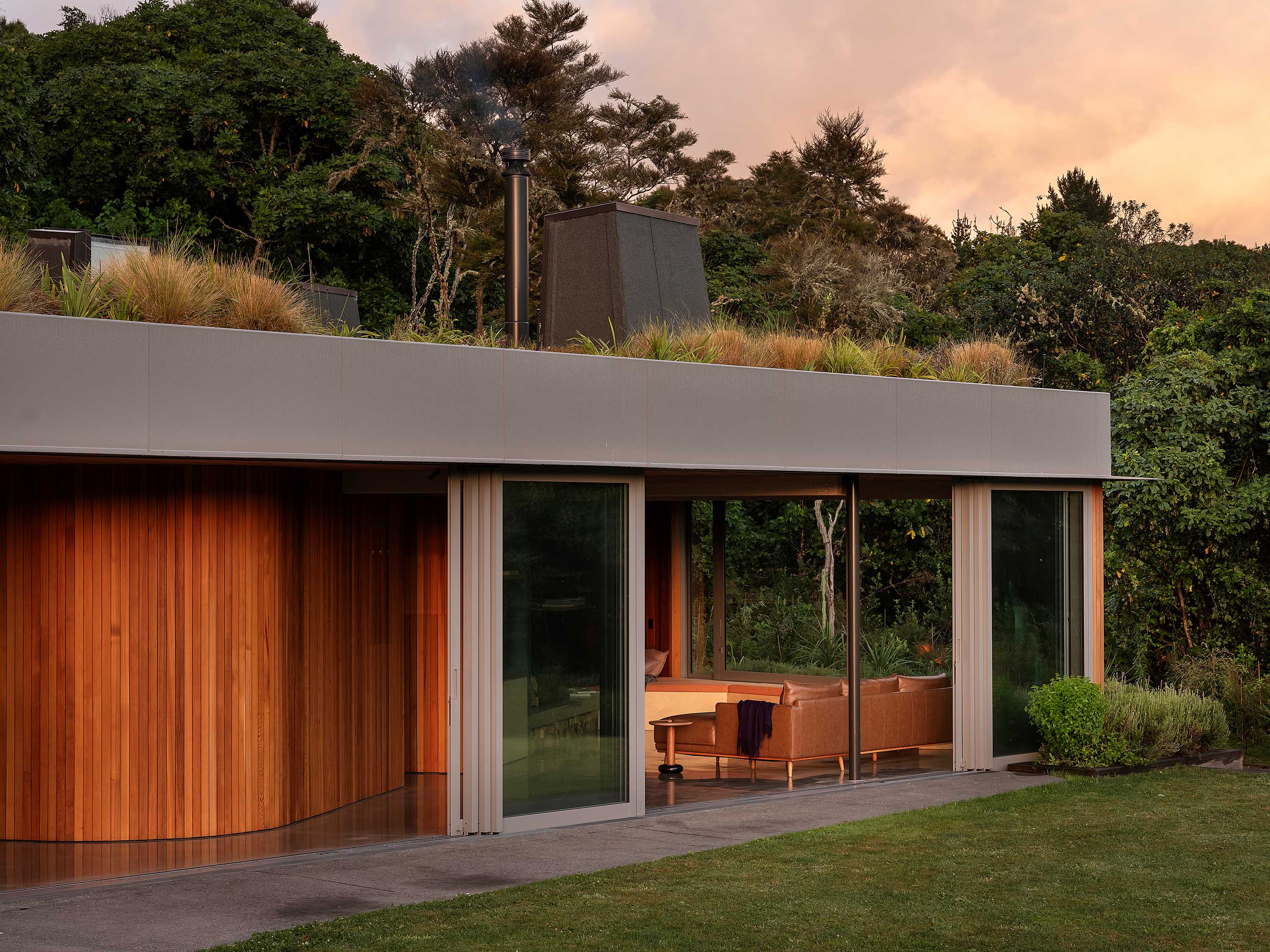
Tucked against the bush in a quiet Lake Taupō village, this family bach presents a curious first impression. Lying low, with a curved internal wall, chunky grey aluminium eyebrow and tussocked living roof, it’s a striking image, made even more so by the glowing purple “light stalks” that pop up out of the roof.
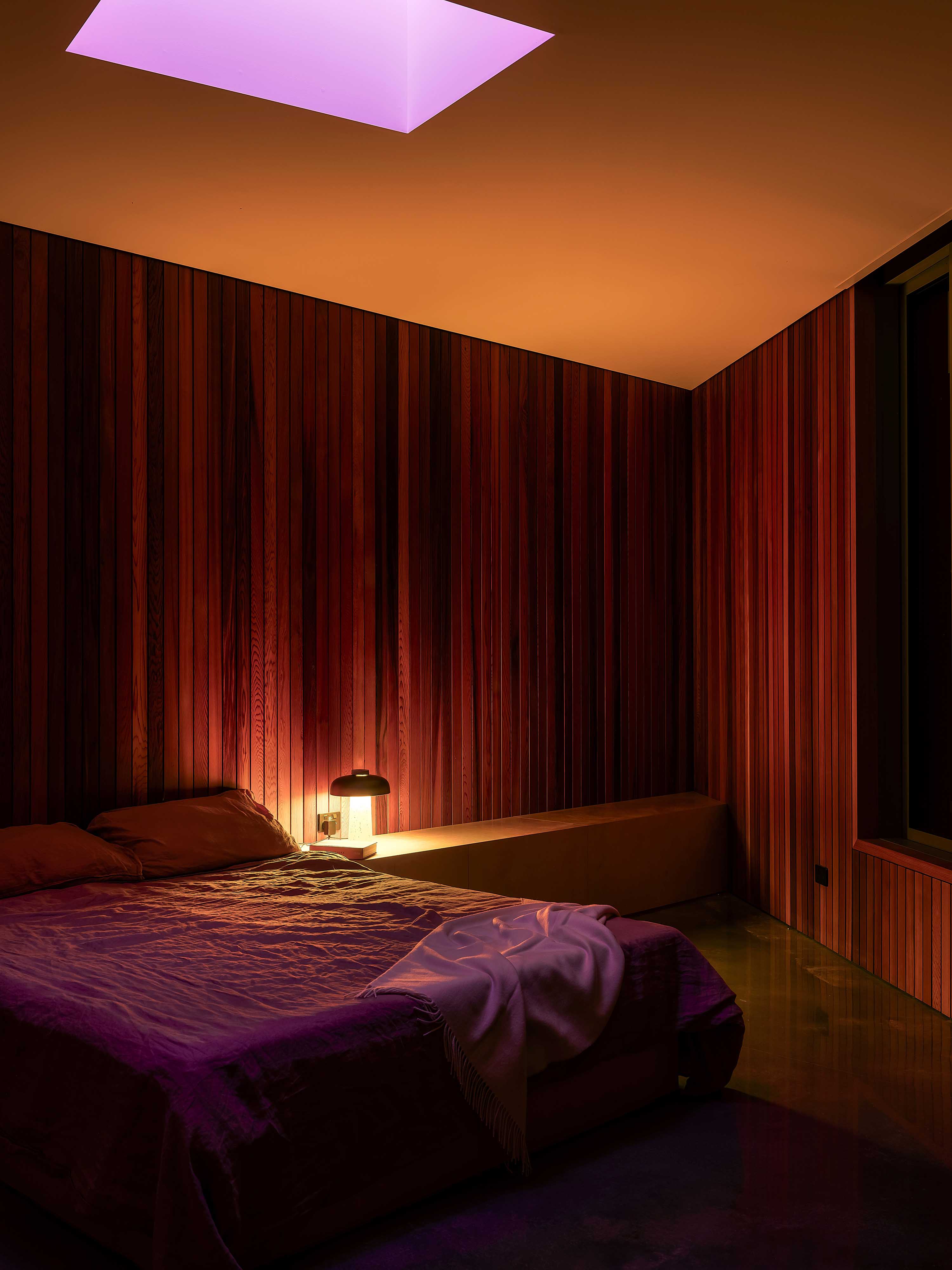
“They’re an iteration of the skylight,” explains Finn Scott, of Bossley Architects. “But they steep the light in, rather than drawing it in – they’re quite directional.” With Altherm glazing waterfalling across the top and side, each roof window funnels light down into the corners of the bach during the day. At night, they glow thanks to purple LED lights in their base. Sculptural in form and brimming with character, they serve as an unofficial crown to this remarkable bach.
With its back pressed up to the native bush, and camouflaged by the living roof, the house dissolves into the landscape. It’s laid out in a triangle: private quarters at the back; public spaces up front. A bunkroom and spare room guarantee beds for at least five guests, while the main bedroom and ensuite nestle into a quiet corner on the western side. It’s a calm, low-lit setting. Generous Altherm glazing frames an exaggerated view out to the bush beyond.
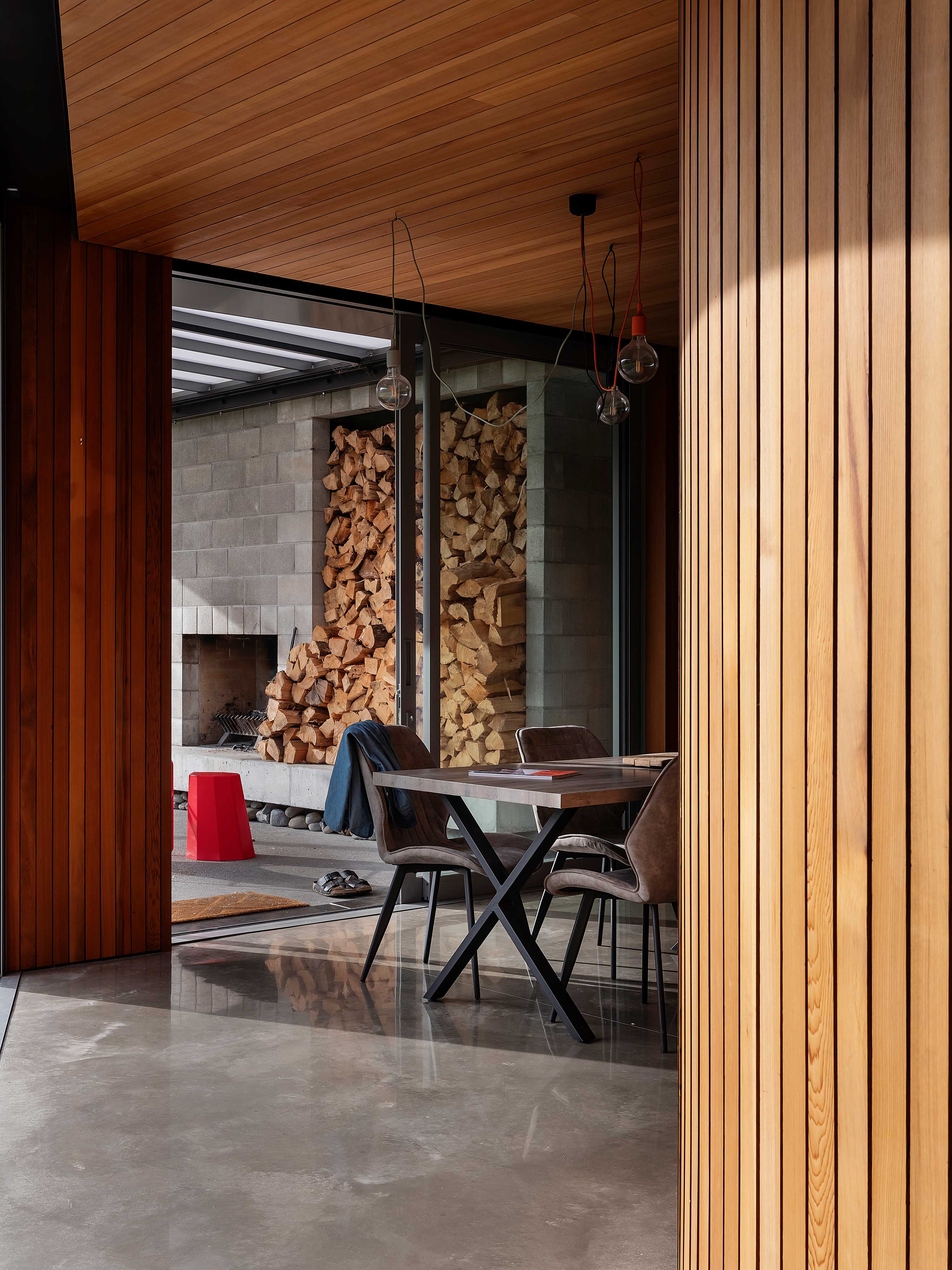
In contrast, the public spaces are open and bright with an easy connection to the outdoors. The lounge, dining space and kitchen flow together, spilling out to the north-facing front yard through APL Architectural Series sliding doors that bank back tidily. Most of the family’s time is spent outside, on the lake or winding down around the covered outdoor fire. “That fireplace is where it all happens,” says Scott. “They live around it, eat around it – I’ve even had photos of them sitting out around it in the middle of winter.”
Shiplap cedar is used throughout the home, chosen in part as a nod to rustic trout-fishing huts. Its rich brown tone pairs well with the polished concrete floor, while built-in plywood joinery and window seats maximise space and deliver a robustness befitting of a family bach. “It had to be able to take a few knocks, be used, loved and lived in,” says the architect, who was keen to avoid anything too fancy or formal.
Initially, this building was planned as the sleepout for a larger bach, but during construction, the clients realised it had everything they needed. “Maybe one day they’ll decide to press play on the bigger bach, but for now, this has shown them the difference between what you think you need and what you actually need,” says Scott. It’s a rewarding reminder of less is more – and the power of purple.
To read more about this porject including video and podcast, click here.
Related Stories: