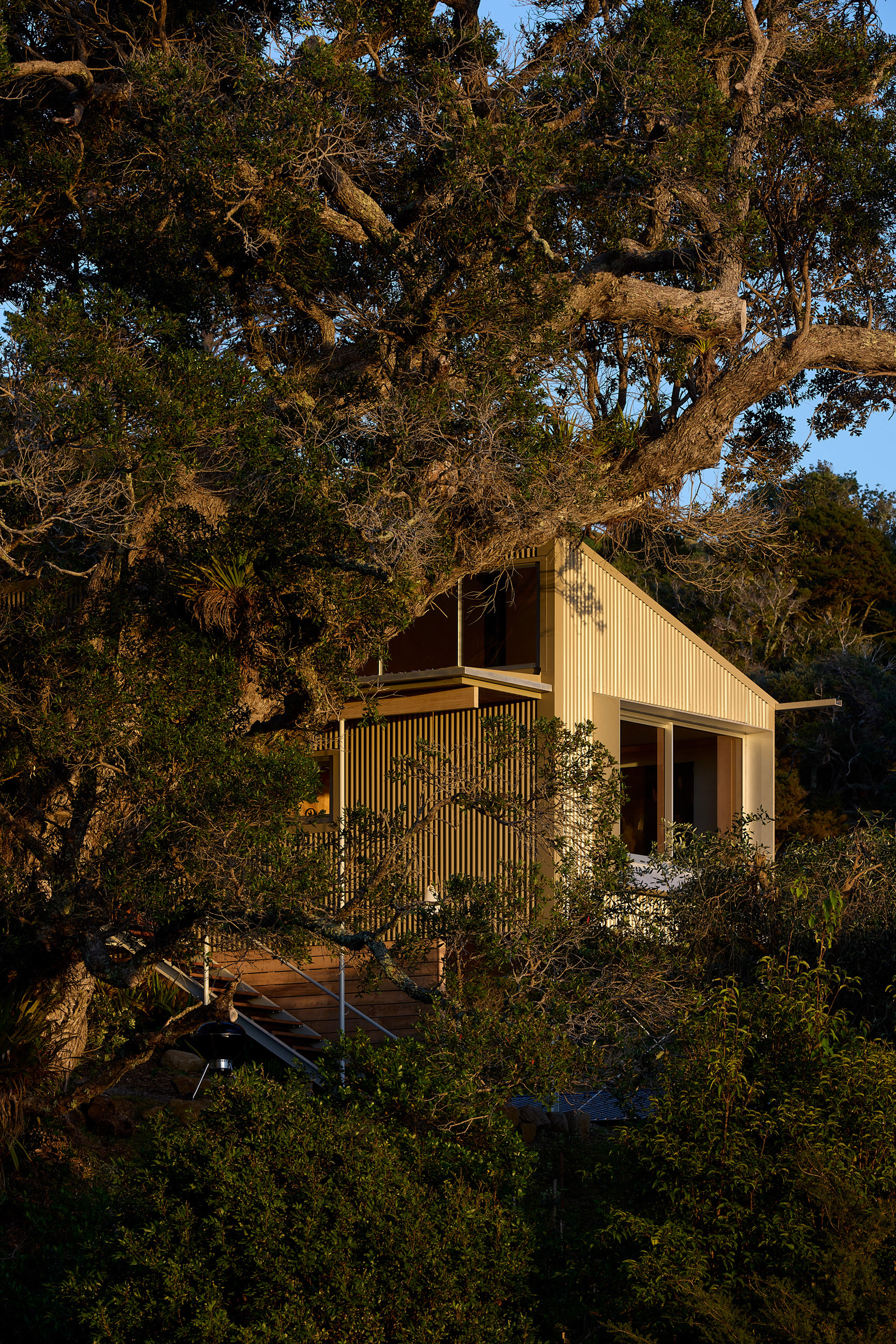
Now on at Objectspace, In the Image of the City interrogates the forgotten, overlooked and marginal parts of our cities. It’s less about urbanity, more about the edges: the suburban wastelands, the forgotten corners. New suburbs and megaconstructs spill into the countryside; gaps are reclaimed in the fabric of streets and neighbourhoods.
Curated by director Kim Paton and Kathy Waghorn, who works between Monash University and Tāmaki Makaurau, the exhibition explores the edges of the built environment through video work and photographs by artists, architects and designers from Naarm Melbourne and Auckland.
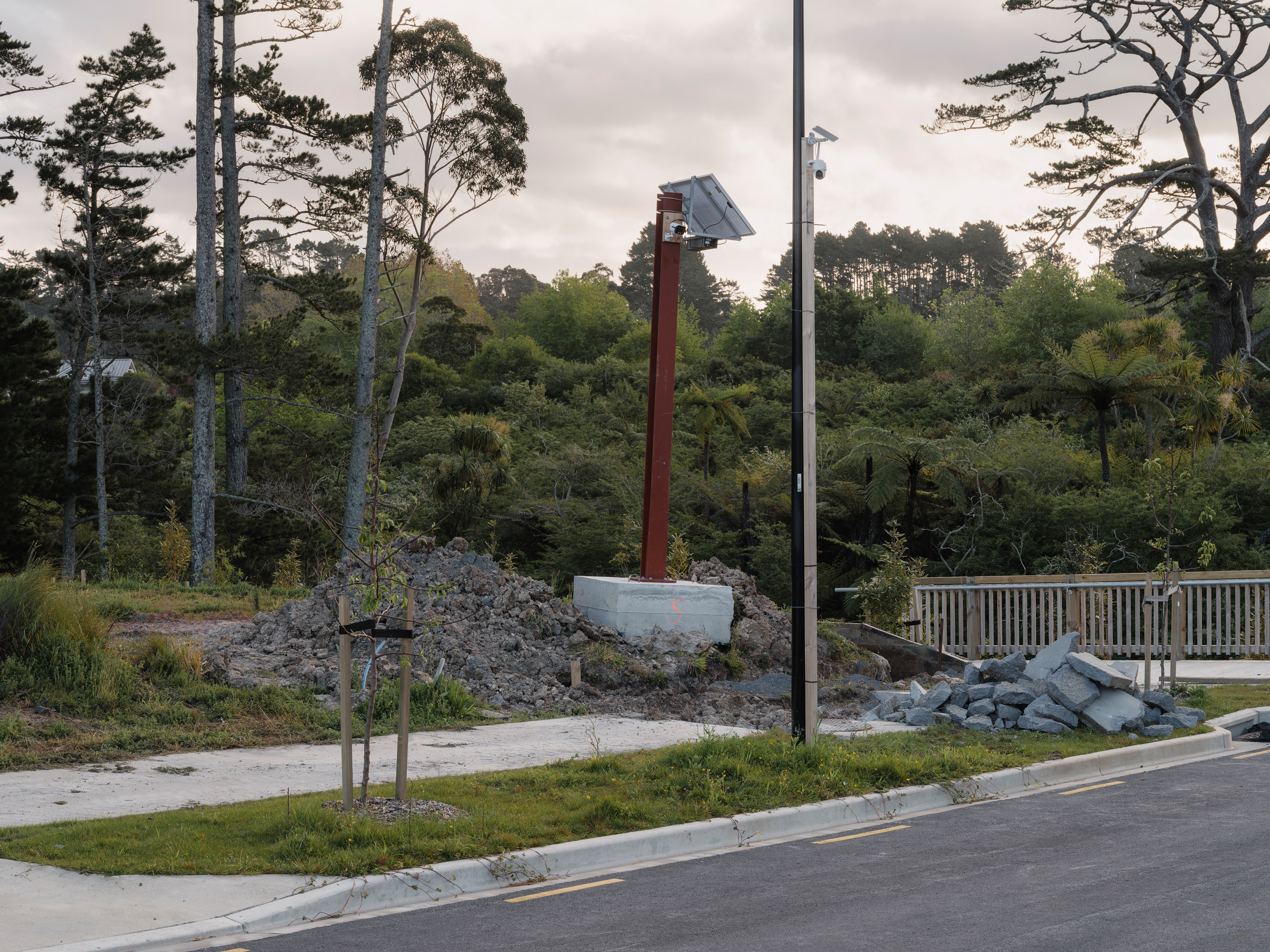
There’s a striking variety of work. In David Straight’s 2021 images of Covid checkpoints at the borders of the city – part of a larger body of work looking at Covid sites across Auckland – he finds the largely unseen sites, noting that “overnight the imperceptible border between regions, previously a line on a map, suddenly had a new physical edge”. Similarly, last year, the photographer documented Spy Towers of CCTV cameras in raw new suburbs, part of a wider documentation of new housing, from Flatbush to Westgate.
In Coburg, meanwhile, an inner north suburb of Naarm Melbourne, sisters Safa, Emina and Fatima El Samad have transformed the former Lebanese grocer owned by their father into Dukkana, an independent, not-for-profit community space celebrating Arab creativity, storytelling and culture – documented here in photographs and video by Amelia Stanwix.
Elsewhere, Edith Amituanai documents young people swimming in an idyllic landscape – an abandoned quarry in her home suburb of Rānui, which she’s documented since 2003. It’s an expression of joyful defiance in a place made ugly by human activity.
In Naarm Melbourne, the Monash Urban Lab with Baracco+Wright Architects explores the impact of sprawling development in a video work, originally made for the 24th Triennale Milano International Exhibition.
And in Central Otago, Matthew Galloway considers the monumental scale of the Clyde Dam. His sculptural works mimic the bannisters and seating that line the viewing platforms around it, hung with monitors on which scenes from the dam’s external workings – and impact on the landscape beyond its edges – play, alongside poems by Brian Turner.
In all, multiplying peripheries and overlapping centres emerge, in which visions of monotony and surveillance exist alongside community, ancestry, refuge and sanctuary.
In The Image Of The City
Objectspace until November 15
.jpg)
Related Stories: