Based in Taumarunui (on the main trunk line), Tyrone Te Waa (Ngāti Tūwharetoa) manoeuvres effortlessly around mode and medium in his studio-based practice. His works are phantasmagorical candy for the retinas and offer a complex, nuanced investigation of cultural identity and memory.
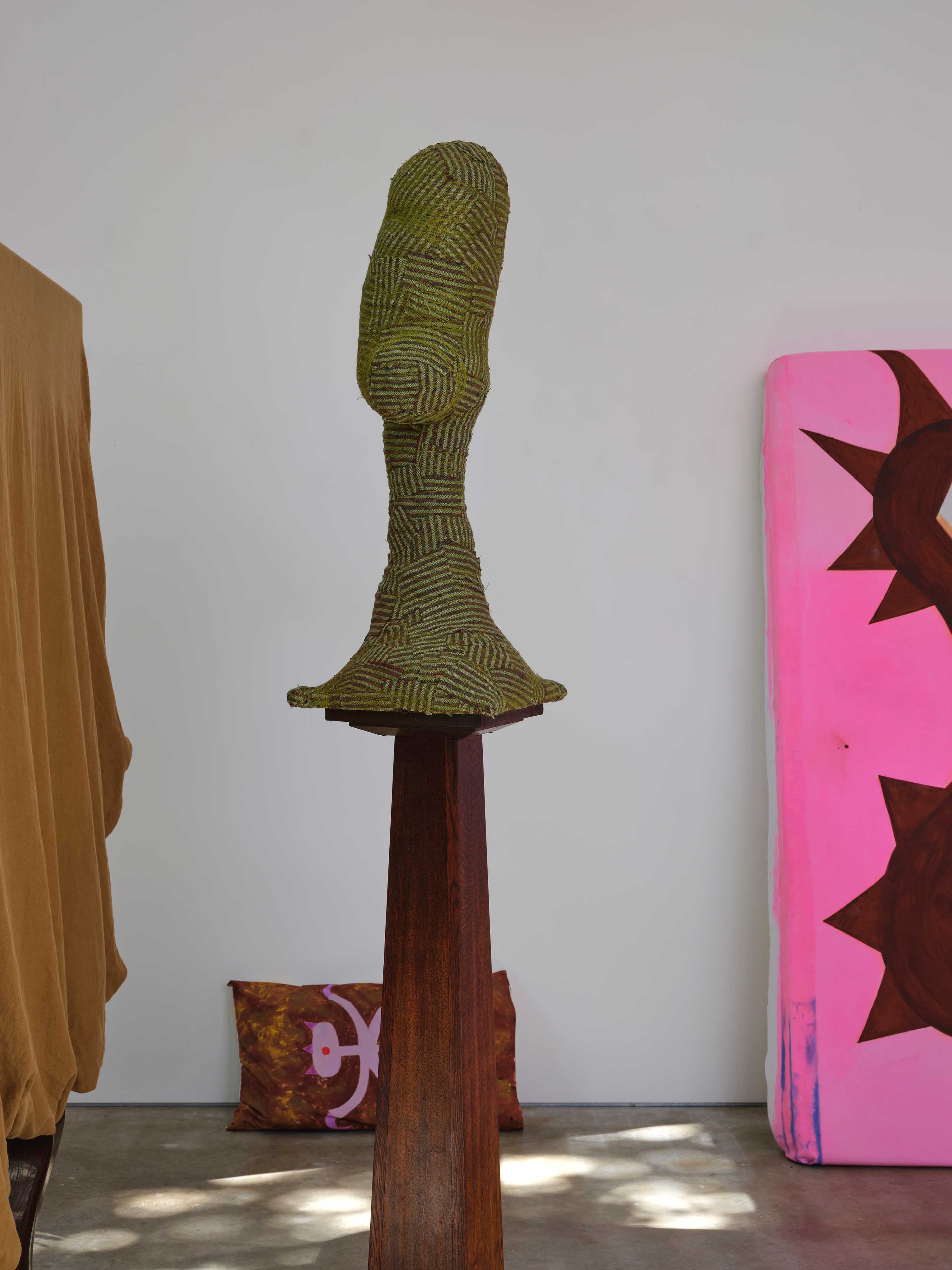
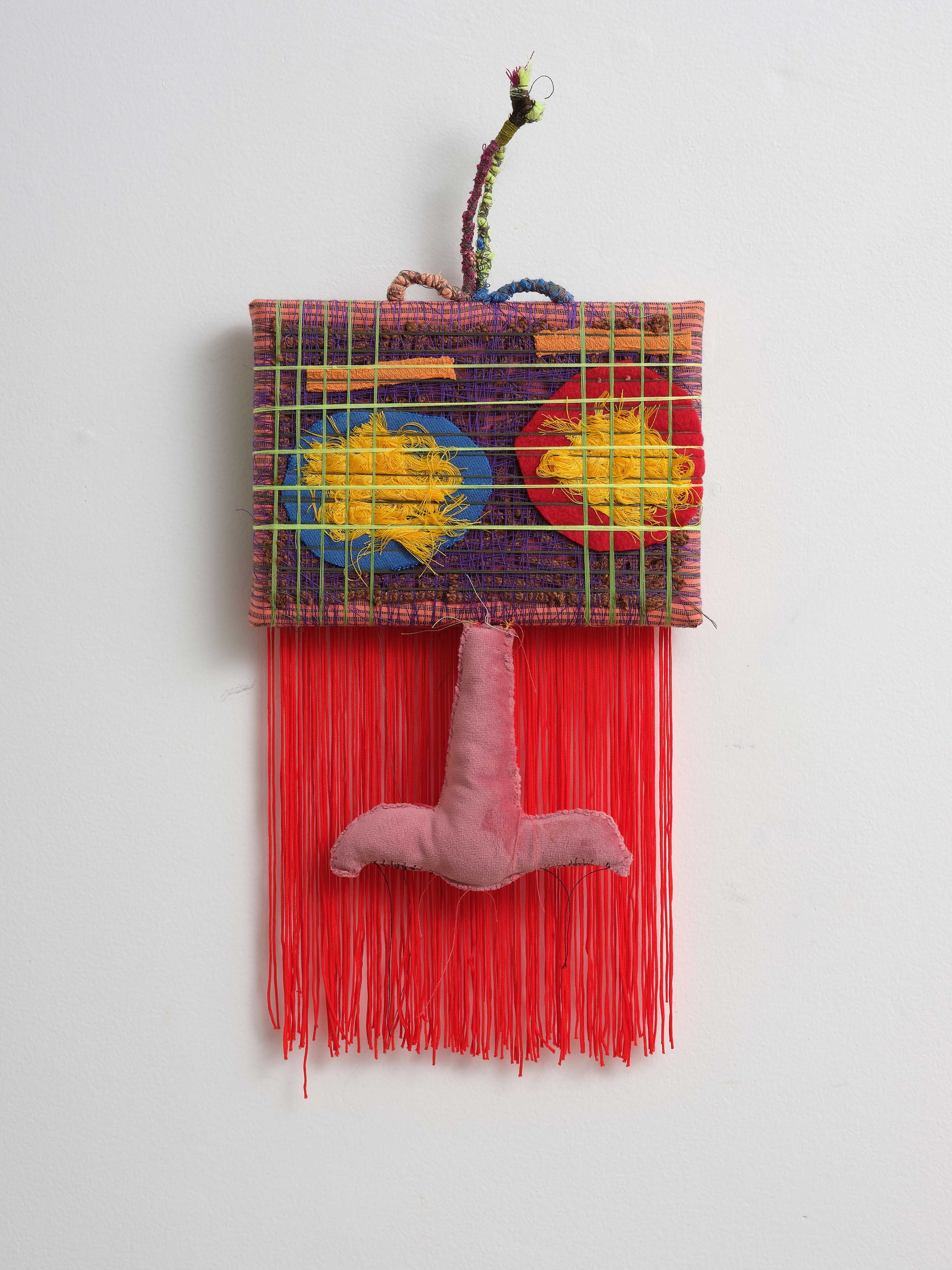
Represented by Anna Miles Gallery in Tāmaki Makaurau Auckland, he works predominantly with found materials that seem straight out of the craft drawer – wood, fabric, paint, foam, resin and string – with exuberant and highly tactile results that you can’t help but want to touch. He compares his artmaking to “cooking lunch” or “an act of knowledge weaving”, signalling a playful approach to traditional gender roles, and emphasising the importance of the artist’s hand.
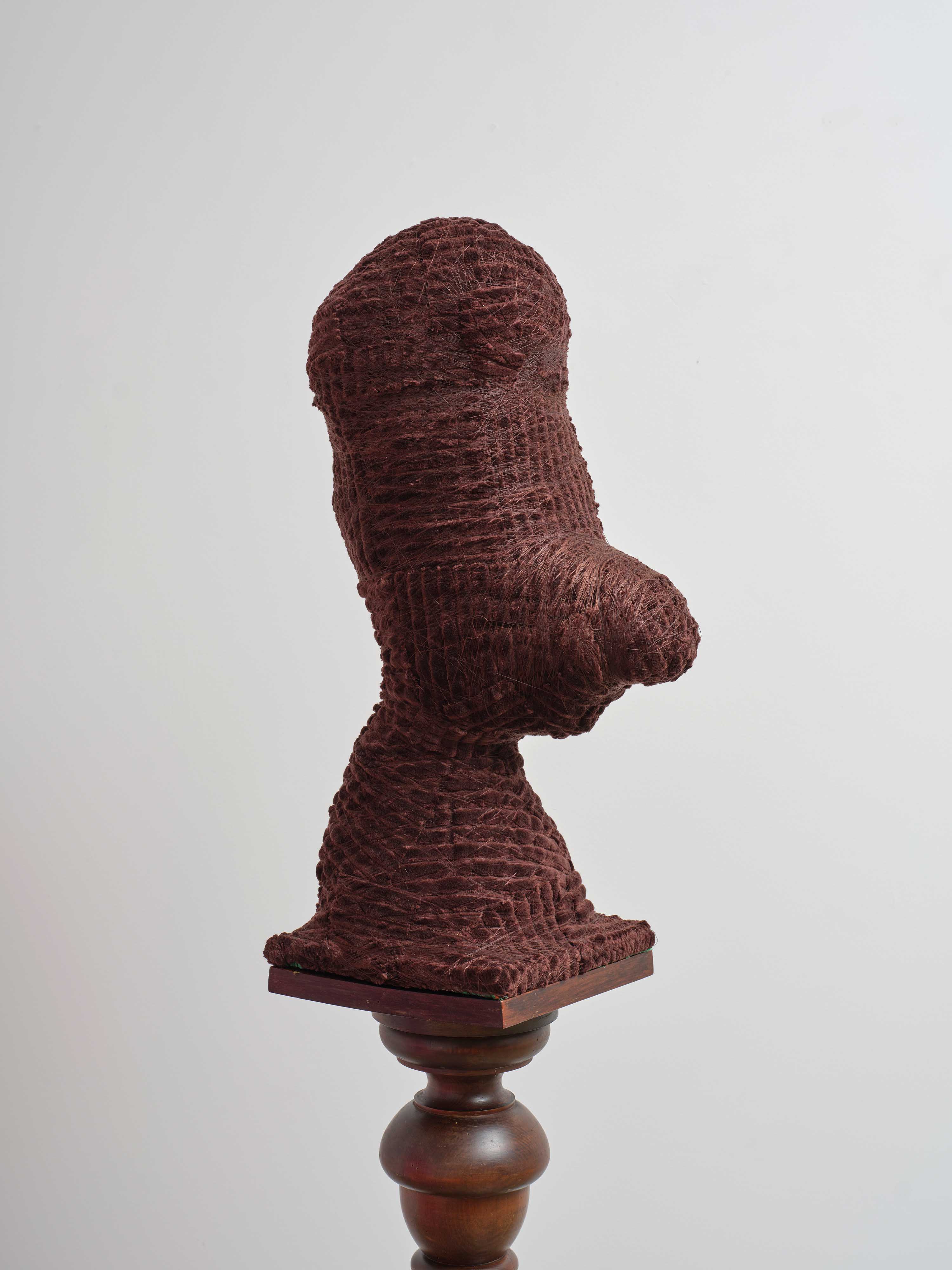
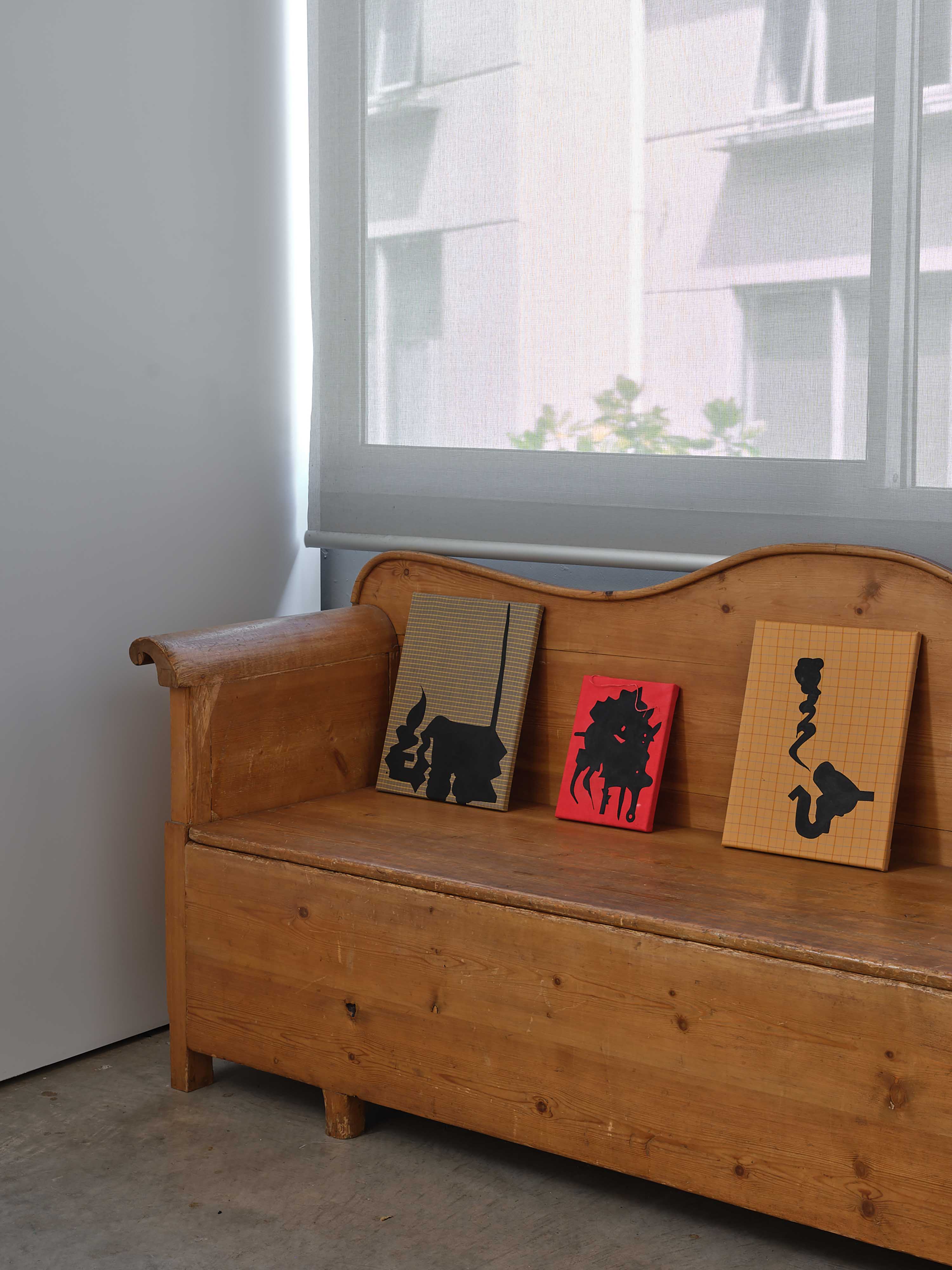
The art is endlessly variable and resists being tied down. Te Waa marshals a diverse range of unexpected techniques: binding, concealing, knotting, tangling, layering, felting and wrapping – things associated with preservation, concealment and revelation. The results are surreal and beautiful, endearingly seductive in their wonky Dasein, their thingness. The formalism, already softened by the materials, calls up memories of biomorphic surrealism and rehabilitates modernism’s obsession with the indigenous. It’s chaos, and intensely human.
“Within the sculptural language I use,” says Te Waa, “those gestures function all the time, all together or in different ratios and at different times, depending on what’s happening energetically around me. Sometimes I use textiles and wood to think about skin and bone, and other times I think about putting together raw materials like a cook that uses whatever’s in the cupboard.” Indeed, the layers of fabric seem to enflesh the underlying scaffolding and supports beneath; Dr Frankenstein starting with the skeleton and working outward. And golly, it’s camp in the best possible way.
Te Waa was born and raised in Tāmaki Makaurau. An imaginative kid, he was an enthusiastic painter and drawer, which was encouraged by his whānau. He later graduated from Unitec with a Bachelor of Creative Enterprise. There, he was exposed to contemporary art and New Zealand art history, Western art history and theory, and Māori art history and tikanga. He completed his Master of Creative Practice at Unitec in 2021. The following year, he was awarded an Arts Foundation of New Zealand Te Tumu Toi Springboard and was mentored by artist Maungarongo “Ron” Te Kawa, noted for his quilt works.
Te Waa’s Māori heritage plays a crucial role in shaping his art. Traditional Māori motifs such as koru, manaia and kōwhaiwhai are frequently referenced or reimagined. Māori spiritual concepts find compatibility with the goals of surrealism. Pop art’s assimilation of animation, comic books and music subcultures is also an apparent influence. Te Waa crafts an otherworldly realm, telling stories grounded in personal and collective histories – visual genealogies, mapping the connections between ancestors, land and contemporary experience.
Just as raranga and tukutuku encode genealogical and tribal whakapapa, Te Waa reflects on his own autobiography and ancestry, informed by research into takatāpui and queer histories in Aotearoa, and translated through the language of deconstruction and fashion. “I usually go straight to plants and body shapes for references,” he says. Often, the work feels like the product of intuition, not letting excessive intellectualism get in the way of heart and soul. The resulting aesthetic has an almost endearing awkwardness, giving each work a distinct personality.
“I love an awkward person who pushes themselves outside their comfort zone,” says Te Waa, “that is what I find most endearing and inspirational when I create things. I love to see awkwardness in social situations and observe how people ‘wear’ uncomfortable situations. It’s my favourite theatre show, especially at an art exhibition. Parallel to this, I wonder how architecture, clothing, colour and persona affect people, and I like to explore this through materials in my installation practice.” Te Waa’s installations not only fill out Rosalind Krauss’ “expanded field” of sculptural theory but actively resist permanence and putting things on pedestals, particularly in the recycling of the found and discarded. The past is still there though, in the rituals of making.
.jpg)
.jpg)
“Everyone can impart their ritualistic, sacred, ephemeral and ancestral presence into anything they share an intentional interaction with, and it happens daily,” says the artist. “I do this when I rearrange my lounge or construct an art installation, and I am reminded again that everything around me is moveable and nothing is stuck. In terms of materials, I like to practise placing value on discarded ‘things’ to rework my relationship with ‘things’ and change some habits that don’t belong to me. This is a constant meditation on the attachments I have and where I think more value should be placed within the multiple relationships I hold.”
The “knowledge weaving” he speaks of is redolent of his materials and his practice of drawing from takatāpui and queer histories in Aotearoa. “I work with fabric and think through fabric,” he says, “so ‘knowledge weaving’ means interlacing new knowledge from any place and time into the existing weave that was given to me. Alongside this view, I find knowledge based on recurring signs and symbols I observe that land around me, and then I spend time processing whether or not it’s my role to hold that knowledge.”
Titles like The Shroud of Carmen Rupe and Bird Snare from Ongarue Pub (after Nanny Te Keehi) suggest a broader whakapapa and wayfinding in his work. “I use titles to acknowledge stories,” says the artist. “Ancestral stories carry lessons that I use as a road map. While I find some stories were formulaic, others unfolded through intuition and pattern or were prewritten by genealogy. As a way of staying in contact with my ancestors, I recite their names often and this serves as a grounding point for my art practice.”
The pop art sensibility underplays it all, disrupting hierarchies, and the humour creates a middle ground for the viewer to approach the message. The works are eccentric whānau full of personality. In interviews, Te Waa has spoken about the importance of humour and play as strategies for navigating complex histories and contemporary realities. His art often employs satire and whimsy, inviting audiences to reflect on serious themes of cultural continuity, colonisation and resilience, without becoming didactic or heavy-handed. This lightness of touch makes his work accessible to a wide audience, while its layers of meaning reward repeated viewing and contemplation.
“Humour disarms the viewer,” says the artist, “discomfort challenges them, and camp-play plays with the familiar, sometimes pushing it into what feels like dysfunction. At times, I create, and consider a child surrounded by the presence of shapes and how those shapes become part of their subconscious. I think everyone has their own shapes, and they are free to play with the point, line, curve and shadow of their shapes. This is one way I reflect on psychic space and memory.”
In recent years, Te Waa has shown locally at Objectspace, Auckland Art Gallery Toi o Tāmaki, Dowse Art Museum, and at Casula Powerhouse in Sydney. Ultimately, the work and the artist are of a piece, cut from the same cloth, expressive, bold, flamboyant, yet completely open, raw, vulnerable. What you see, as Frank Stella used to say, is what you see. That goes for the artist as well.
Related Stories: