“It’s a bit of an escape really,” says architect Karl Wipatene, of a.k.a. Architecture, reflecting on the studio he and his wife Anne Kelly designed for longtime clients in Mount Victoria, Te Whanganui-a-Tara. “It’s kind of a folly in the garden.”
The family have lived on this block for a long time, originally next door, where they undertook a major renovation by Wipatene when he worked for another Wellington practice. When the neighbouring house – which has a deeper section, and off-street parking – came up for sale, they moved next door. They had young kids and a busy family life, so the flat lawn and recently completed basement extension were perfect.
A decade or so on, they needed a different kind of space: somewhere for yoga, craft and drum practice away from the main house – a second zone, complete with outdoor kitchen, that could also offer somewhere to gather with friends in summer, since the main house’s living areas are upstairs. So they approached Kelly and Wipatene to build a multi-purpose space at the bottom of the garden.
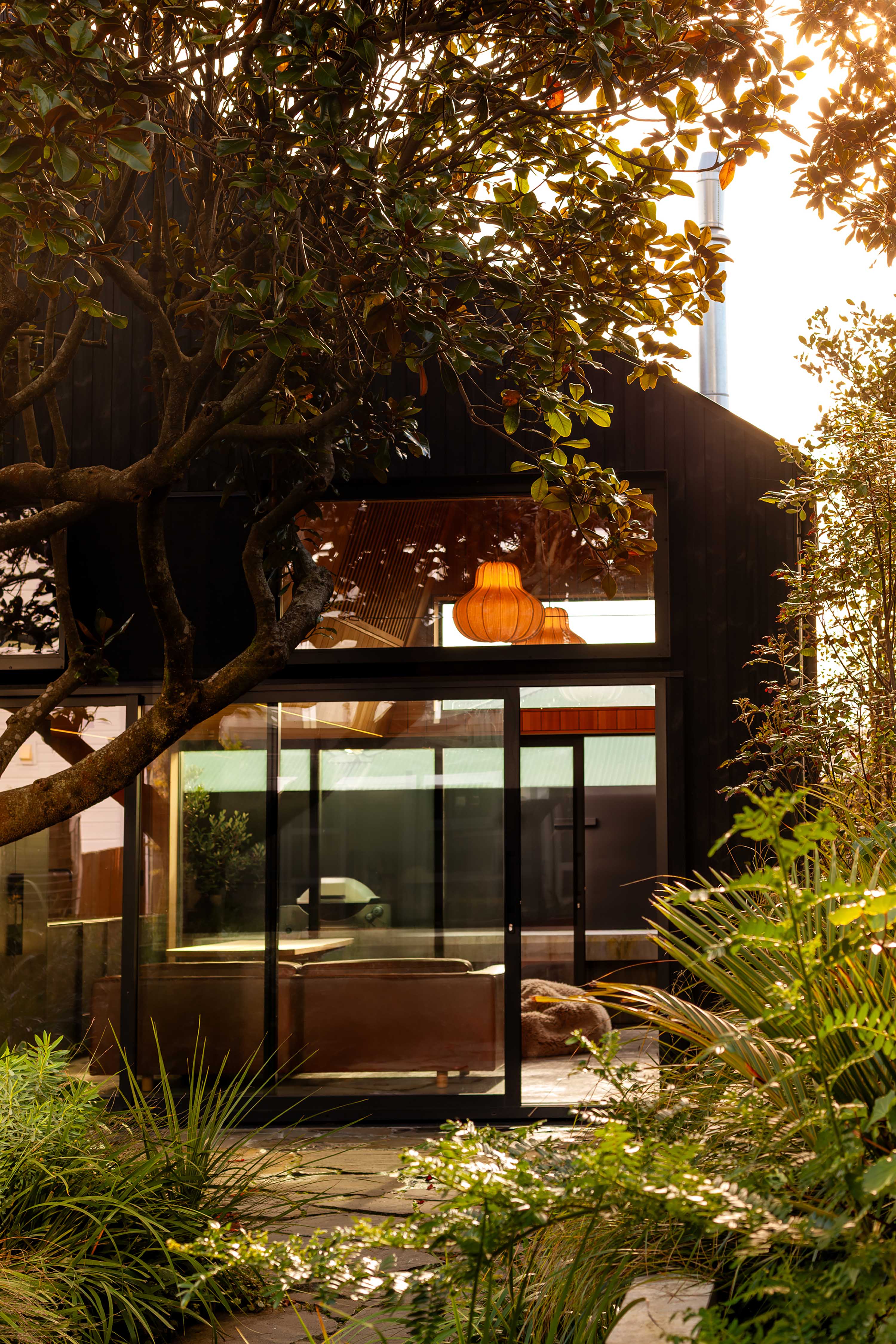
Their response is simple: an asymmetric gable pushed as far back on the section as possible, sitting within the planning overlays. It’s wedged between the setback along the rear boundary and an established magnolia tree, which has become the focus of a new courtyard. “We set it up so it could be a little studio for one of the kids one day,” says Wipatene, noting that plumbing in what is now a storage space behind the kitchen (and changes to the district plan) could enable it to operate as a self-contained apartment with its own bathroom. “Though, for now, it’s a hang-out space.”
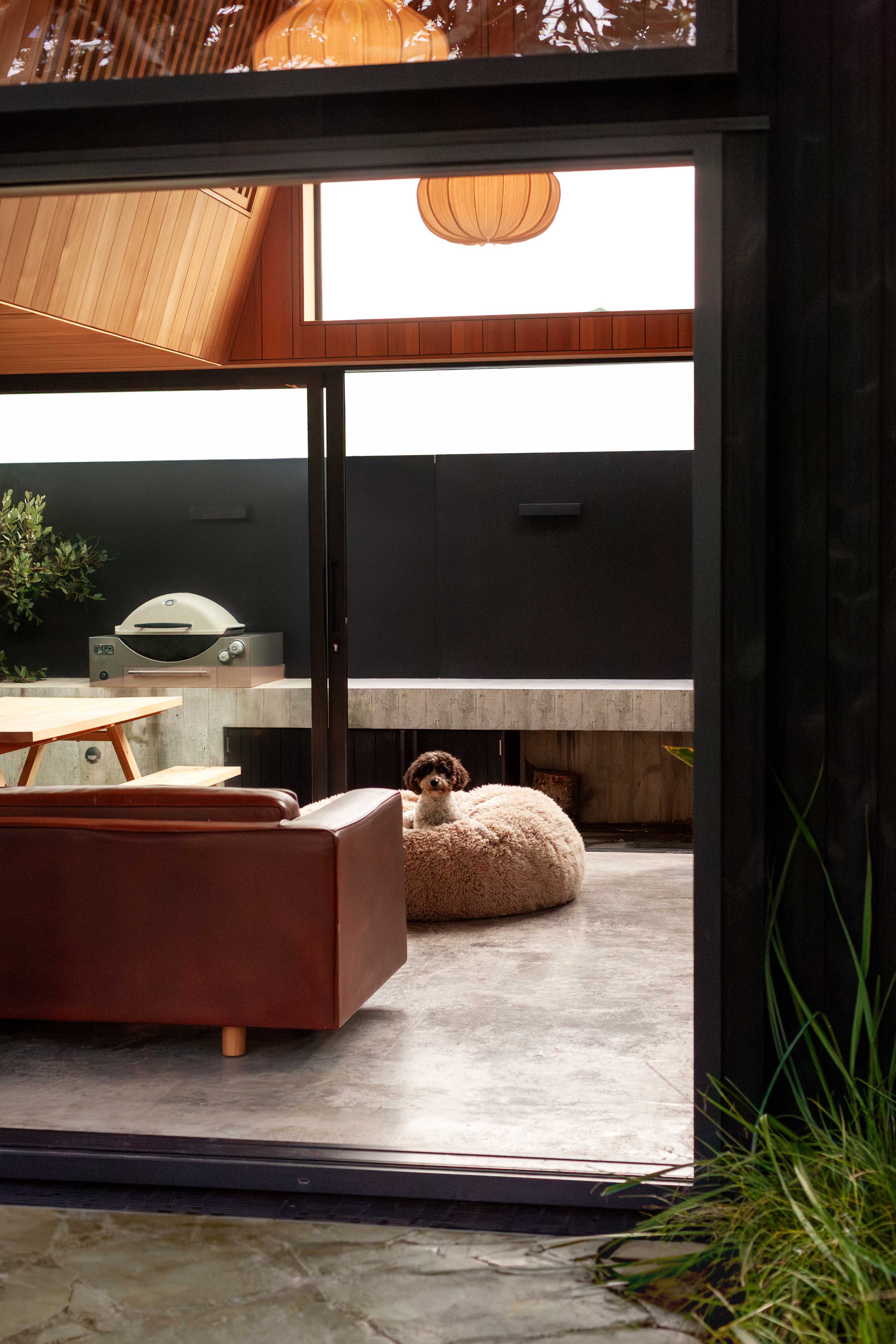
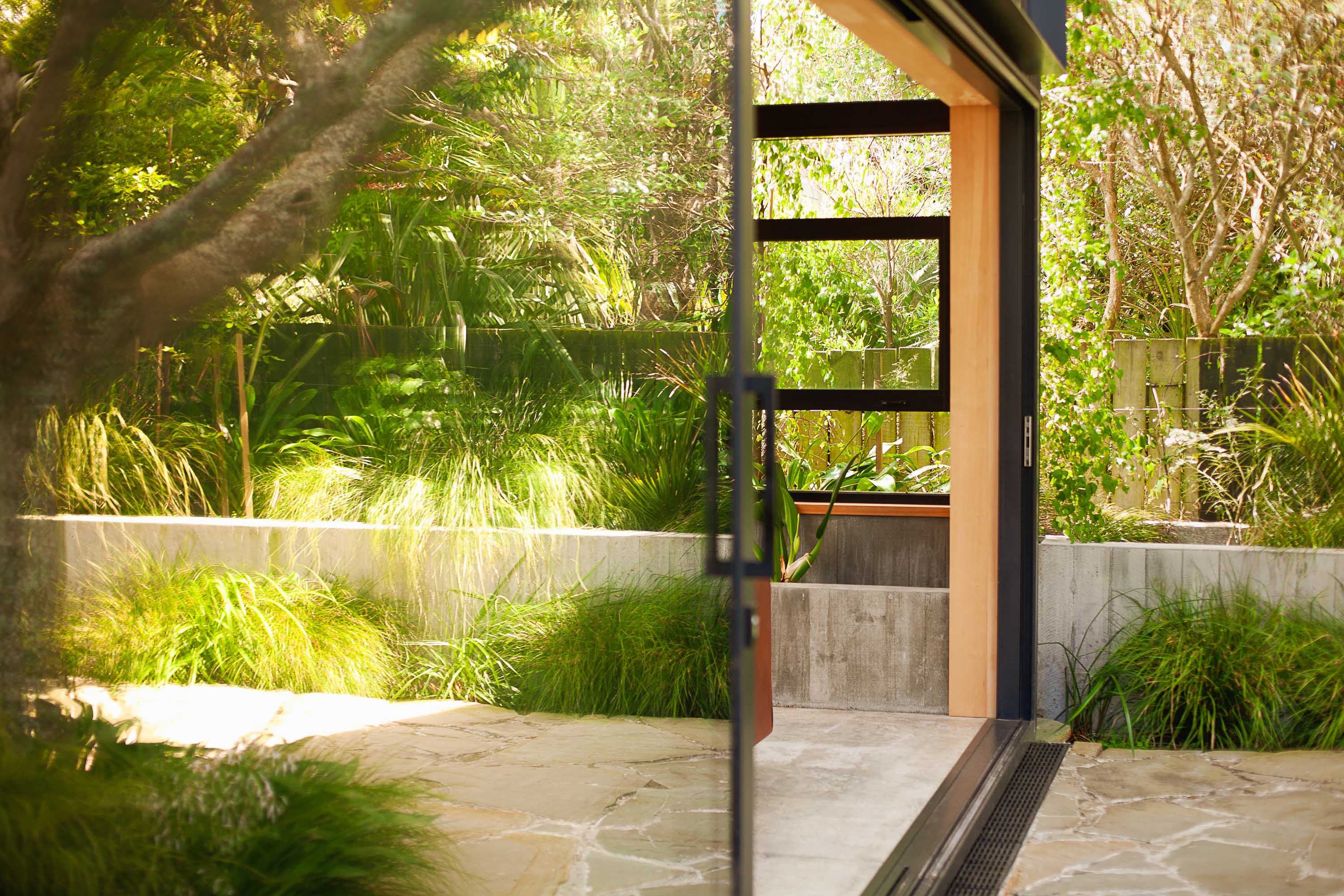
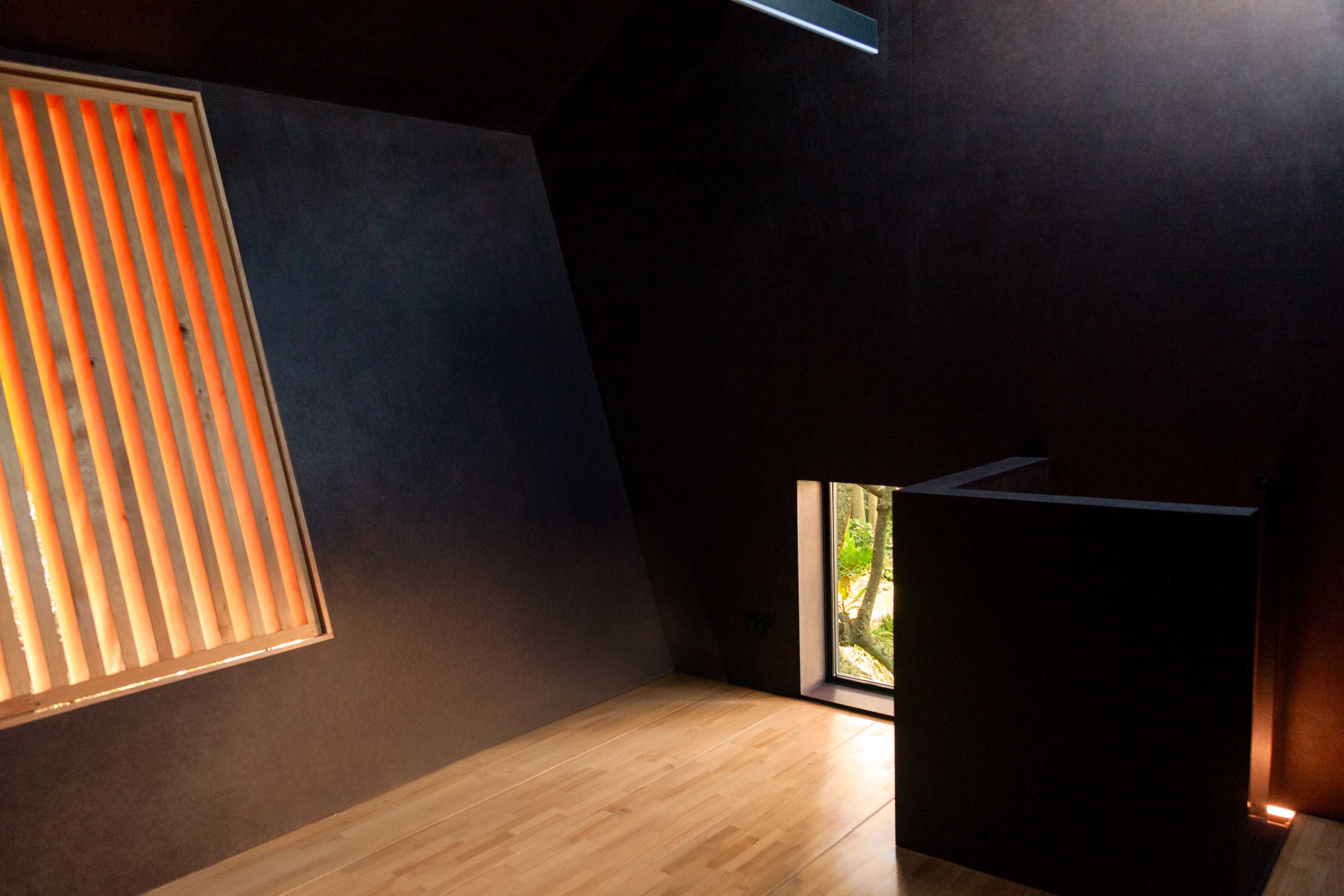
It’s deceptively simple, but beautifully detailed, with a concrete floor, hemlock lining, and taiga cladding on the outside. It has an open volume on one side, and a discreet loft above a storage space, reached by a hidden staircase behind a wall of cabinetry that also houses a kitchenette from IMO. Up the ladder, it’s Tardis-like – an asymmetric box clad in black Trans-Tex cladding (more typically used for truck decks). In summer, the doors push right back and it becomes a garden pavilion, complete with built-in Weber; in winter, a woodburner keeps it cosy inside.
Landscape designer James Walkinshaw of Xanthe White Design's Wellington studio came on board as the building started to go up. The slab was down and so were the planter boxes, but everything else was up for grabs. “It was interesting because I was looking at the plans and asking how we could embed the new building in the garden. It’s a garden pavilion, not a wee shed, so it was about drawing them out to it.”
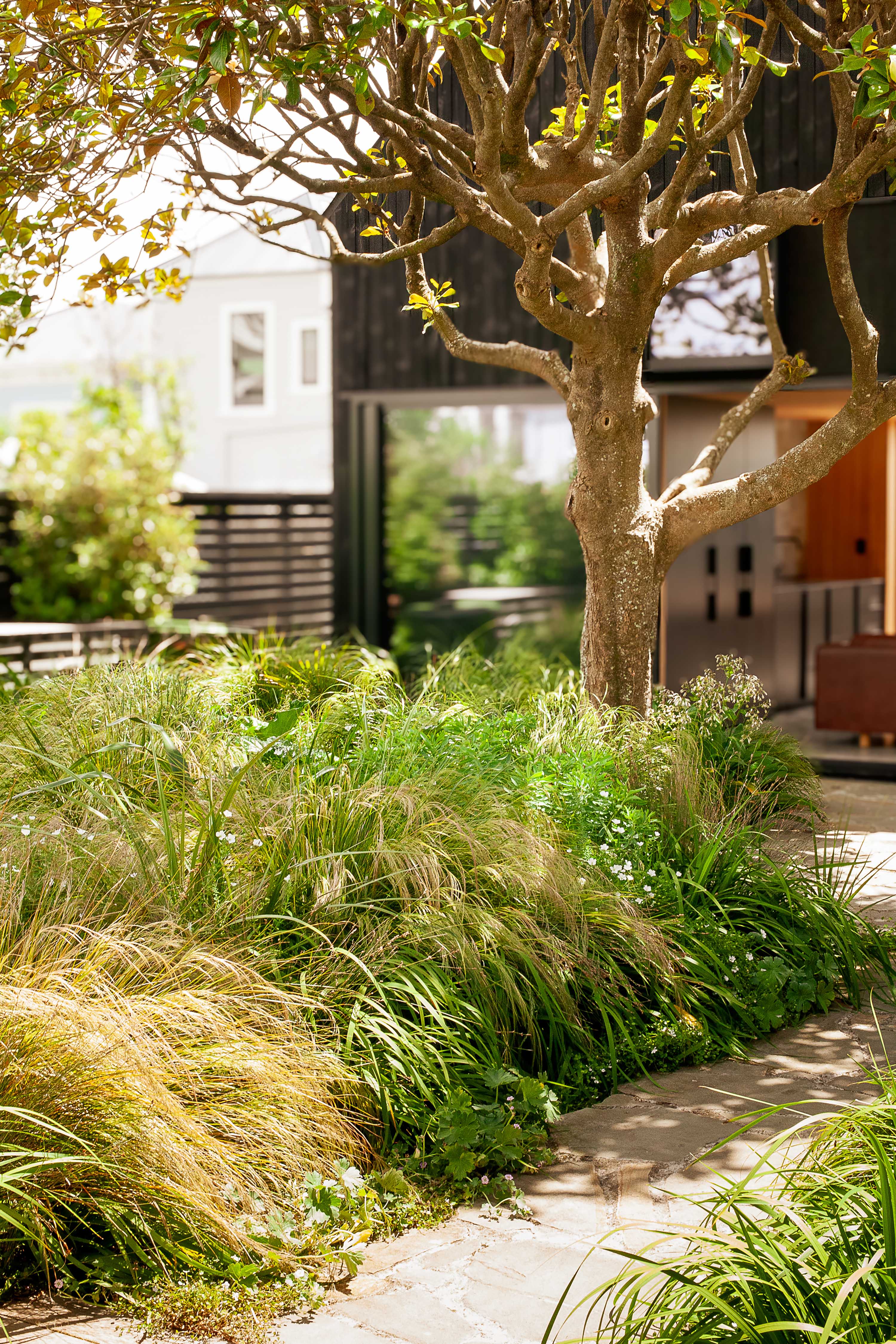
His first instinct was to question how much, with older teenagers, the clients really needed the lawn. “I had this idea of a native grassland,” he says. “I was interested in this idea of weaving textures into a grassland, so we have a tapestry of quite low things.” You look at the garden from three key places: the pavilion itself, the primary bedroom, and from the living spaces above: the tapestry approach works from all vantages.
To that, he added stone paving that leads through the garden to the pavilion. An existing deck off the house was edited to add more corners and nooks. Here, Walkinshaw introduced a tree and planting to create a private deck off the primary bedroom. On one boundary, he added native mānatu (ribbonwood) to provide dappled screening from next door; on the other, it’s more open, with borrowed views over neighbouring gardens to established trees.
In the grassland, planting is largely native, differentiated by form, texture and tonal colour. The scheme includes rengarenga, miniature toi toi and waiūatua (euphorbia glauca) – small, grass-like natives – along with a few exotics, including wisteria on the house, and a lemon tree. Scattered through the grassland are small plants which will, over time, emerge to change the feel: shrubby kōwhai, nīkau and makamaka. Long term, the meadow will develop into a native forest garden. “It shouldn’t feel like a botanical garden,” says Walkinshaw of the approach. “It should feel fresh, nice to look at – and to look over.”
Related Stories: