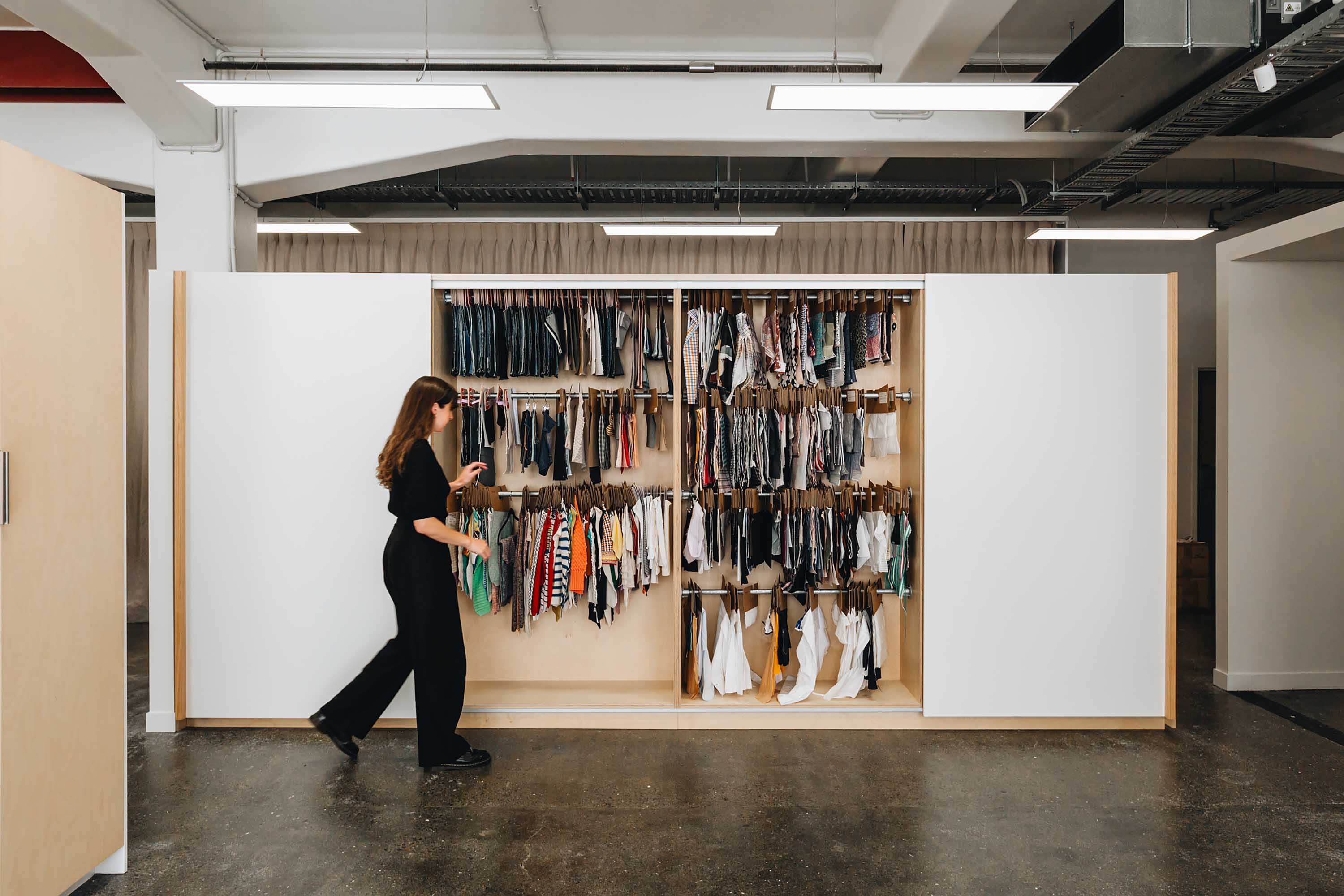
Over the past seven years, Makers of Architecture have worked with Kowtow to overhaul the brand’s head office and atelier in a beautiful old industrial space in the heart of Te Whanganui-a-Tara Wellington. Originally built as a printer, it was used for storage for decades. Kowtow’s head office stretches across two buildings on the second floor, with steel-framed windows and an airy feel.
It’s been quite the journey. “I feel like together we’ve managed to develop a platform for Kowtow’s creative process,” says Beth Cameron of Makers, “a spatial logic that supports productivity and promotes cultural autonomy. Everything is in constant change within this creative fashion environment, so it was important the design could respond and adapt with ease.”
HERE: Tell us about your design approach.
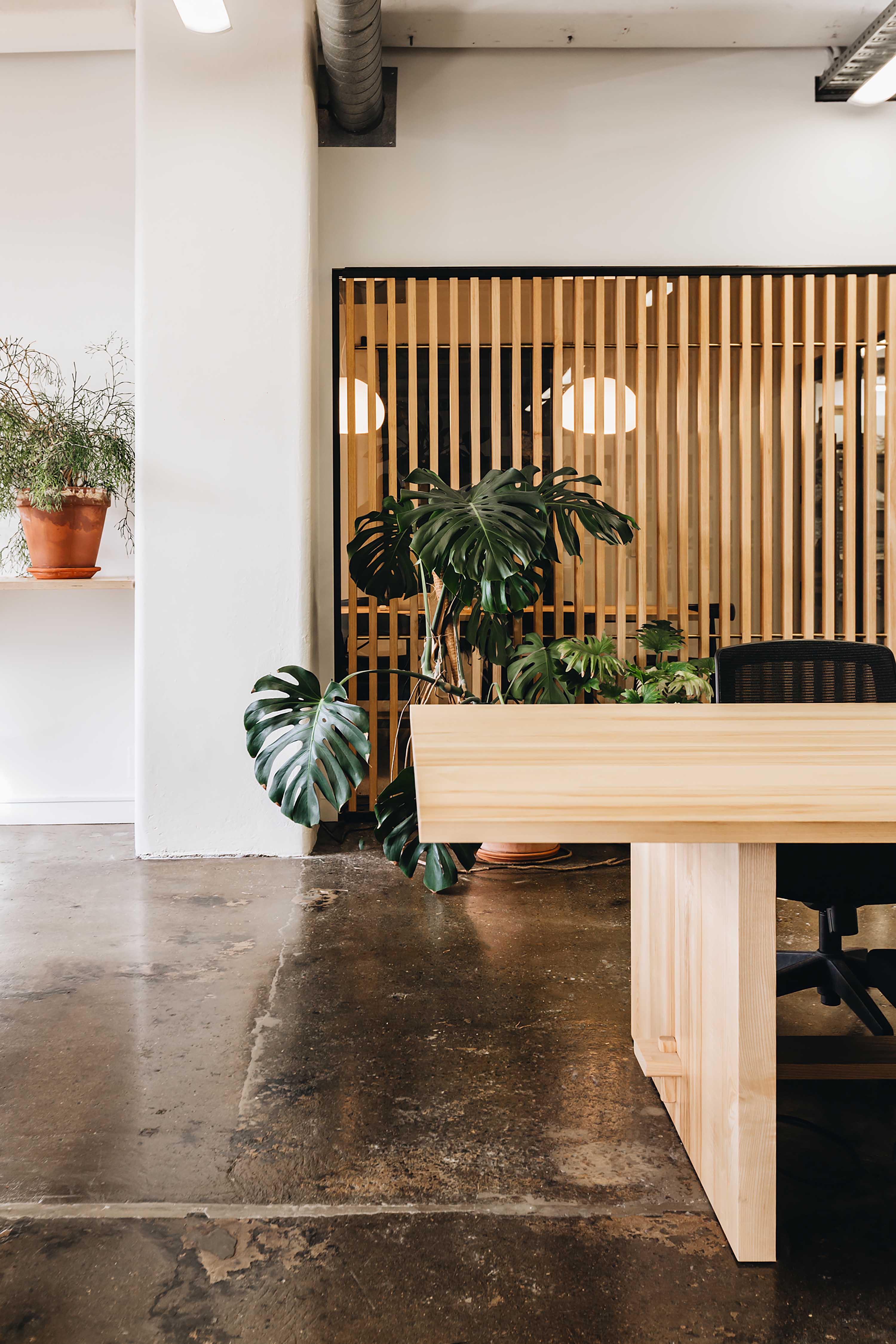
BETH CAMERON: It’s a beautiful space of generous proportions, with large banks of north-facing windows overlooking the street below. The layout is marked by the exposed concrete post and beam structure. Preserving the authenticity of the original space, we approached the design with minimal, flexible interventions inserted within the structural grid. This aligns with Kowtow’s values of honesty, care, preservation and longevity. Our architectural and build teams both shaped a workspace that is simple, considered and able to evolve over time.
HERE: You’ve worked with Kowtow for a while. How have you connected the retail design language with the head office?
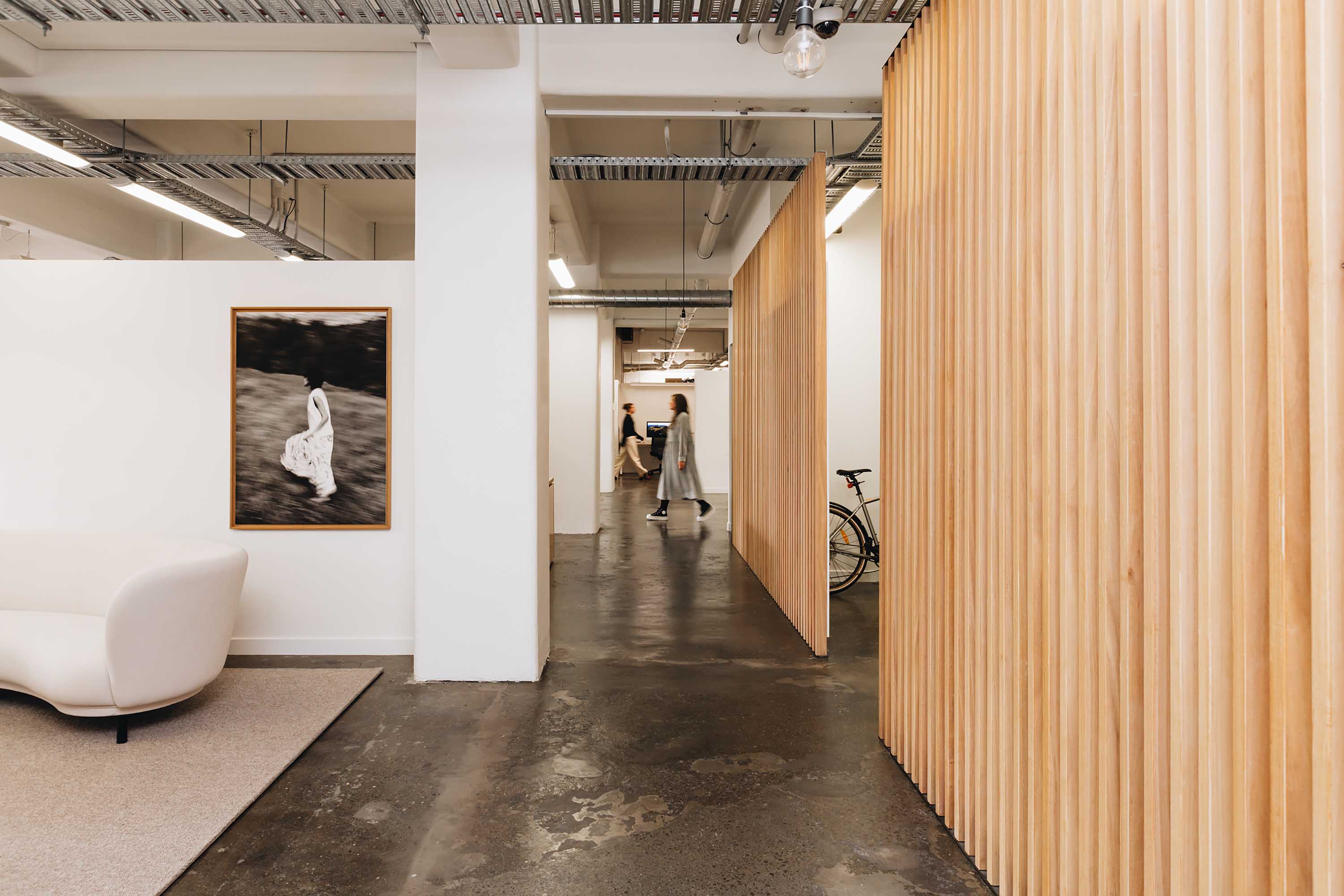
BC: We collaborated with Rufus Knight on the flagship store, and our build team, Makers Fabrication, completed the fitout. Referencing design elements and details from the store, such as the locally sourced eucalyptus timber screens, ties the spaces together. It was important for Kowtow to bring the same sense of quality and materiality from the store into the workspaces above, democratising the brand experience for employees, buyers and customers. A focus on future reuse and flexibility underpins both.
HERE: It’s been a seven-year project – why has it been such a long collaboration?
BC: The underlying strategy for design layout and furnishing has been one of flexibility, reuse and minimal intervention. There’s a lot of efficiency to be gained with this approach: we’ve been able to test successive layouts using the modelling and components of the prior setup, ensuring as little waste as possible and testing layout options quickly. It’s also helped significantly that Makers Fabrication has been able to work alongside us, delivering all fitouts and feeding into the design and construction logic.
HERE: What happened when?
BC: The fitout has been undertaken in three distinct stages to support Kowtow’s growth. The first stage (beginning in 2017) encompassed all of Kowtow’s operations, including a partitioned pop-up retail store, distribution centre and design studio, alongside management, marketing, sales, accounts and production. A private meeting room, archive and existing kitchen were shared by all. Stage two, in 2020, allowed more growth and space: with the flagship store operational, the pop-up store was no longer needed. The distribution centre had outgrown the space and was moved to a new site. Flexible work desks were implemented, and the team kept growing. Stage three (2022-2023), was the most recent growth step, accommodating up to 40 employees, with the acquisition of the adjoining tenancy.
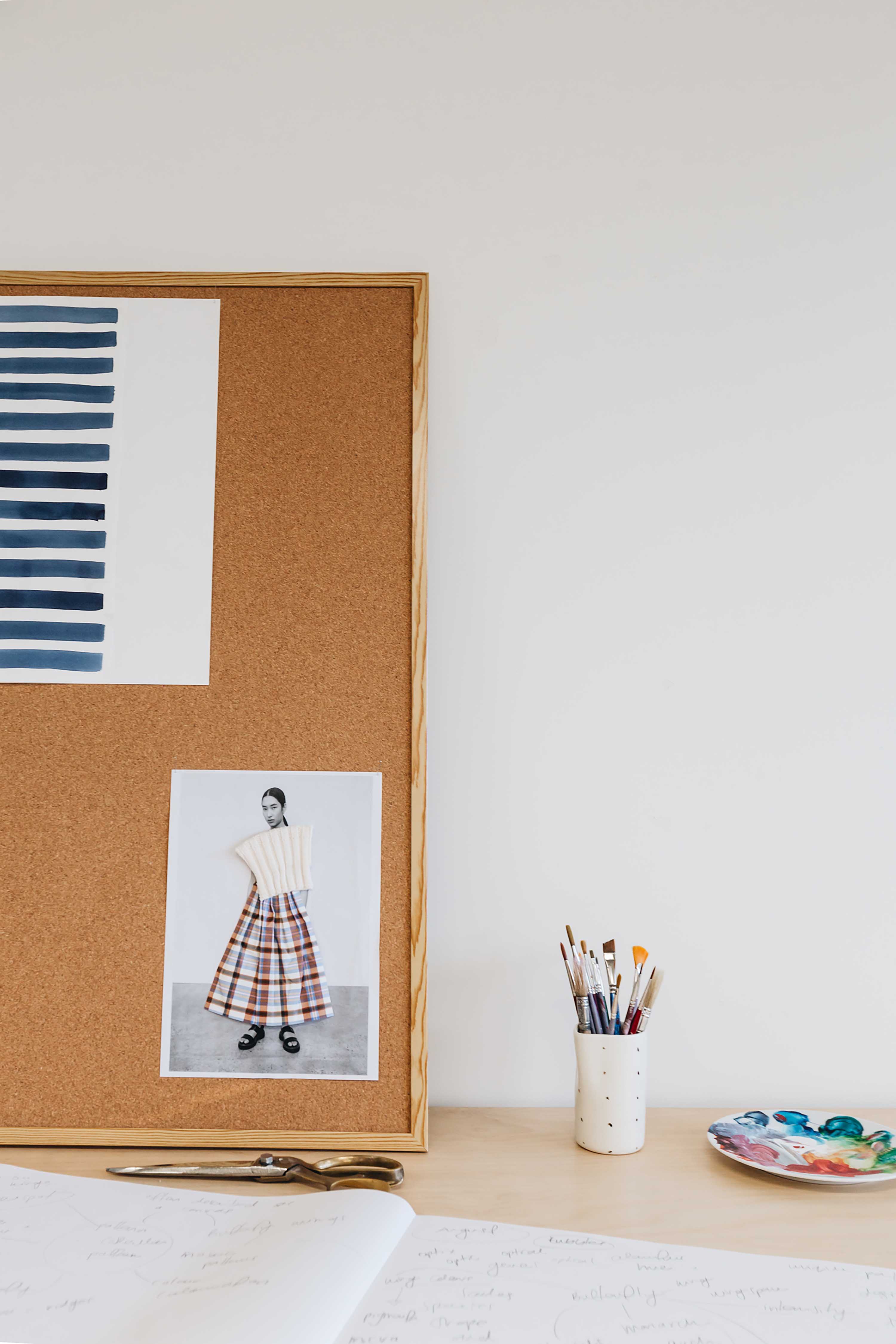
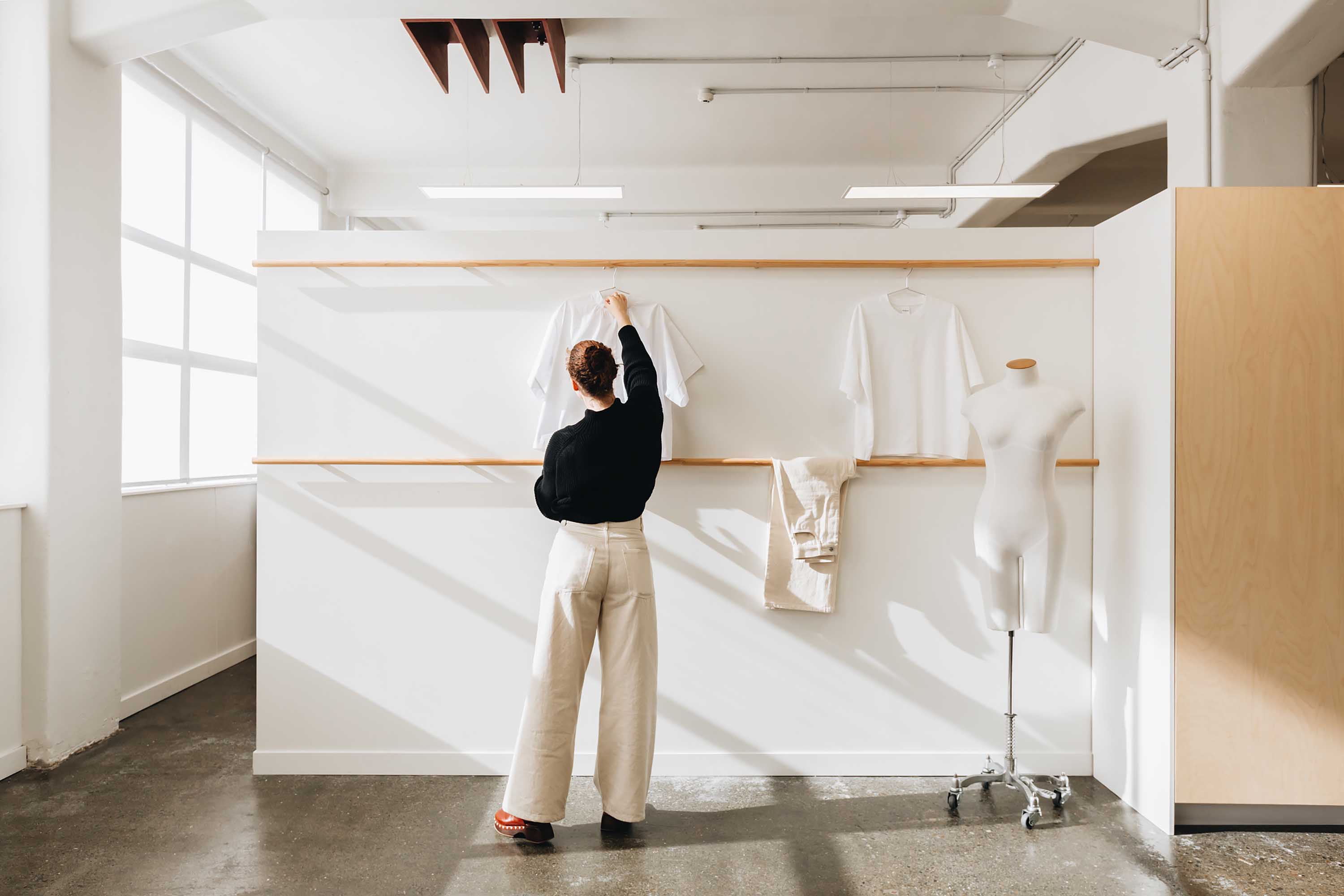
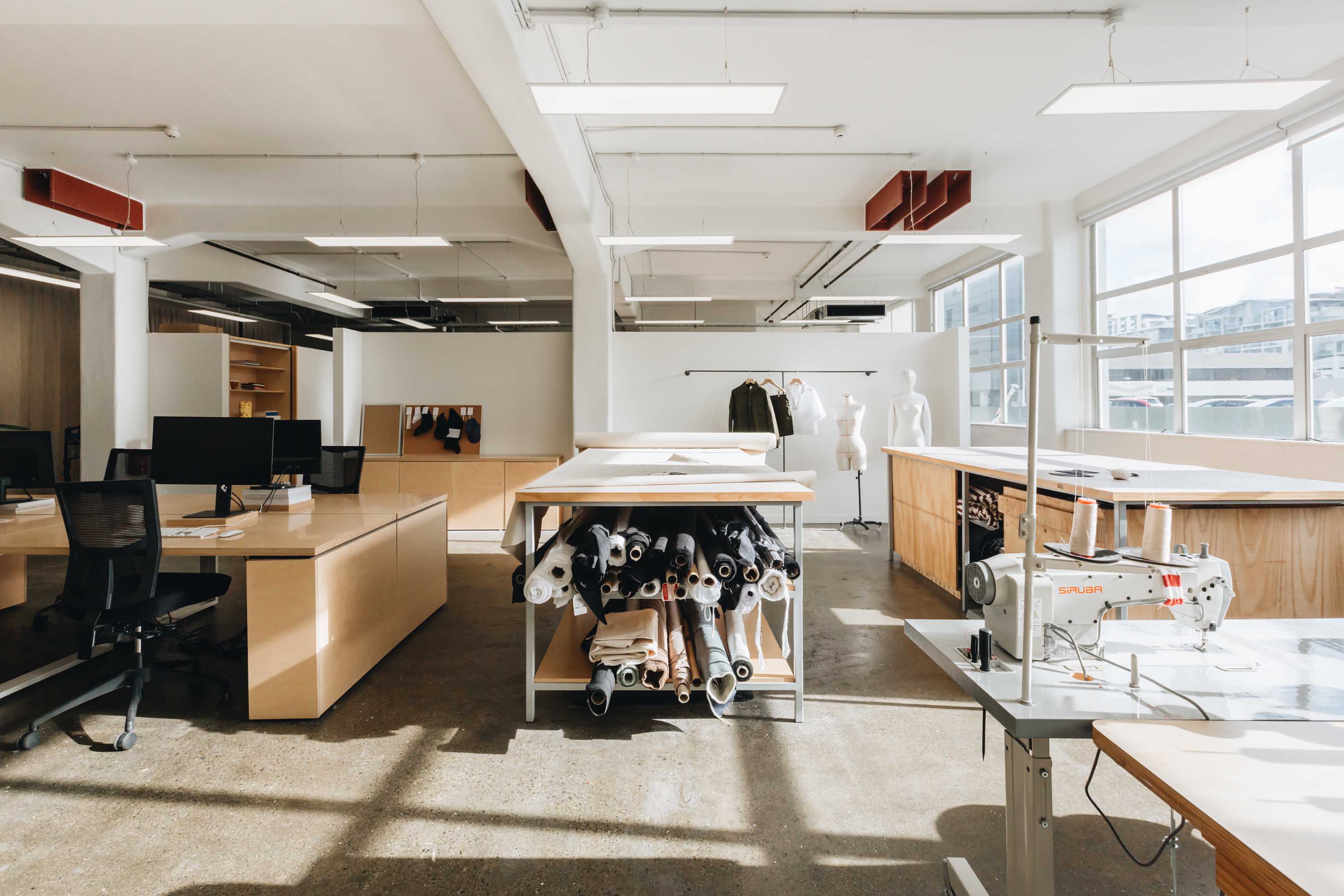
This new space houses design, production and archive, exclusively becoming the atelier. We also opened up the original tenancy, adding two more purpose-built meeting rooms, flexible work and gathering spaces. Generosity and creative autonomy underpin this final stage. Many of the spaces work twofold, for example, the design space can also be used for fittings and photo shoots.
HERE: Kowtow is a brand with sustainability at its heart – how did this play into the fitout?
BC: We applied Kowtow’s brand values to our design strategy, which felt like a natural fit as we share common perspectives on design responsibility and a holistic approach to production. Everything has been designed with circularity and reuse in mind. Where possible, we focussed on using natural materials that were sustainably harvested and Red List free. All finishes promote health and wellbeing while also being resilient and long-lasting.
HERE: How does the space work?
BC: The layout, as it currently stands, includes spatial groupings where roles overlap, so spaces and resources can be shared – design and production work together closely, for example, and they have a messier, playful creative environment. Flexible workspaces have been prioritised – team members set up where they choose, and there are a variety of spatial options, including shared desks, high desks for meetings or presentations, and quiet enclosed spaces. But Kowtow’s sense of generosity, culture and community is experienced through every space.
HERE: How will it evolve in the future?
BC: As Kowtow continues to lead as a circular, sustainable brand, we have no doubt their requirements will change and flex over time; through growth, efficiency, advocacy, their approach is exemplary. We enjoy seeing the fitout adjusting and supporting their extraordinary work and team.
HERE: What was the biggest challenge?
BC: The beautiful old industrial building’s structural form presented both a cherished raw aesthetic and a host of challenges. The undulating concrete floors and structural posts meant tolerance had to be built into the detailing and design logic. With any fitout, timing is key: the staged development supported short construction programmes with our build team, minimising disturbance and displacement for the staff. We staged the atelier so it was complete, prior to the updates undertaken in the original neighbouring tenancy. This staging was a rewarding challenge to resolve as the Kowtow team required the space and were able to continue working through the fitout.
HERE: What are you most proud of?
BC: Engaging with the Kowtow team, understanding how they work and how they wanted to be able to work was imperative. Additionally, seeing the cultural overlap with our design and build teams was very special – they naturally connected through making, craft, form and material integrity. The collaboration has been rewarding for all, and every time we visit, it’s heartwarming to see the spaces morph and change, supporting Kowtow’s creative team and workflow.
Related Stories: