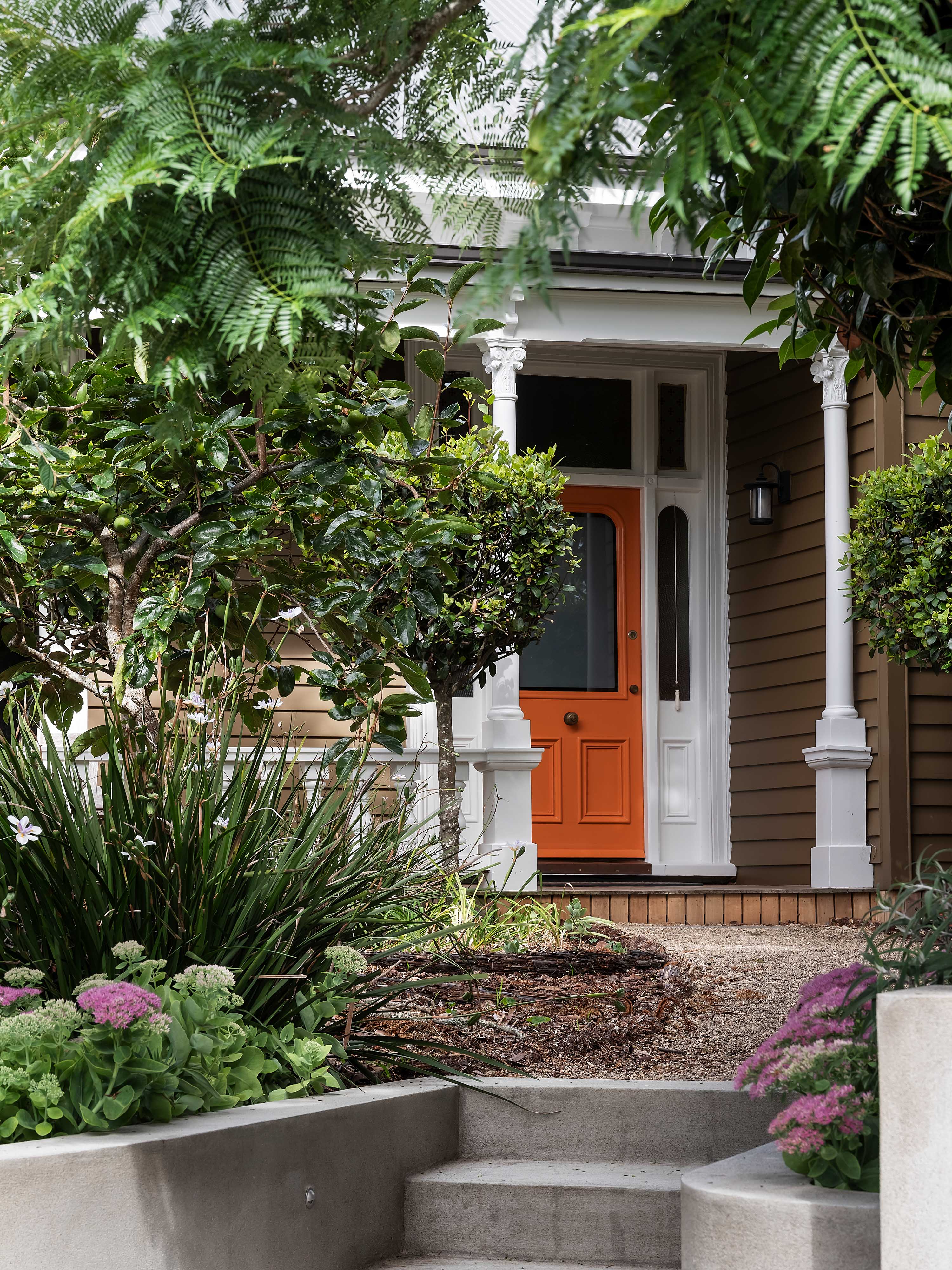
“When you’re taking on a renovation, there’s always that moment of discovery when you peel the old bits away, and you think, ‘Hmm, we’ll have to figure out how to deal with that,’” says Pac Studio’s Sarosh Mulla. “The big one here was that a previous alteration had left a piece of an old roof sandwiched between the second storey and the kitchen ceiling. It was like opening up a sarcophagus to find this perfectly preserved roof – structure, linings, everything – just entombed in the building. It was a bit odd, but it turned out to be a bit of a win because getting rid of it let us reclaim a bit more head height. Pros and cons of the job.”
Mulla led the renovation of this stately villa in Epsom, Tāmaki Makaurau. The elegant home sits in a layered green garden with all the charming bits and pieces you hope for from its era. Its high ceilings, wide hallway, timber window joinery, warm entrance and wraparound deck were time-tested and beautiful, but things fell short in the rear. The kitchen-dining area had its back to the outdoors, while the laundry and powder room were poky and ill-conceived. The brief was to rework these problem zones, add an office, and create a more purposeful connection between garden and home.
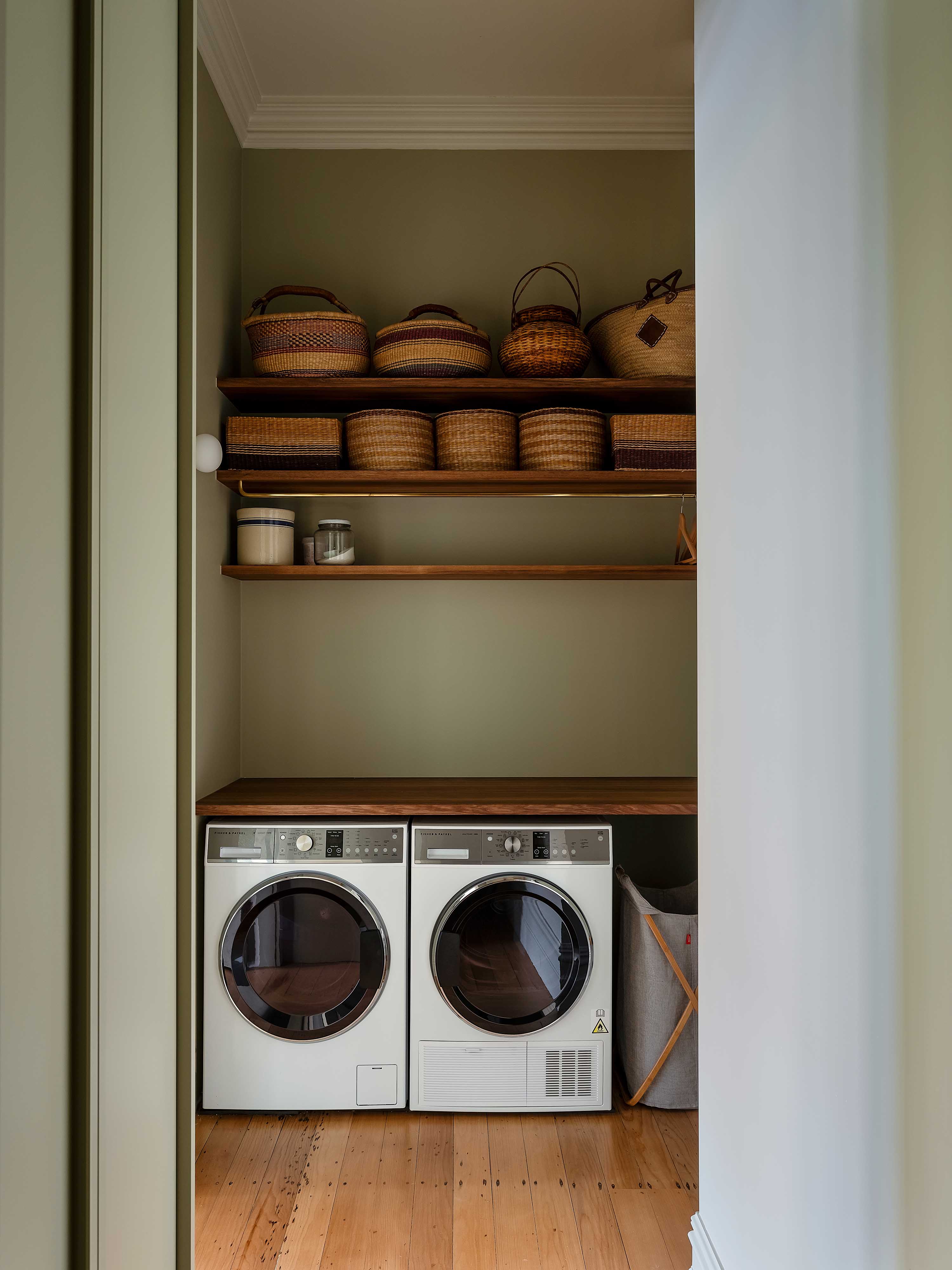
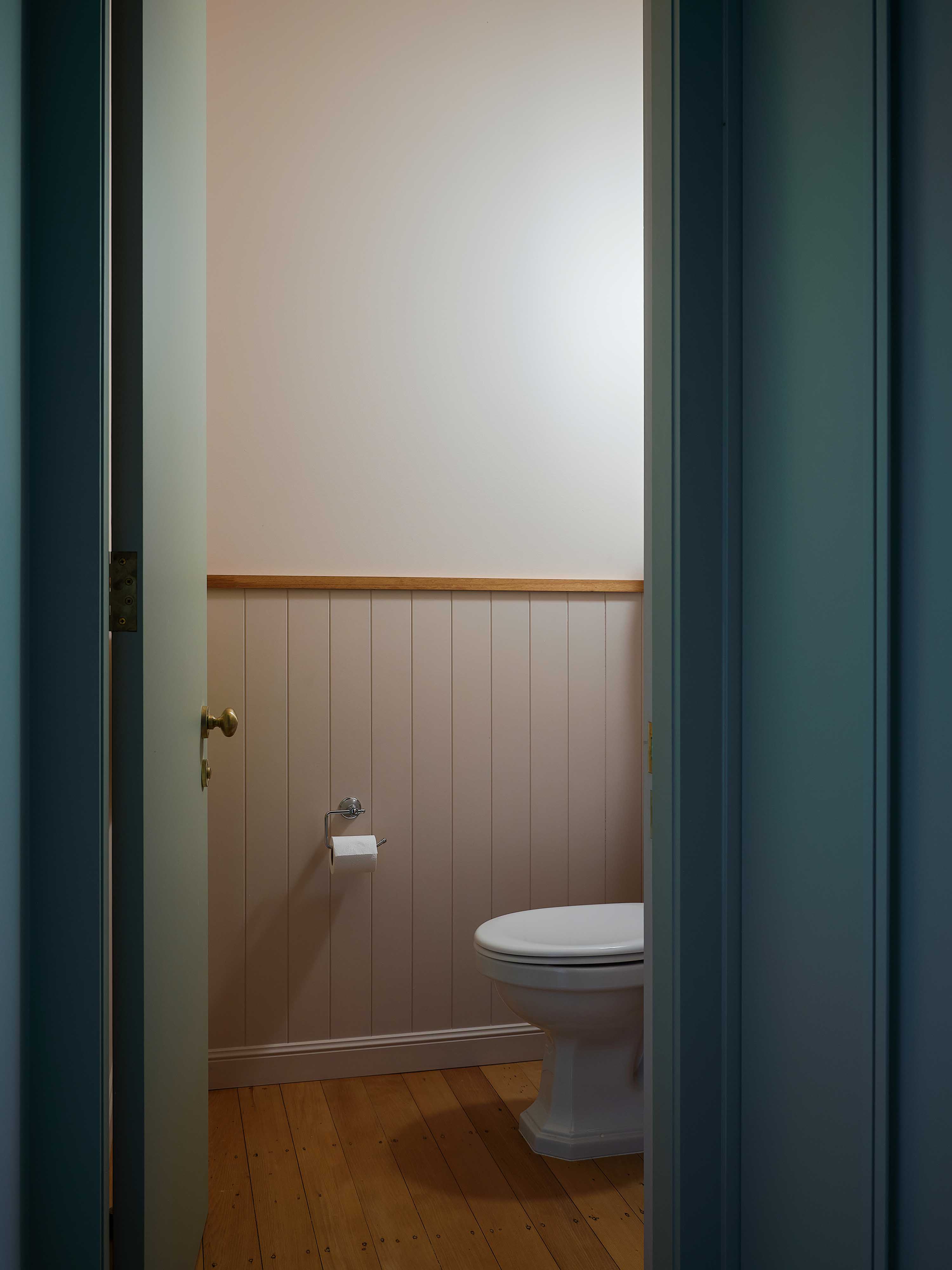
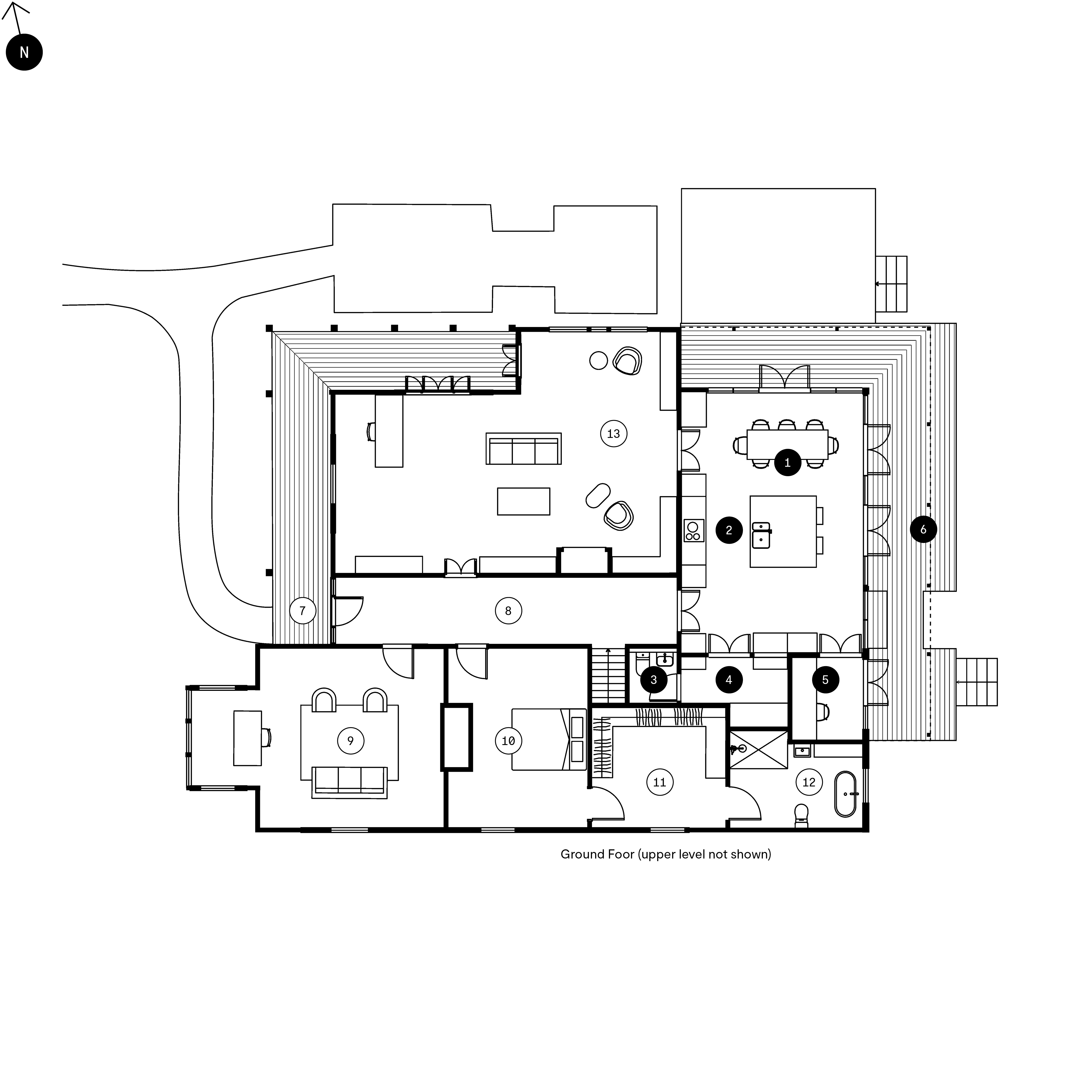
The owners have lived here for years and chipped away at other concerns with previous alterations, so the plan was to tread lightly, and not to unpick any earlier edits. That meant Mulla had to work around fixed walls, reshaping the kitchen and dining area within the established zigzagging footprint, then slot the powder room, office and laundry into the leftover nooks. “A lot of the moves in this project were to use this renovation to make more sense of the previous additions. To stitch it all together so the whole thing felt more cohesive, more complete,” he says.
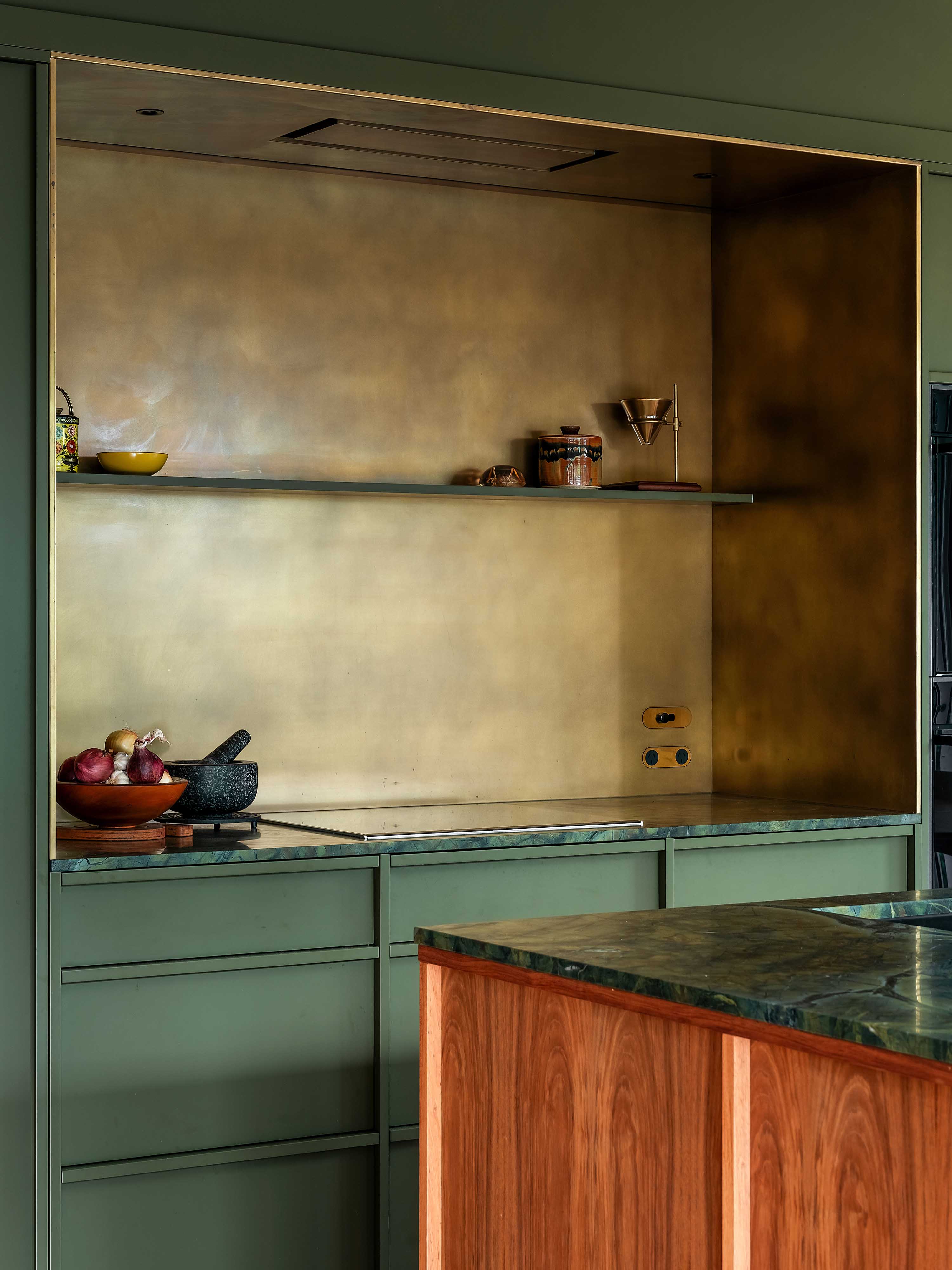
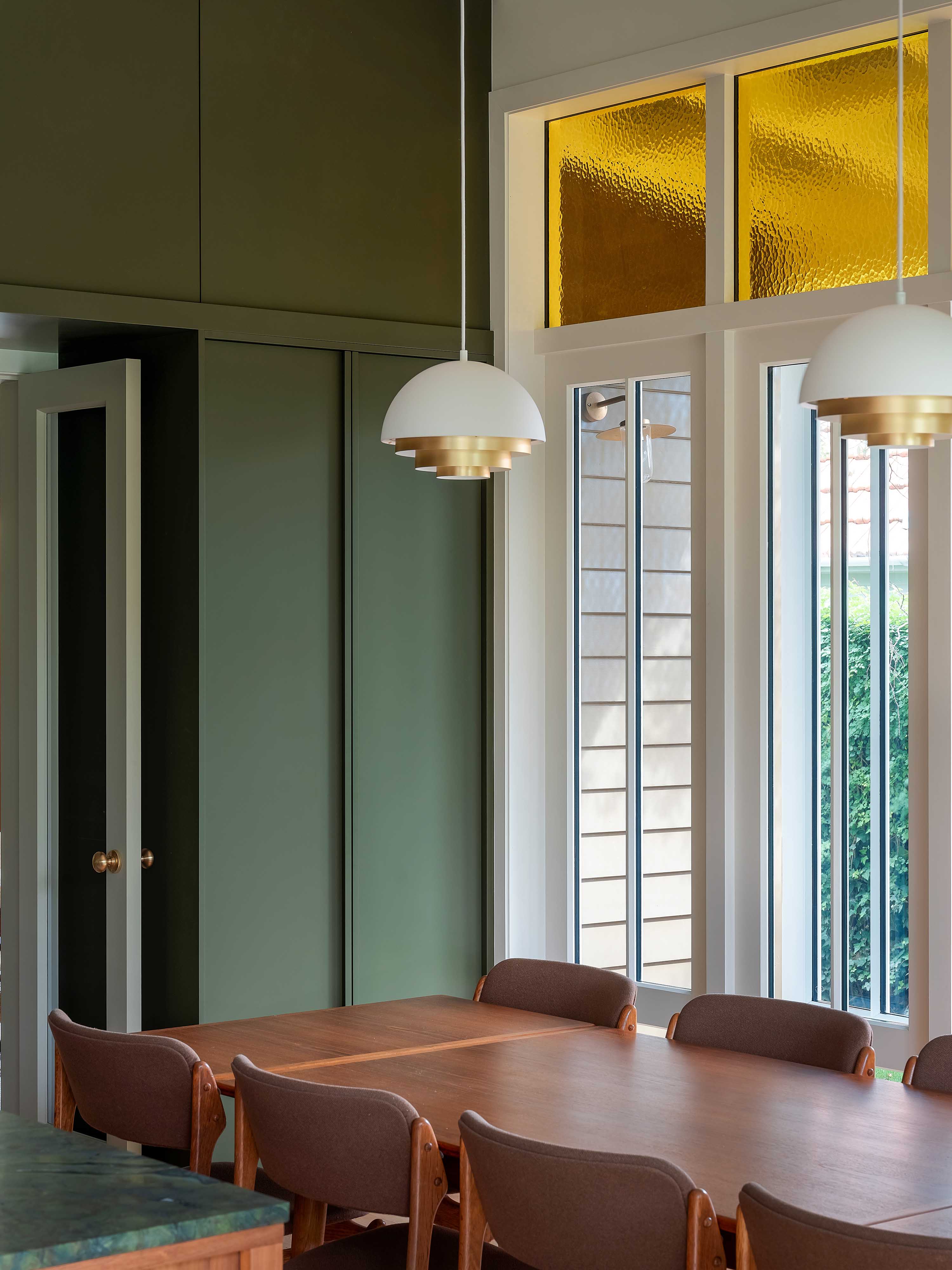
Working through the owners’ design references, Pac landed on an interior concept that is materially rich yet completely uncluttered. In the kitchen, an oversized blackwood island serves as a sculptural anchor, laden with storage (a 10-seater dining table means there’s no need for bench seating). The island’s veined green stone top brings texture and tone. The cabinetry picks up on the colour, using the deep, muddy green of Dulux Mt Stevens as a unifying element.
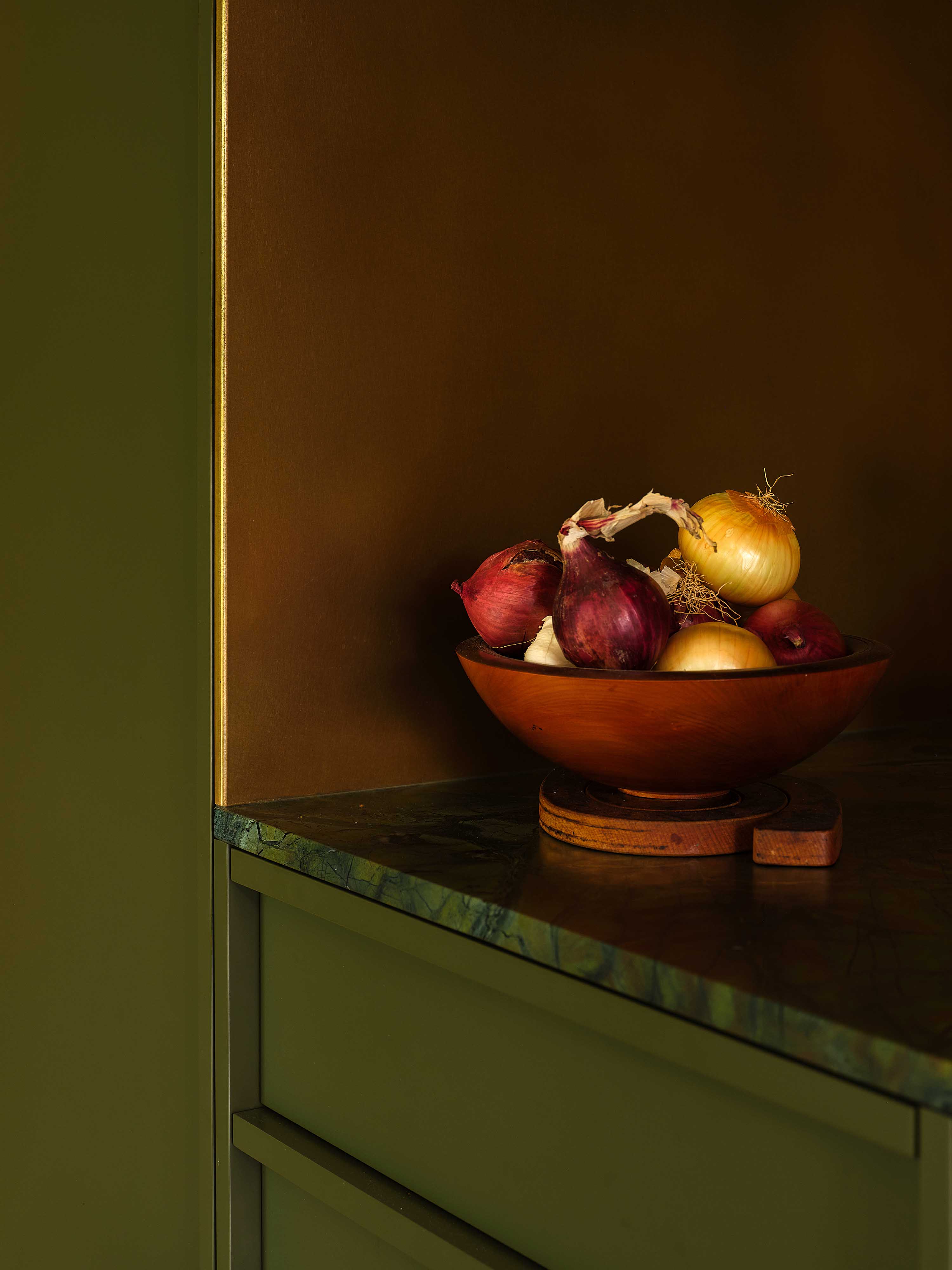
As per the brief, the material palette is disciplined, including no unnecessary hardware, frills or flounces. Instead, the focus remains on design and finish. The patinated brass cooking recess adds an organic feel – natural light bounces off it, bringing movement to the room. The tap, door handles and lights use the same soft metal, and will continue to mellow over time.
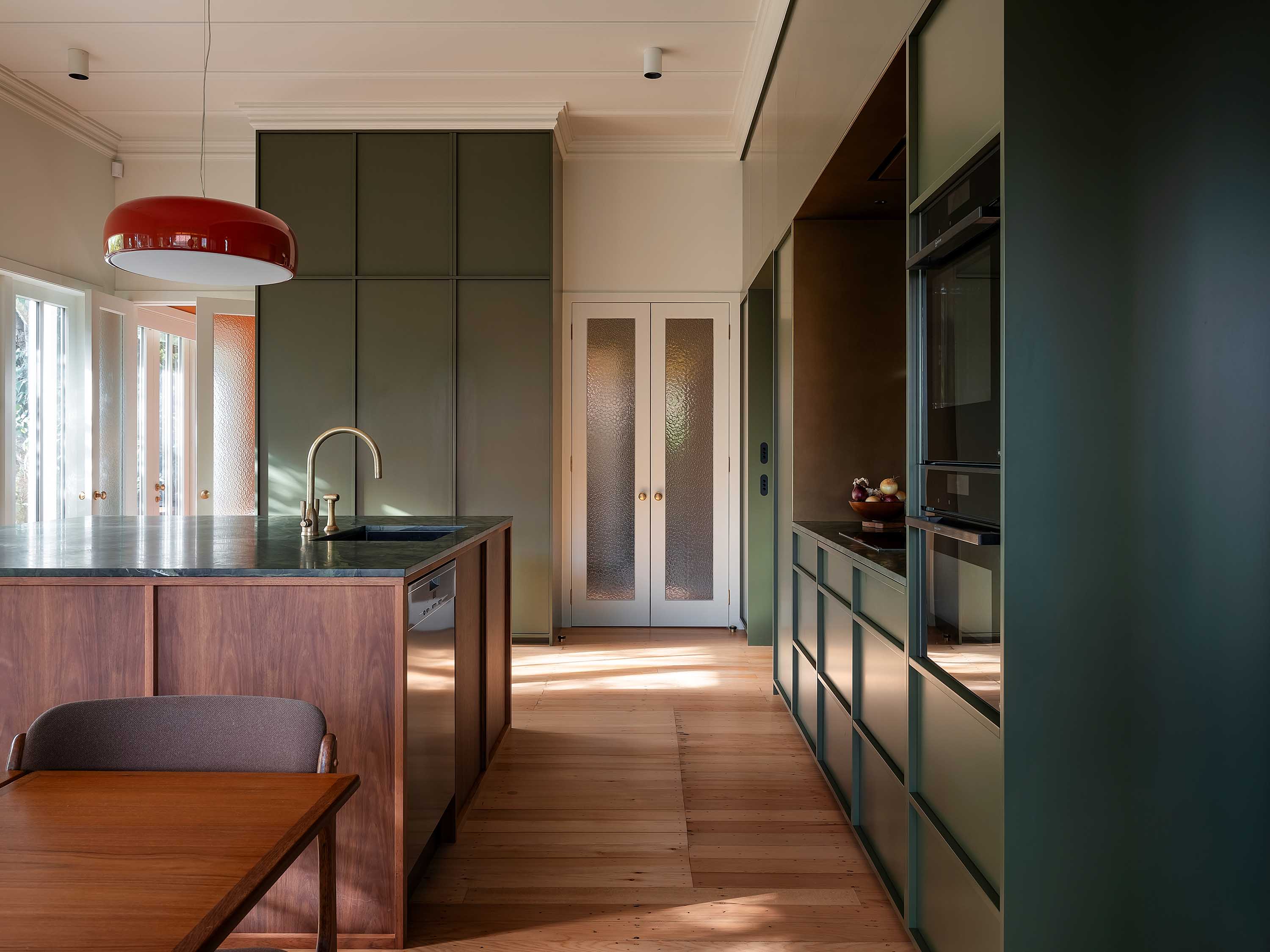
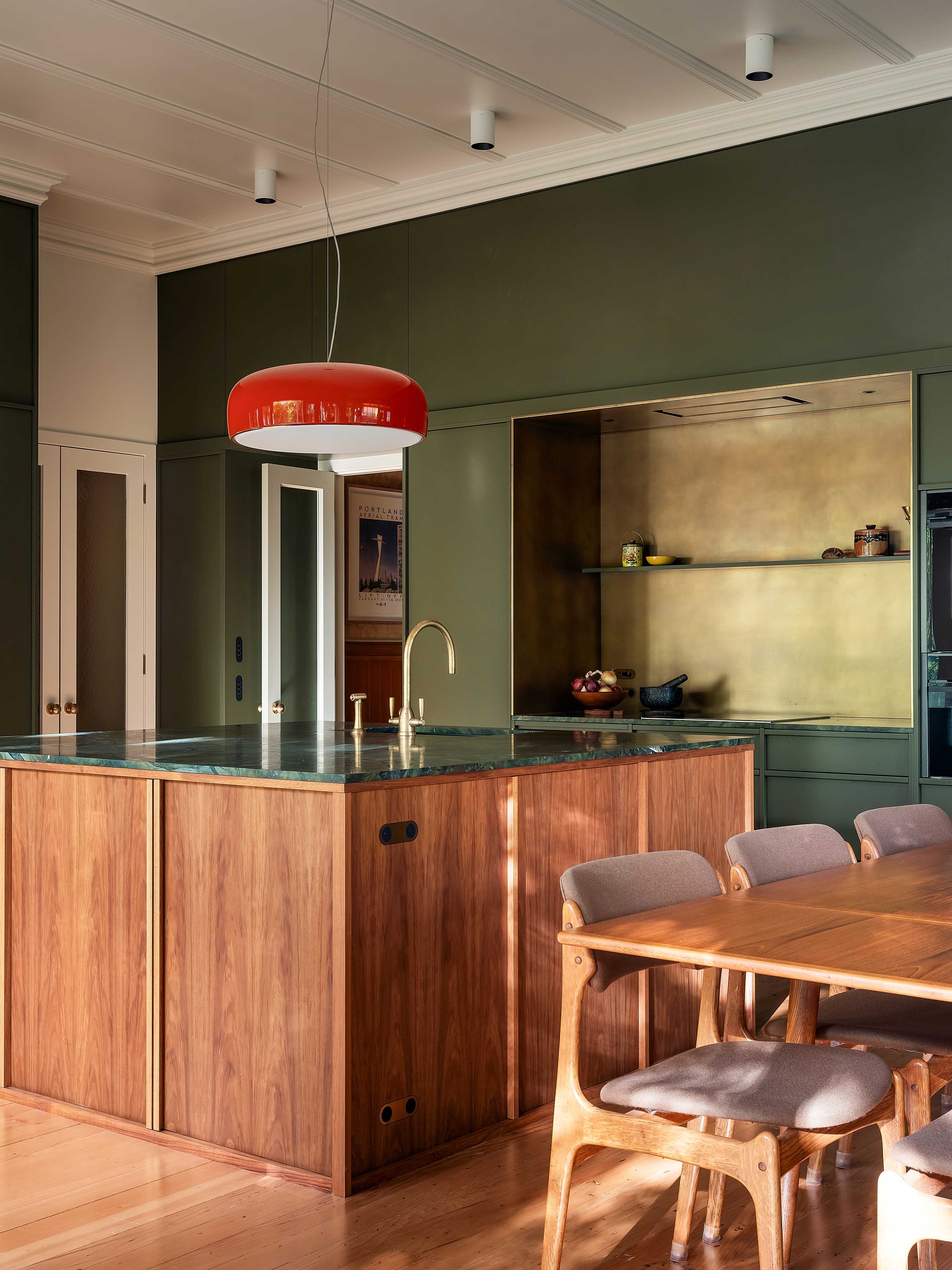
Kauri flooring tells the tales of previous renovations with its shifts in direction and irregular joins. It’s bitsy, a little hodgepodge, and the room is much richer for it. “There was really no reason to change it,” shrugs Mulla. “When I was working with Jeremy Salmond, he always joked with clients that they would have to pay double for that patina and texture, so they should always keep it, use it.”
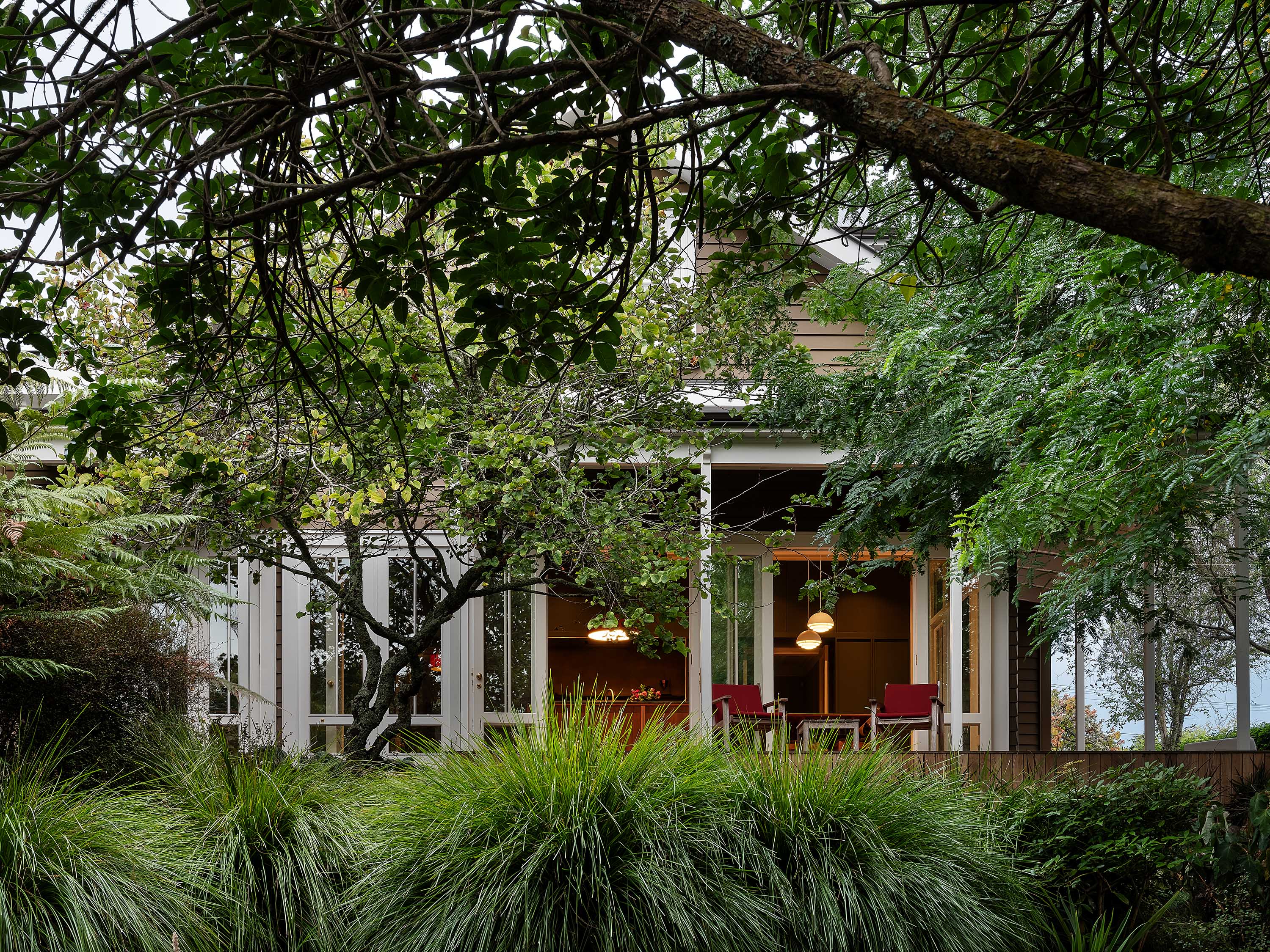
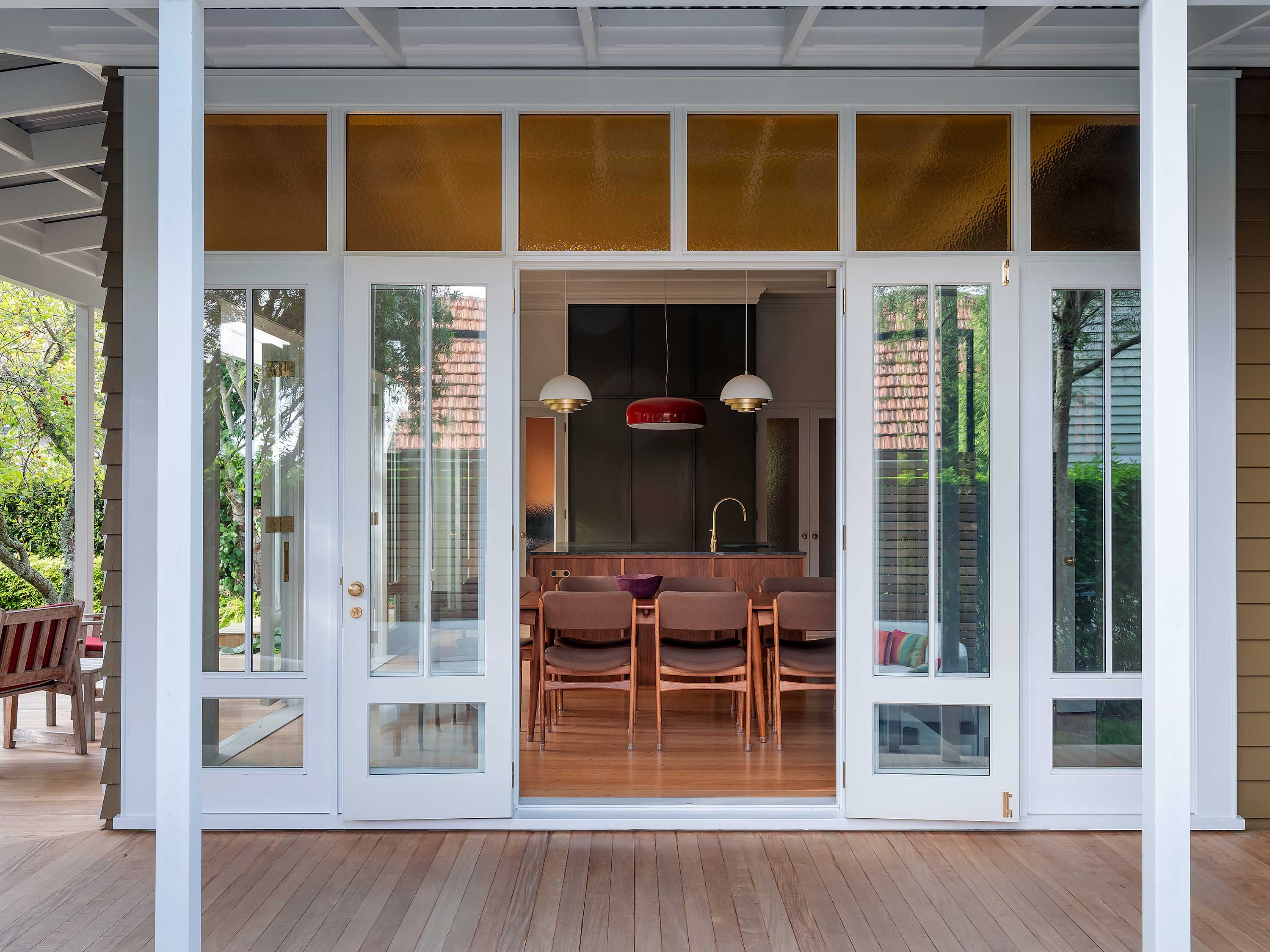
Looking back at the home from the garden, you’d be hard-pressed to determine which parts this project has touched – and that’s precisely the point. “In my previous life working in heritage conservation, that was always the game. You can tell what’s new, but you really have to be looking,” explains Mulla. The design picks up on the home’s heritage language, wrapping the renewed kitchen-dining area in glazing that emulates the existing. This tall bank of doors and fixed panes is topped with dimpled amber glass that casts a soft, honeyed glow inside. It all opens out to a wraparound verandah, which forms that missing link into the garden.
The team used classic detailing out here to tie new and old together, even hand-carving the underside of the roof with an asymmetric stop chamfer, a decorative edge seen in traditional woodworking. This depth of care (applied to a mere structural feature) gives you an idea of the skill and consideration that underpin the entire project. “There’s a lot of craft in the original bits to play with, and there’s joy in being able to include that,” says Mulla. He’s quick to credit the team from J.R. Hosking for that detailed execution. “They’re great builders to have onside. Nothing’s a problem with them, everything’s a solution.”
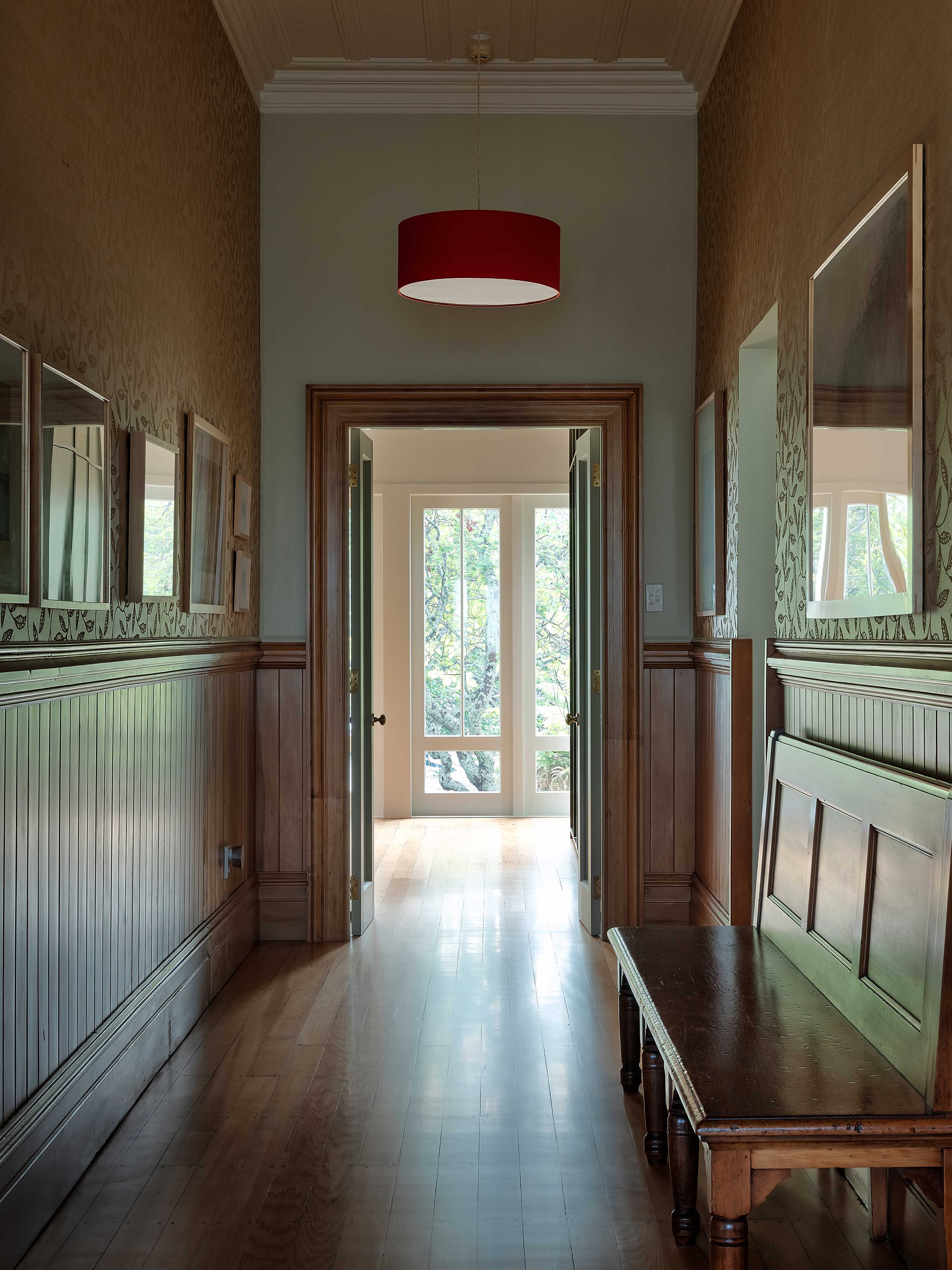
There’s an intentional break in one section of the verandah, where the planting pushes tight up against a tall window. That window sits at the end of the main hallway, so when you enter the house, your eye is drawn down the passage out to what appears as a glowing pool of green light. “Before we did that, the hallway was so dark,” says Mulla. “It’s a small thing, but I think it actually makes the biggest impact on the rest of the house.”
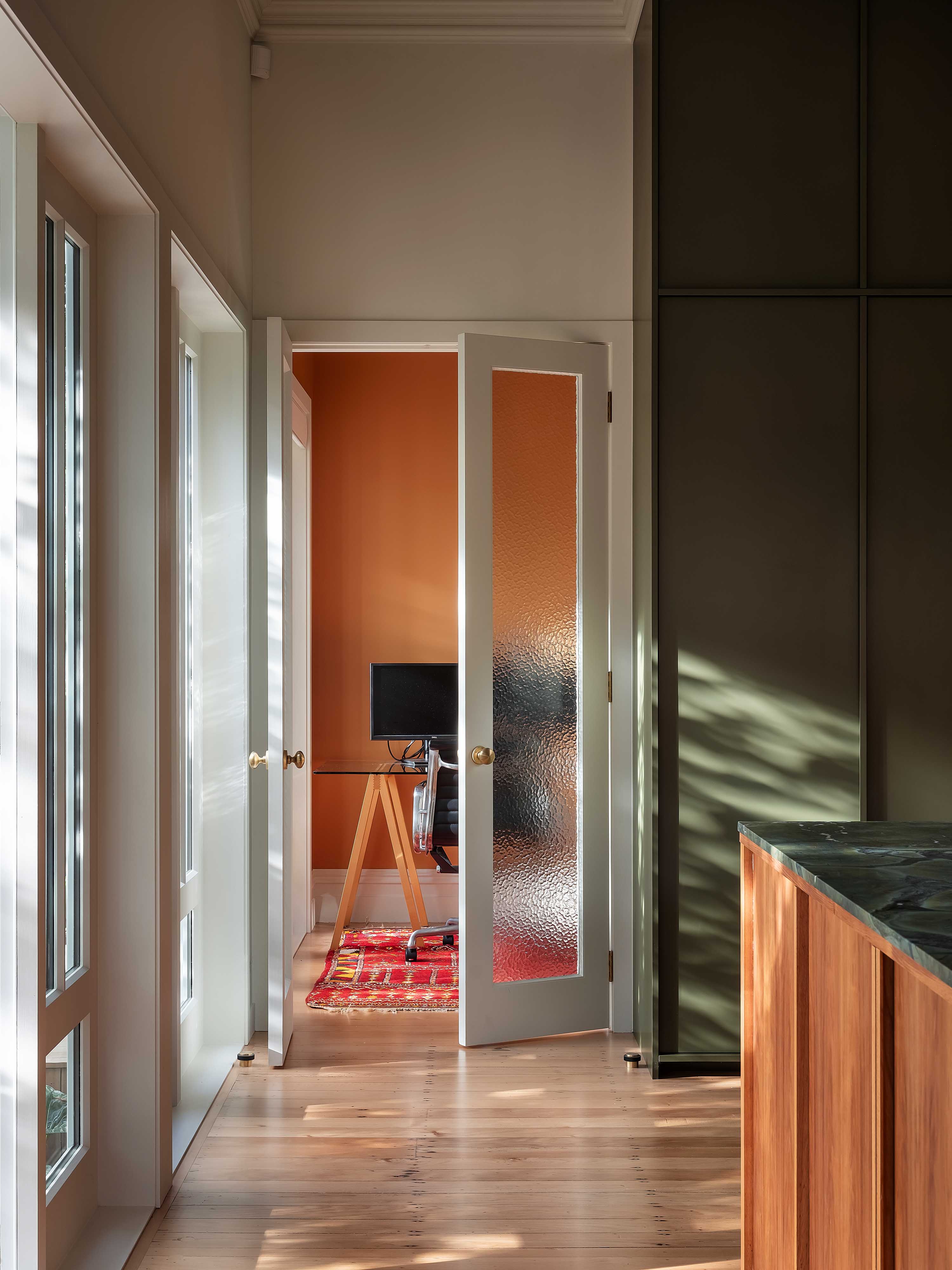
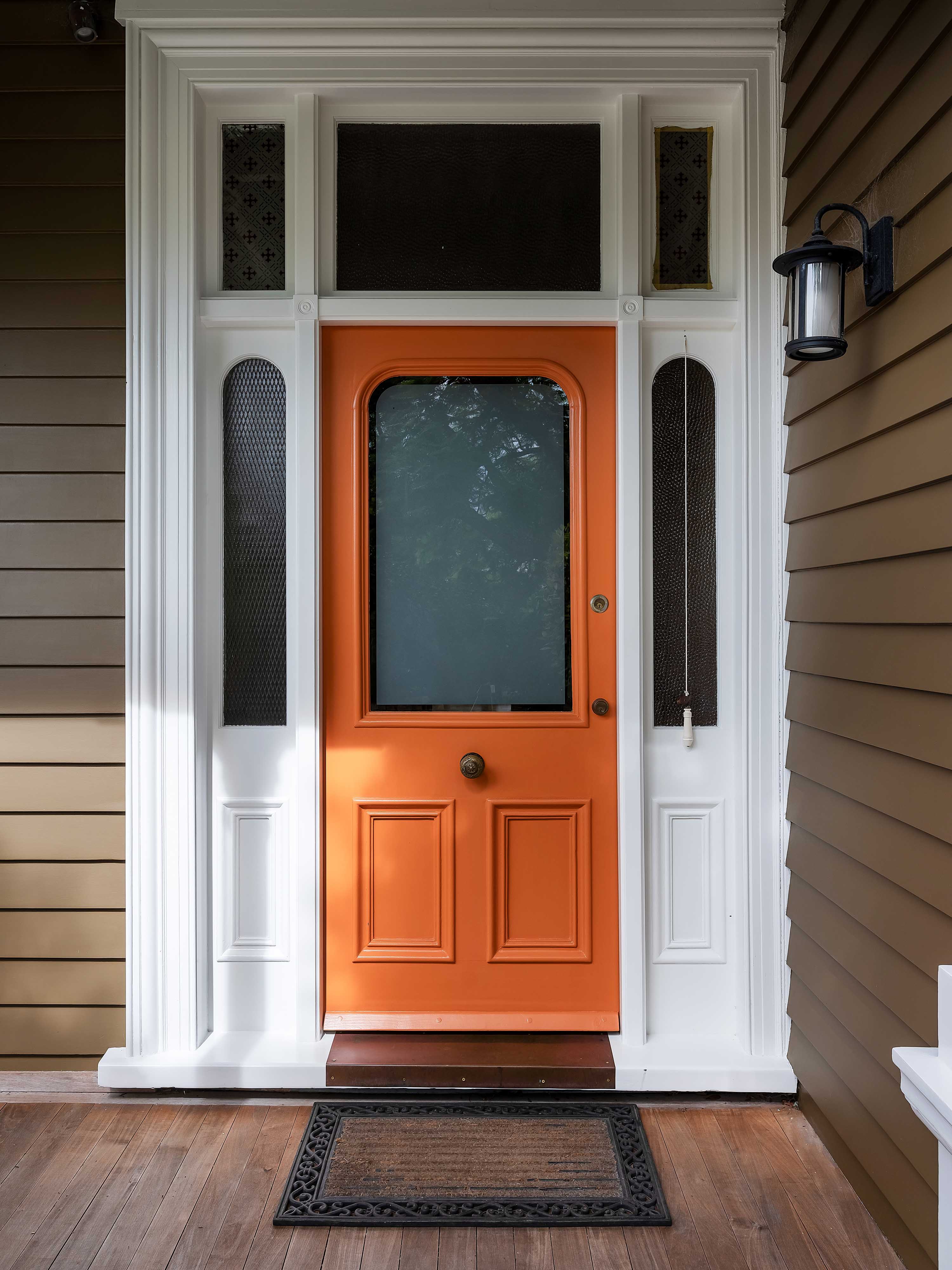
Pac’s reluctance to encroach on any previous alterations meant they made only subtle adjustments to the layout. For the most part, walls stayed put, and Mulla played the hand he was dealt, fitting the office, powder room and laundry into the leftover spaces. Impressively, no room feels compromised; each is practically occupied, including the office that now hangs off the back of the kitchen. While small, its glazed doors keep things light, and its punchy orange wall in Dulux Fortrose matches the front entrance and ties in handsomely with the home’s green elements.
“These heritage alterations are a different vein of what we do at the practice; they give us a chance to use confident colour and detailing,” says Mulla. “You have the challenge of tying it back to the old house, the craft of the original to play with, and all the unexpected bits. It’s a huge amount of fun.”
Renovation
1. Dining
2. Kitchen
3. Powder Room
4. Laundry
5. Office
6. Verandah
Existing
7. Entry
8. Hallway
9. Lounge
10. Bedroom
11. Dressing Room
12. Ensuite
13. Living
Related Stories: