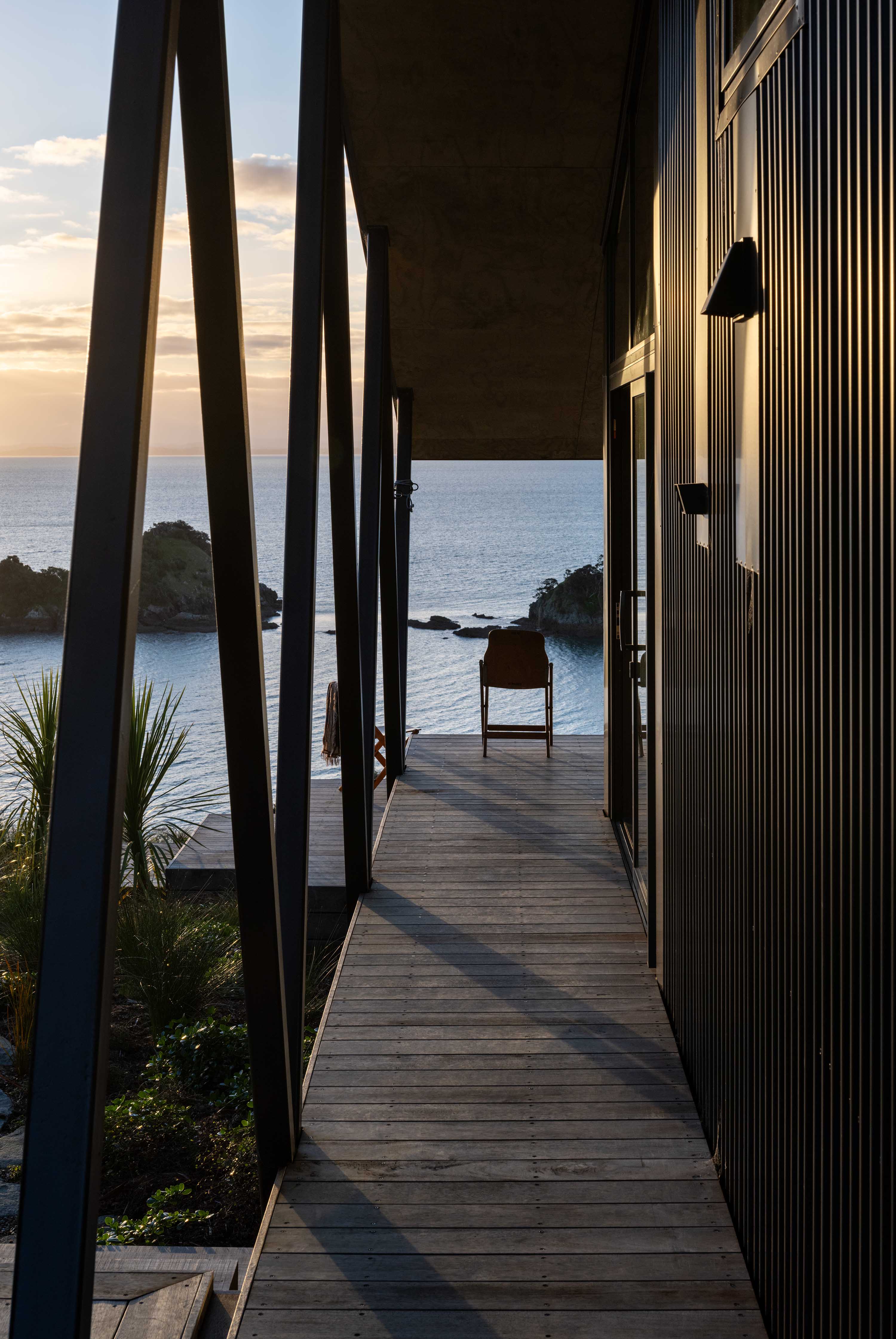
To listen to a playlist by Charlotte Ryan inspired by the house, click here. People build houses for all sorts of reasons, and find meaning in doing so for all sorts of other reasons. For architect Richard “Arch” Archbold, designing and building a bach for himself and partner Ana Simkiss on Rākino Island came with a particular sort of satisfaction. A former principal for Warren and Mahoney (he’s currently in the process of launching his own shop) Arch has spent his career designing large commercial and civic buildings that take years to come to fruition. However, between 2013 and 2023, he endured an especially dry patch. “I joke that a lot of things that I’ve been involved with have been crushingly slow,” he says. “At the time of designing this it had been 10 years since I’d finished a building that I’d had a hand in. So I thought I’d build something, even if I had to commission it myself.”
Arch and Ana have owned the land since 2019, though Ana’s connection with the island goes back to childhood. “I have really vivid memories, and I now realise the place we stayed in was on our road,” she says. “So we knew about it when other people didn’t, which I think was step one.” Tucked behind Rangitoto in Tīkapa Moana the Hauraki Gulf, Rākino is a 45-minute ferry ride from downtown Tāmaki Makaurau, but it’s a world away from its glossy neighbour Waiheke. There is no power, no water supply and no reticulated sewerage. Needless to say, there are no shops, vineyards or restaurants either. It is close, but very isolated. It is also very charming. “Everything is on a different time frame,” says Ana. “You have to be quite thoughtful about what you take – it’s a thoughtful, slow space.”
Arch and Ana were only half-looking for a property when they stumbled across this section above Woody Bay. There’s a small flat spot at the top, but the rest is very steep, running down to what many consider the best beach on the island. Arch tinkered away on the plan for a few years. “We designed it pretty slowly,” he says. “There were a bunch of forks in the road on the choose-your-own-adventure tree.” The first was whether they should build in a traditional way, housing builders on the island, with the added expense and logistics of delivering materials by barge. Or, they could prefabricate it and truck it over. Arch, naturally, chose the latter, which meant immediate, but pleasing, constraints. The buildings had to fit on a truck trailer, so could be a maximum of 3.2 metres wide and 4.2 metres tall. “And then we kind of designed it from there. Starting with these little Lego blocks, it became a kind of mini masterplanning exercise,” he says, paying credit to Waterfall Associates who completed the consent documentation.
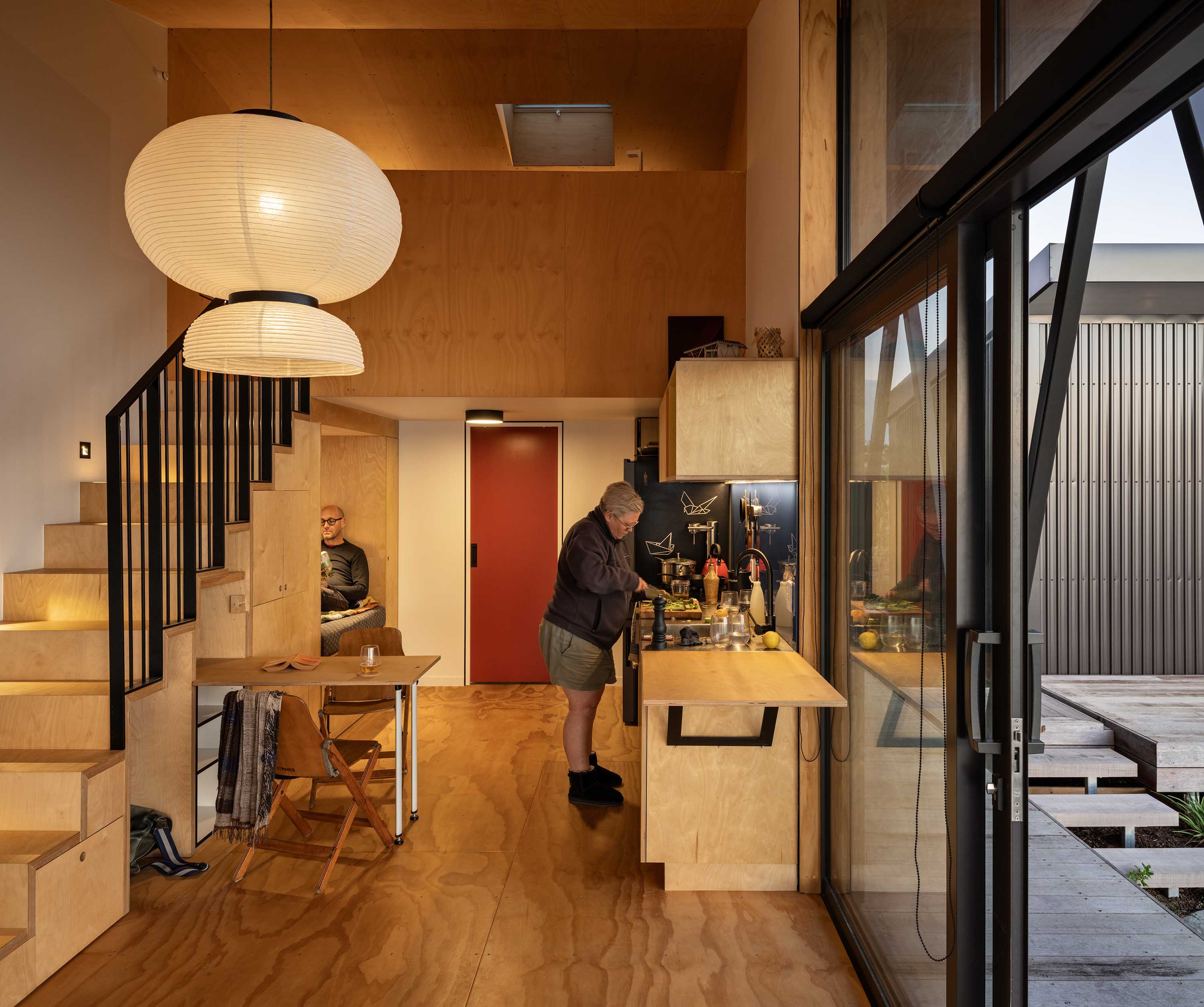
The site is almost suburban, with neighbours either side and views to the northwest. Arch placed one pod running roughly north to south, and a second across the back of the property to create a sheltered courtyard. In the main pod: kitchen, dining, living, bathroom and a mezzanine bedroom. In the other: a built-in desk and a second sleeping space. The plan is functional and straightforward. “There’s really only a couple of ways you can cut it,” he says. Cabinetry under the stairs hides everything from an air fryer to extra chairs. There is no oven, and no washing machine. Says Ana: “It’s bare feet and informal – it’s not about anything other than the view to the harbour.”
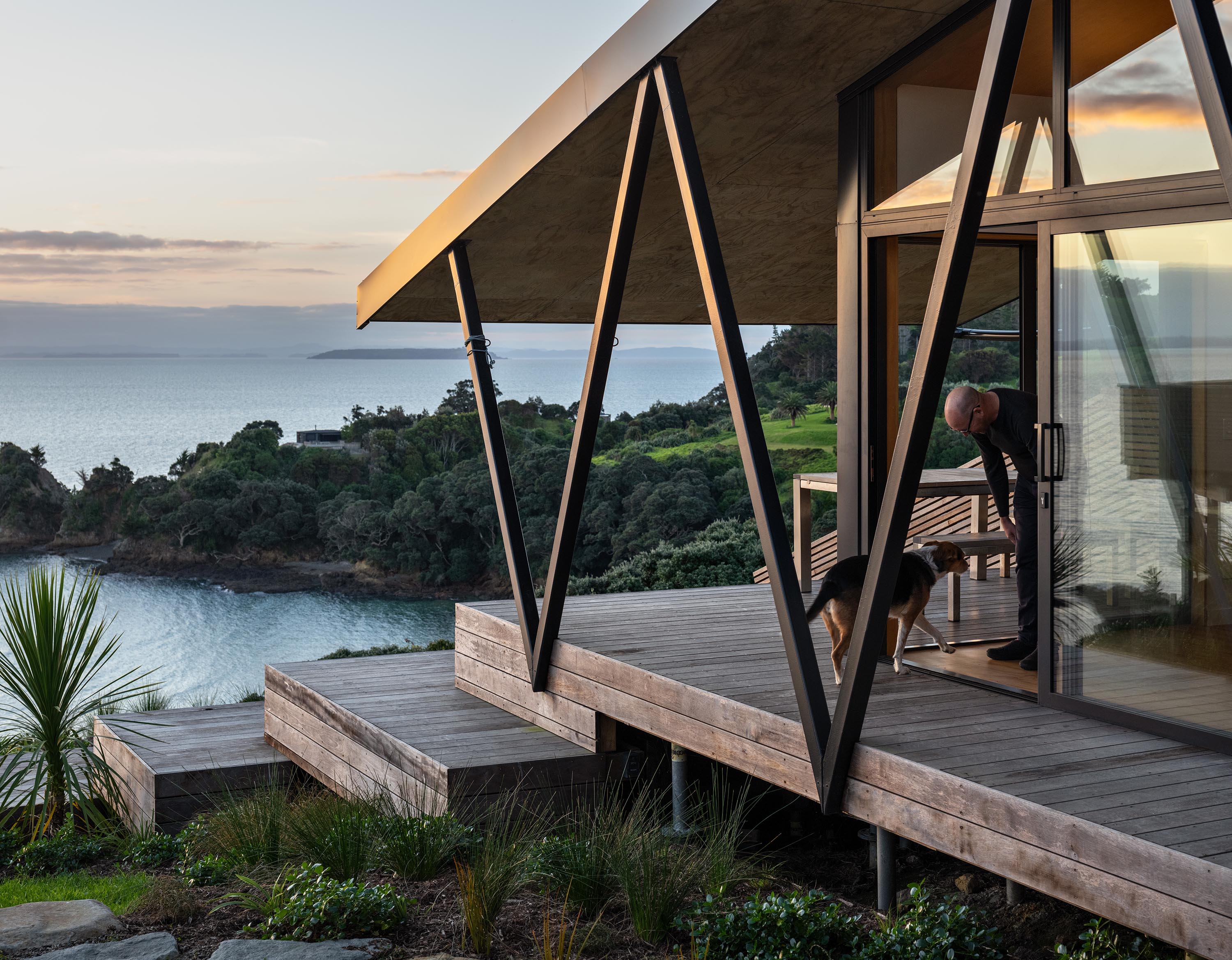
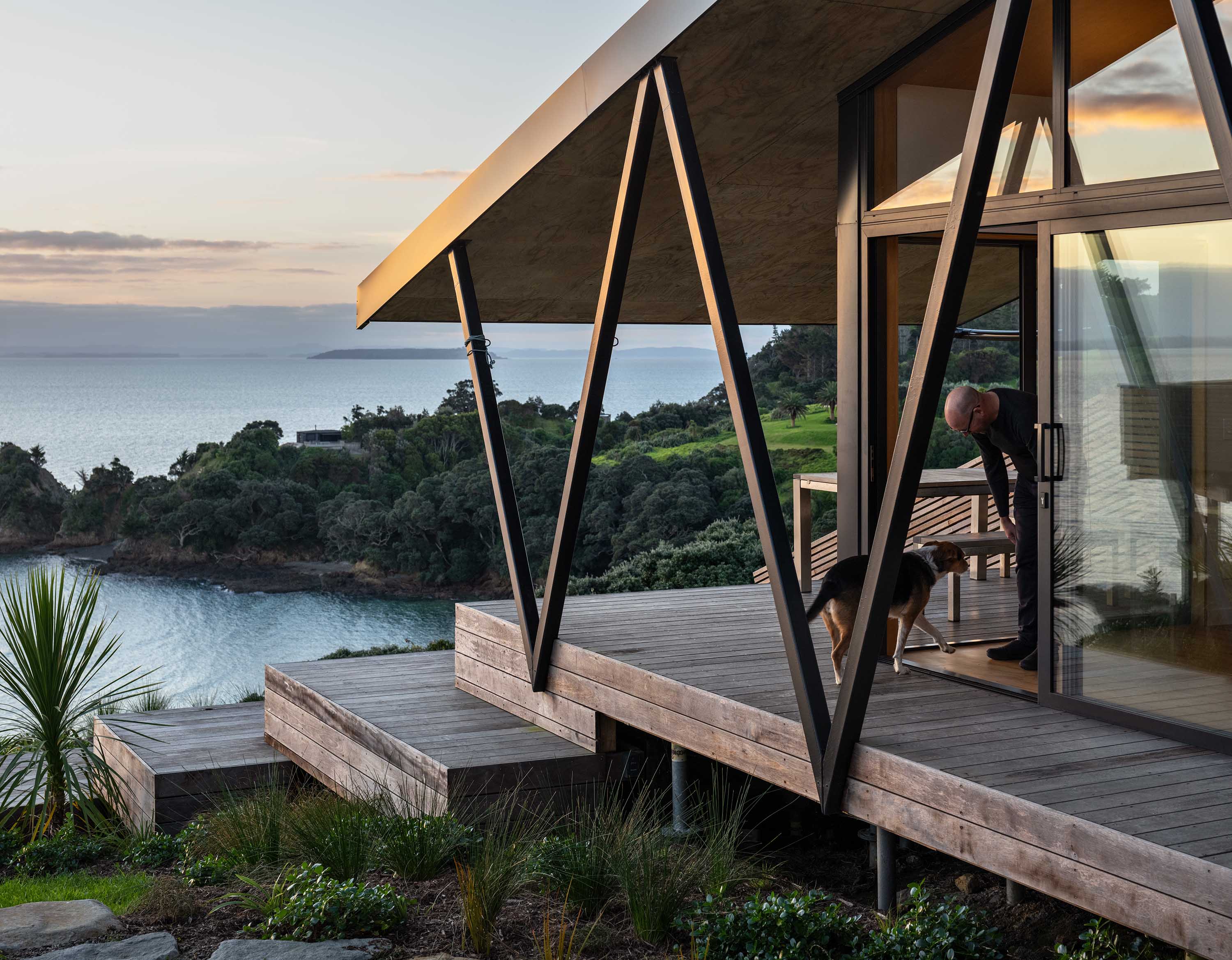
On their own, these boxes fit a familiar typology. You’ll know the rough shape from tiny homes: tall and narrow, designed to go on a truck and maximise internal volume. The key here is the roof. For the main cabin, Arch designed a wide, generous canopy, which sails down from the mezzanine and finishes just above eye level. In a single move, it creates covered outdoor space and frames the entrance into the site. It also provides shelter from the westerly sun, which is brutal.
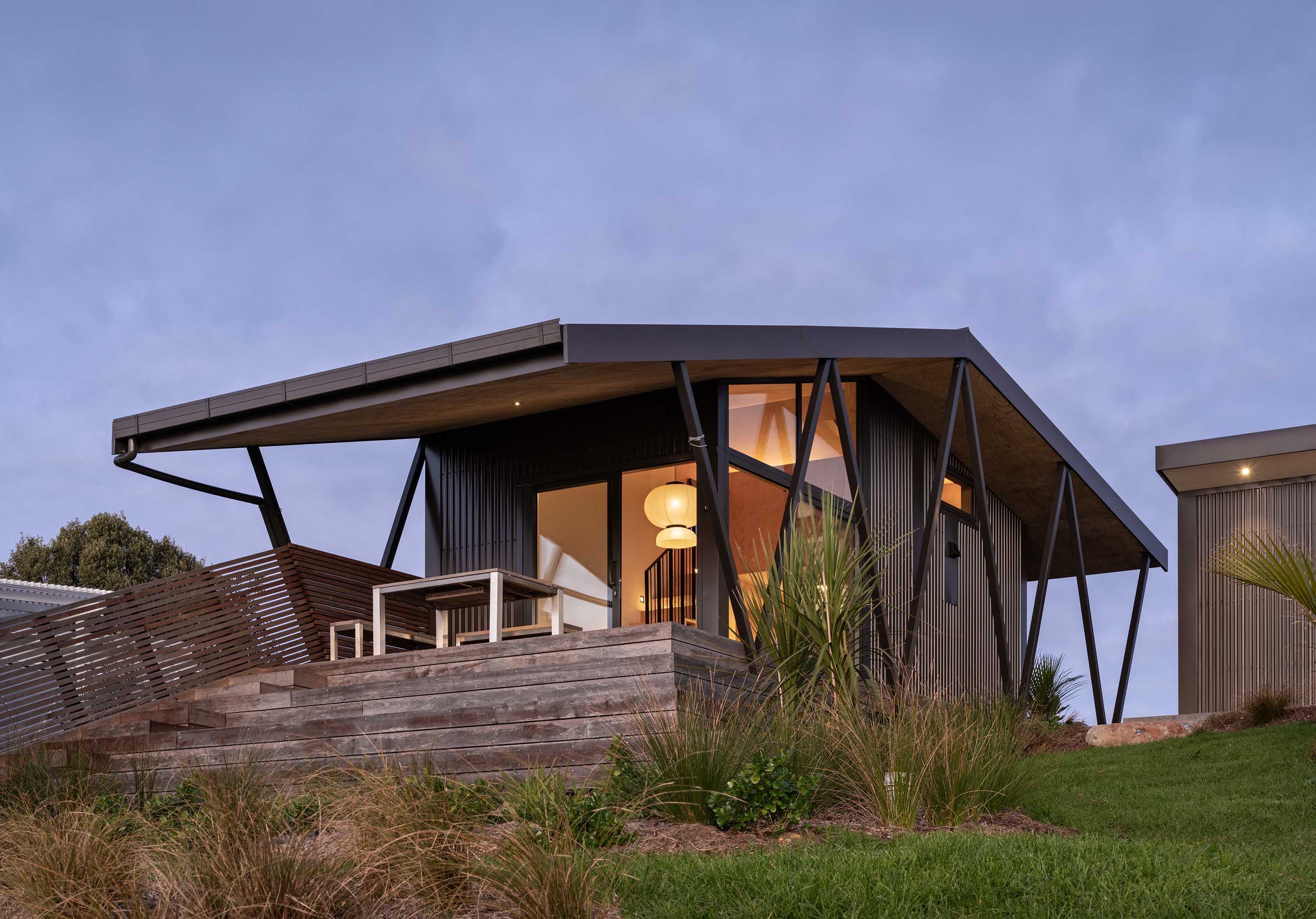
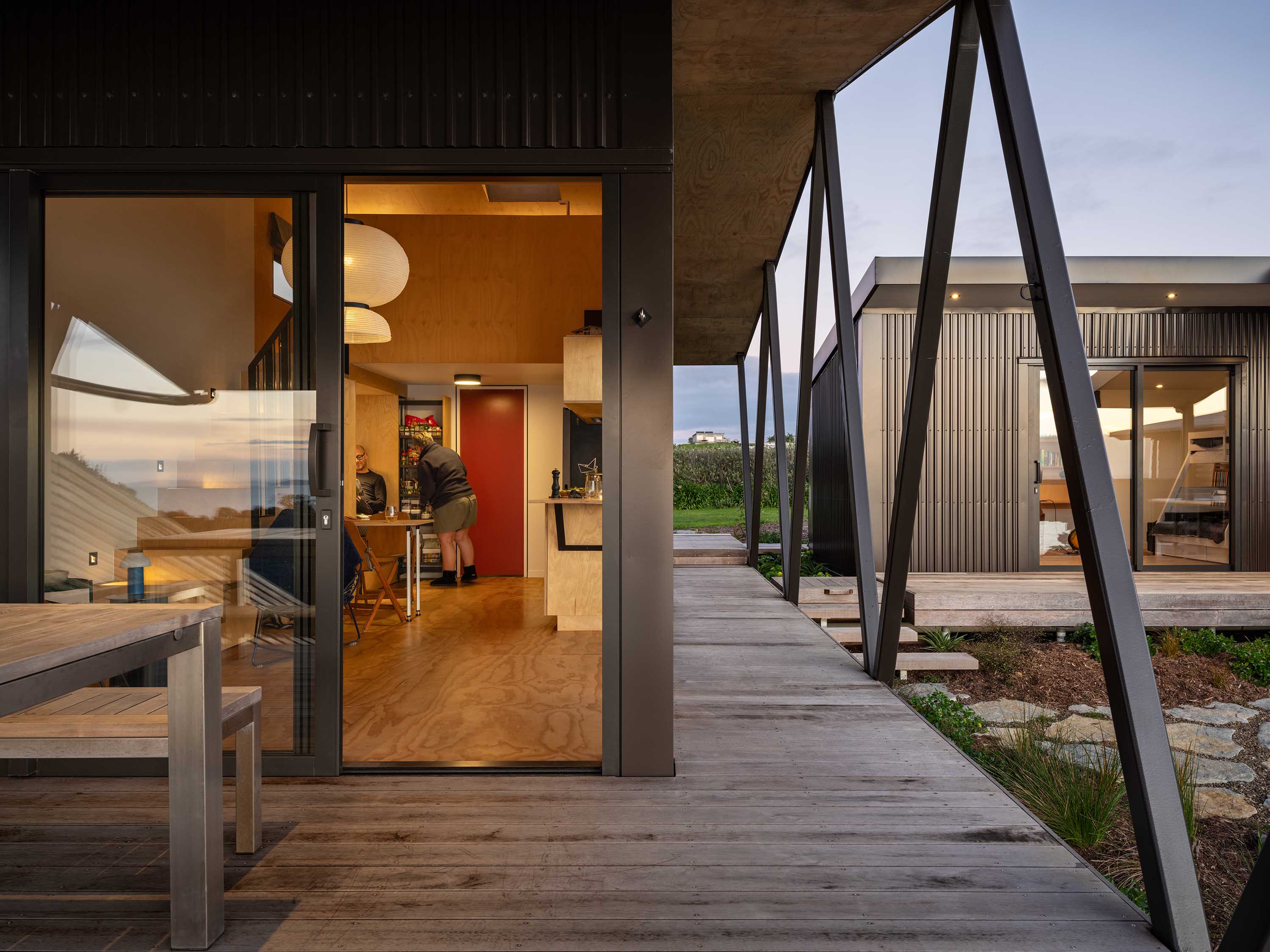
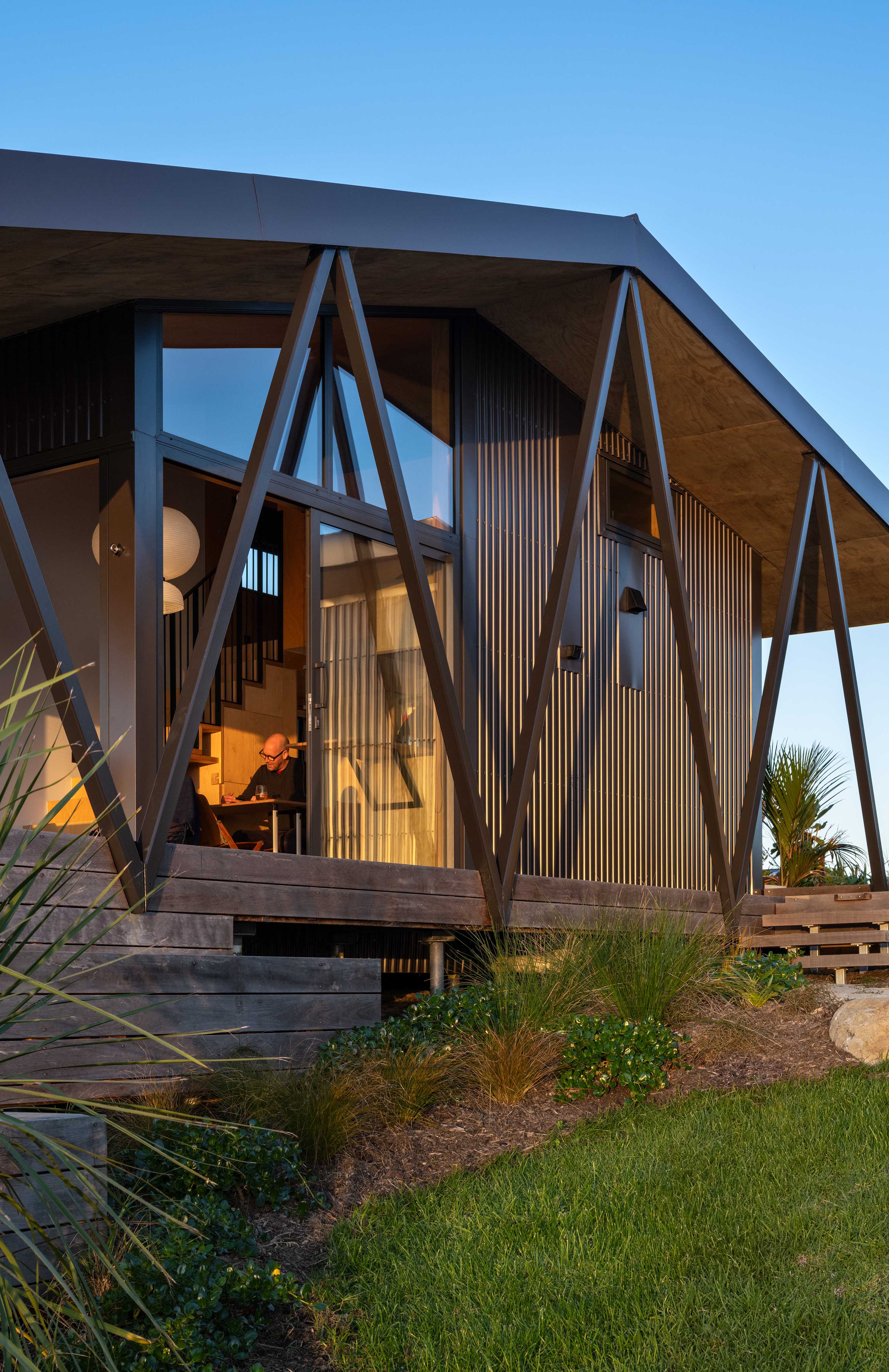
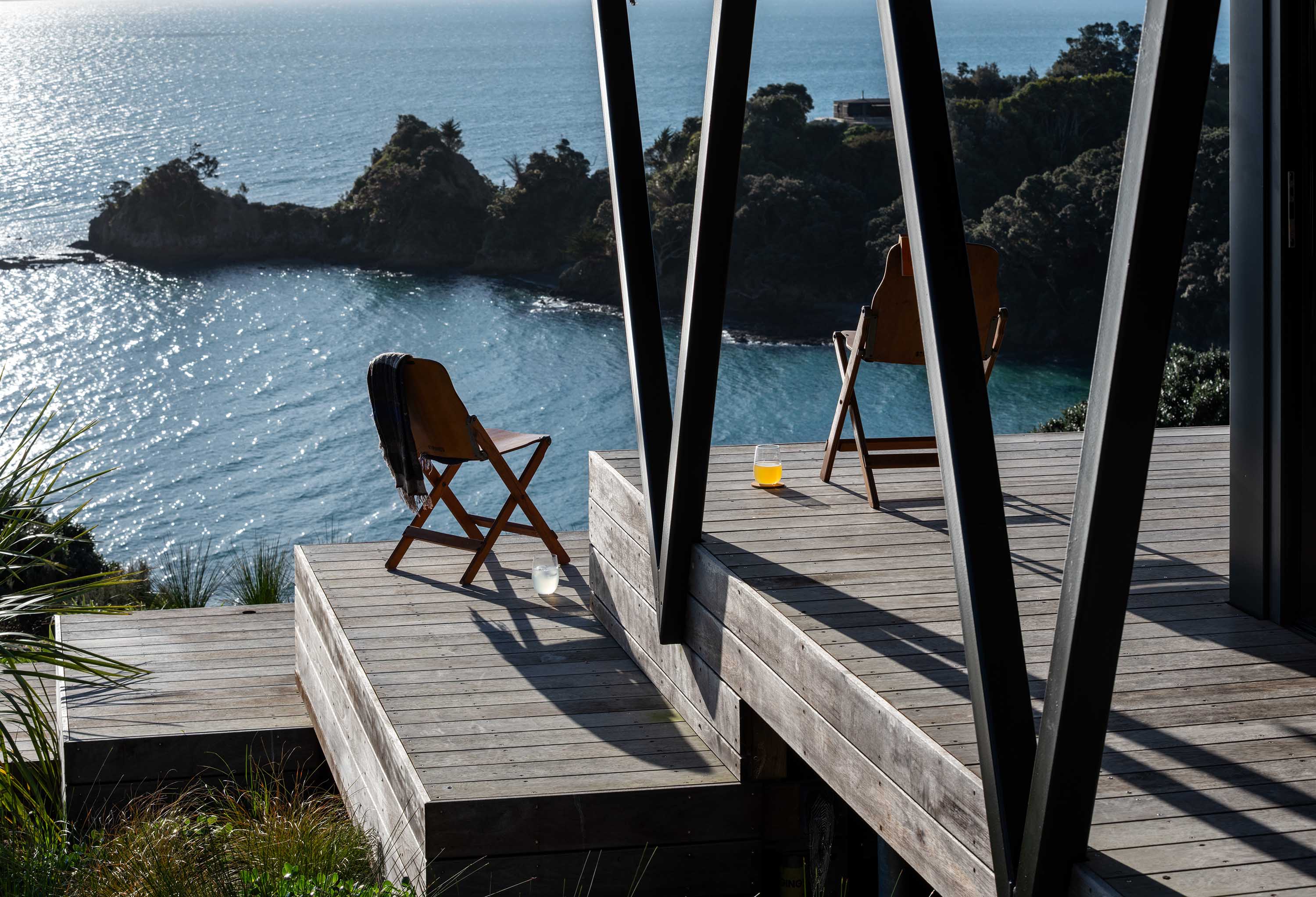
“The dominant beach-house language is about expansiveness and openness,” says Arch. “We liked the idea that the roof is this massive canopy. But it also captured that very first experience we had of the site, which was that the cliff falls away and you look down into Woody Bay.” From inside, the outlook is focussed quite closely on the bay. As you step out and down a series of floating timber steps under the roof, the view of the wider gulf opens out.
Cliffs give great views, but they also tend to be quite windy. This one has the highest possible wind rating, so the roof needed to be held on, and the whole thing required a framework to stiffen the building on its site. Arch’s response gives the structure its identity. A series of struts, laid out in a double “W”, zigzag under the roof and bolt to the deck. (It is, I tease, a kind of hangover from his days at Warren & Mahoney, known for their WM motifs on a number of buildings.)
The project had two separate building processes. On site, a team installed water tanks and a septic system, and created the building platform. Cityside, Arch worked with Scott Cassidy, of Cassidy Build Group, to prefabricate the cabins. Arch and Ana visited often, approving the prefabrication as it went, before packing the cabins with everything from cutlery to linen for the journey over. But they weren’t on site as the trucks made their way to downtown Auckland, onto a barge, and up to the site on the island’s narrow red-metal roads. “It would have been incredibly stressful for me, which would have made it stressful for other people,” says Arch.
Towards the end of the day, they received word the buildings had settled on their piles. Builders on site constructed the roof and framework for the verandah, and just before Christmas 2023, Arch and Ana spent their first night there, assembling the furniture that had come over inside the cabins. In the years since, they’ve planted the section, and established the courtyard – what Ana calls “this nice green fuzz around it.”
“It’s changed our lives,” says Arch. They visit often, and spend most of the summer there. “I run pretty hot, and it takes a lot for me to disengage. It’s not particularly magical, it’s just being by the sea, being alone, and being away from the city. I love cities, the bigger the better, but there, it just washes out of me.” It’s a familiar sentiment for anyone lucky enough to get away from the city and stare at the water. For Arch, it carries special meaning. “I’ve had a very fruitless career in terms of numbers of buildings. So the satisfaction of having done it is huge. I immediately wanted to go and do it all over again.”
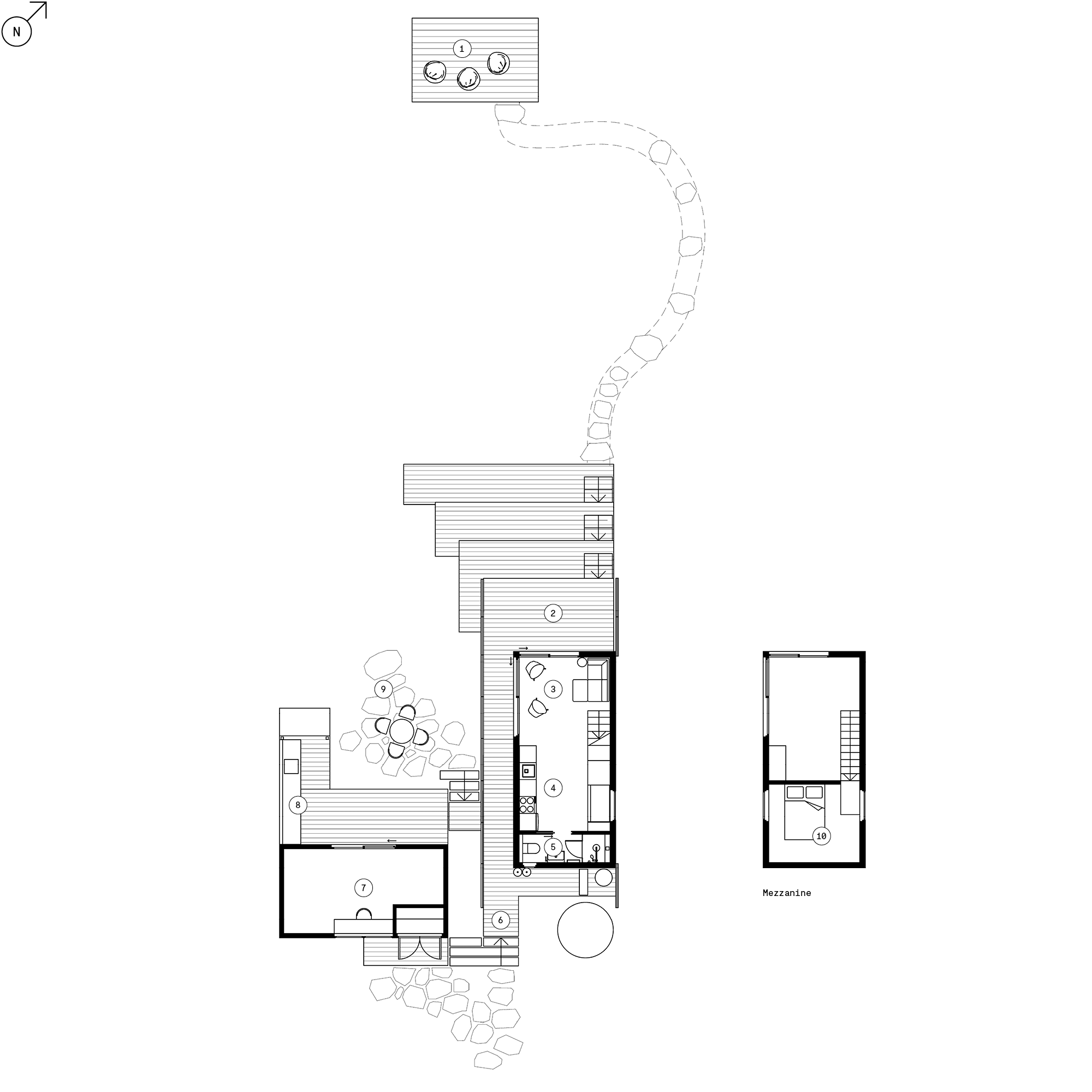
1. Gin Deck
2. Outdoor Dining
3. Living
4. Kitchen
5. Bathroom
6. Entry
7. Studio
8. Outdoor Kitchen
9. Courtyard
10. Bedroom
Related Stories: